Hey there! If you’re in the market for a powder sprayer (that’s what I do—supply these bad boys, so I get asked this question a lot), let’s cut to the chase: powder capacity isn’t a one-size-fits-all number. A typical powder sprayer’s hopper (that’s the bin that holds the powder, duh) varies based on what you’re using it for—like small DIY jobs vs. big industrial coating runs. Let’s break this down like we’re chatting over coffee, no stuffy engineering jargon here. Powder Sprayer
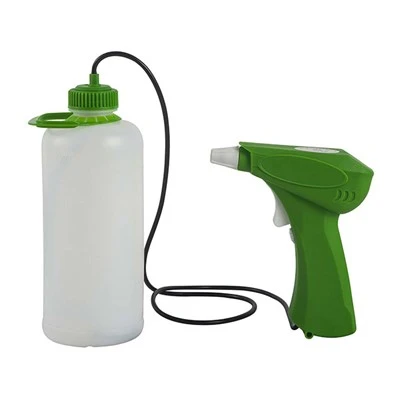
First off, let’s start with the basics: why powder capacity even matters. If you’re halfway through coating a batch of metal parts and your hopper runs dry, you gotta stop, reload, and clean the gun. That’s not just a hassle—it wastes time and powder (powder overspray is pricey, and wasting it cuts into your profit). So matching the right capacity to your job is key.
Let’s talk about the common types of sprayers you’ll run into, because that’s where the numbers actually land. First up: handheld, entry-level sprayers—think the ones a small fabrication shop or a DIY hobbyist might grab for touch-ups or a small project. These usually have hoppers between 1 to 5 pounds (that’s like 0.45 to 2.27 kg, for the folks who use metric). Wait, let’s make that relatable: 1 pound is a bag of coffee beans, 5 pounds is a small bag of dog food. Yeah, that’s how big those are. I’ve seen new guys come in and buy a 1-pound unit because it’s cheap, then complain they’re reloading every 10 minutes on a 50-part run. Trust me, I hear it all.
Next, mid-sized sprayers—this is the sweet spot for most small to medium industrial shops, like those coating bike frames, farm equipment parts, or small furniture. Their hoppers clock in between 10 to 25 pounds (4.5 to 11.3 kg). That’s way better than handhelds because you can do a full rack of parts without stopping. I had a client last month who switched from a 5-pound handheld to a 15-pound mid-sized one—his downtime for reloading dropped by 70%. He was stoked, saved like 2 hours a week just on reloading.
Then there’s the big boys: industrial bulk sprayers. These are for factories cranking out car parts, appliance panels, or giant metal structures. Their hoppers aren’t even just bins—some are connected to bulk powder tanks that hold 50 to 200 pounds (22.7 to 90.7 kg), and some even have centralized systems that feed powder from a big storage bin across the whole spray booth. I know a refrigeration company that uses a 150-pound bulk setup; they run 12-hour shifts without ever stopping to reload the spray gun. No joke, that’s game-changing for high-volume work.
Wait, but hold up—capacity isn’t just the hopper size. A lot of people mix up “hopper capacity” with “usable powder.” Because not all the powder in the hopper gets sucked up by the gun. Some settles at the bottom, especially if you’re working with fine powder, and if the hopper’s shape is off, you might leave 10-15% of the powder unused. That’s a tip I always tell customers: don’t just go by the label number. For example, a 10-pound hopper might only give you 8-9 pounds of usable powder, so factor that in. I design our sprayers with tapered hoppers (not flat bottoms) so we cut that waste—small thing, but it adds up.
Also, what affects capacity? Let’s get a little science here, but keep it simple. The type of powder matters, for one. Fine metal powder (like zinc or aluminum) is denser, so a hopper holds more weight than the same size hopper with a lighter powder, like polyester powder coating. Oh, and your spray pressure—if you’re running too low pressure, the gun doesn’t pull powder as fast, so you might not even be using the full capacity of the hopper. I always suggest testing pressure with your specific powder to get the most out of your sprayer.
Another thing: if you’re doing batch work vs. continuous work. Batch work (like coating 20 parts at a time) might need a mid-sized hopper, but if you’re running a production line 8 hours a day, you wanna go bigger—bulk systems are way better than refilling a hopper 10 times a day. I had a guy who was using three 5-pound handhelds for his production line, and he switched to one 50-pound bulk sprayer. His powder cost per part dropped by 12% because less was wasted, and his output went up 20%. He thought he was saving money on cheap sprayers, but he was actually losing it on downtime and waste.
Wait, let’s address the myth that bigger is always better. I see this all the time—guys come in and buy the biggest sprayer I have because they think it’ll be “more efficient,” but if you’re only doing a small job once a month, that 200-pound industrial sprayer is overkill. It’s heavy, hard to move around, and you’ll have powder sitting in the hopper for weeks (powder can go bad if it’s not stored right—especially if it’s exposed to moisture). So matching capacity to your workload is key. If you’re a small shop, mid-sized (10-25 lbs) is usually the sweet spot; DIY folks or touch-up jobs, 1-5 lbs works.
Let me throw in a real example from last quarter. I had a customer who runs a custom bike shop—they coat frames, forks, handlebars, all that stuff. They were using a 3-pound sprayer, reloading every 2 frames. It took them 10 minutes per frame total, 2 of which were reloading. We suggested a 12-pound hopper sprayer, and now they only reload once a day. Their turnaround time went down, they could take more jobs, and they said they saved enough in 3 months to cover the cost of the sprayer. That’s the kind of win I live for, y’know?
Now, if you’re still not sure what capacity you need, here’s a quick checklist I give all my customers: 1) How many parts do you coat in an average day? 2) Are they small parts (like bolts) or large (like car doors)? 3) Do you have a dedicated spray booth, or are you moving the sprayer around different areas? 4) What’s your budget? Cheap handhelds are $100-$300, mid-sized are $500-$1,500, industrial bulk systems start at $2,000 and up. That gives you a rough idea, no guesswork.
Wait, also, don’t sleep on maintenance. A sprayer with a big capacity is useless if the nozzle is clogged or the air compressor is weak. Make sure your compressor can keep up with the sprayer’s powder flow—if you have a 25-pound hopper, you need a compressor that’s at least 50 CFM (cubic feet per minute) to pull the powder properly. I always tell customers to check their compressor specs before buying a larger sprayer; otherwise, they’ll get frustrated with weak powder feed.
Let’s wrap this up: the powder capacity of a typical sprayer isn’t static—it depends on your use case. Entry-level is 1-5 lbs, mid-range for most small/medium shops is 10-25 lbs, and industrial runs are 50+ lbs (including bulk tanks). But don’t forget usable capacity, powder type, and your compressor setup. And if you’re still on the fence, just hit me up to chat about what you’re working on. I’ll help you pick the right one so you don’t waste time or money on a sprayer that’s too big or too small.

If you’re ready to upgrade or grab your first sprayer, let’s connect to talk through your specific needs—no pressure, just straight advice on what’ll work best for your jobs. No weird sales pitches, just real talk from someone who’s been in this game for years.
Foam Sprayer References
Powder Coating Industry Association. (2022). "Hopper Design and Powder Storage Guidelines for Spray Equipment."
Modern Finishing Magazine. (2023). "Efficiency Metrics for Powder Spray Systems: Downtime and Waste Reduction."
OSHA. (2021). "Workplace Safety Guidelines for Industrial Powder Coating Equipment."
Zhejiang Menghua Sprayer Co., Ltd.
As one of the most experienced powder sprayer manufacturers in China, we have world-leading production equipment and strong manufacturing capabilities. Please feel free to buy advanced powder sprayer for sale here from our factory. For price consultation, contact us.
Address: No.5, Houshi Road, Beicheng Street, Huangyan District, Taizhou, Zhejiang
E-mail: sales@menghua-sprayer.com
WebSite: https://www.menghua-sprayer.com/
