If you’ve ever stood next to a running industrial sintering kiln—those massive, fire-resistant chambers that turn raw metal powders, ceramics, or even advanced battery materials into solid, high-performance parts—you know how precise every detail of its operation has to be. Temperature, atmosphere, dwell time, and gas flow all work in lockstep to ensure the final product meets strict quality standards. But there’s a hidden disruptor that many kiln operators don’t account for until it causes costly delays, bad parts, or even unplanned downtime: electromagnetic interference (EMI). As a sintering kiln supplier with over 15 years of working directly with operators across automotive, aerospace, and advanced materials manufacturing, I’ve seen EMI turn a smooth production run into a nightmare more times than I can count. Today, I want to break down exactly what EMI does to sintering kilns, why it matters more now than ever, and how you can avoid its pitfalls. Sintering Kiln
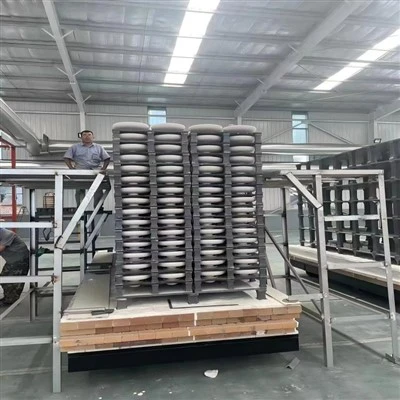
First, let’s ground this in what EMI actually is. Electromagnetic interference is the disturbance that affects electrical circuits due to an electromagnetic field from an external source, or even from other components within the same facility. Common sources around industrial kilns are everything from nearby high-power welding equipment and radio frequency (RF) welders to cell tower signals, variable frequency drives (VFDs) on conveyor systems, and even other kilns in the same production hall. The key thing to understand about EMI is that it doesn’t just “mess with electronics” — it targets the specific control systems that make sintering kilns work, and the results are far-reaching.
Sintering kilns rely on a network of interconnected parts to function. There are the heating elements (most often silicon carbide, molybdenum, or graphite, depending on the material being sintered), the temperature sensors (thermocouples, RTDs—resistance temperature detectors), atmosphere control valves that regulate nitrogen, argon, or hydrogen to prevent oxidation, and programmable logic controllers (PLCs) that tie all these together, adjusting settings in real time to hit precise sintering profiles. Even small deviations in any of these parts can ruin a batch. That’s where EMI comes in.
Let’s start with the most immediate and visible impact: sensor failure. Thermocouples and RTDs are the eyes of the kiln, measuring temperatures that can reach 2,000°C (3,600°F) or higher for advanced materials. When EMI hits these sensors, it creates a noise signal that overlays the actual temperature reading. On a basic level, this can cause the PLC to either overheat the kiln (damaging heating elements, wasting energy, or burning parts) or underheat it (leading to weak, un-sintered parts that fail quality tests). I remember a client in the aerospace sector a few years back who was sintering titanium alloy parts for jet engine components. EMI from a nearby robotic welding line was messing with their thermocouples, making the kiln’s temperature readings jump 50°C in 10 seconds. By the time operators noticed the anomaly, a full batch of 12 high-value parts was ruined. That cost them over $80,000 in materials alone, plus a week of downtime while they had to rework the process.
Even more insidious than sudden, obvious sensor errors are slow, gradual drift caused by low-level EMI. This is the kind of problem that doesn’t trigger an immediate alarm, but it chips away at quality over time. For example, a client making ceramic cutting tools was running their kiln 24/7 for six months, and their product reject rate crept up from 2% to 11% without any clear cause. We traced it to EMI from a new set of VFDs installed on their raw material conveyors. The VFDs emitted high-frequency EMI that was shifting the RTD’s calibration just enough that the kiln’s target temperature was consistently 12°C lower than setpoint. The tool blanks were sintered incompletely, so they were too soft to pass hardness tests. It took three months for the operators to connect the reject rate spike to the new conveyors, because the EMI-induced drift was so gradual it flew under basic quality checks.
Next, let’s talk about control system glitches, specifically with the PLCs and actuation systems. Sintering requires precise atmosphere control, especially for reactive materials. If you’re sintering stainless steel, you need a low-oxygen atmosphere to prevent rust during the process; for tungsten carbide, a mix of argon and hydrogen is critical. EMI can cause the PLC’s logic circuits to misread inputs or send the wrong command to the gas valves. I’ve seen cases where EMI made a kiln’s nitrogen valve close unexpectedly mid-cycle, leading to full oxidation of a batch of automotive valve seats. In another instance, a small RF signal from a nearby cell site caused the kiln’s conveyor to stop halfway through the cooling cycle, leaving parts exposed to high-temperature air and warping them beyond repair. The worst part? Many of these control systems are supposed to have built-in noise filtering, but older kilns (or poorly configured new ones) don’t have the right level of filtering for the high-intensity EMI common in modern industrial facilities.
Heating elements are another often-overlooked component affected by EMI. High-power heating elements draw large amounts of current, but when they’re paired with control systems that can’t handle EMI, the electromagnetic fields generated by the element’s own current can cause harmonic distortion in the power supply. This distortion leads to uneven heating across the kiln chamber, hot spots that burn out sections of heating elements, and increased energy waste. One client running a continuous belt kiln for sintering lithium-ion battery cathode materials was going through 10 sets of molybdenum heating elements a year—three times the industry average. Once we measured EMI levels around their power lines, we found that harmonic distortion from nearby machinery was damaging the element connections, leading to premature burnout. Fixing the power filtering cut their element replacement cost by 65% in six months.
It’s not just product quality and downtime that EMI hits—it’s also compliance and safety. Many industries, especially aerospace and medical devices, require detailed documentation of every sintering run, including exact temperature and atmosphere profiles. If EMI causes the kiln’s data logging system to glitch, missing key data points, that batch can be rejected outright, even if the parts themselves are fine. For medical implants, that’s a critical issue—if a batch of titanium hip implants doesn’t have a verifiable, accurate sintering profile, it can’t be used, putting patient safety at risk and costing manufacturers millions in wasted investment. Additionally, if the kiln’s safety interlocks are affected by EMI, that creates a major hazard. The over-temperature interlock that is supposed to shut down the kiln if temperatures get too high could fail to trigger, leading to fires or even kiln failure. We worked with a metal parts manufacturer a few years back where EMI from a new facility’s refrigeration system caused the kiln’s over-temperature interlock to malfunction, leading to a partial meltdown of graphite heating elements and two days of unplanned shutdown.
Now, you might be thinking: “My kiln has control systems, shouldn’t they already be protected from EMI?” That’s a fair question, and the short answer is that basic EMI protection is standard, but it’s often not enough for the unique environment of a sintering kiln. Sintering kilns operate in harsh conditions: high temperatures, dust, humidity, and powerful electrical loads all compound EMI’s effects. Many standard control systems are designed for general industrial use, not for the specific combination of conditions found in a high-temperature sintering chamber. For example, a standard thermocouple extension cable might have basic shielding, but it’s not rated for the high-temperature environments near the kiln’s heating elements, so the shielding can degrade over time, leaving the cable vulnerable to EMI. Additionally, many facilities don’t conduct regular EMI audits, so they don’t notice that EMI levels have increased as they’ve added more equipment, leading to unexpected failures.
As a sintering kiln supplier, our approach to EMI isn’t just about selling you a kiln—it’s about building systems that are designed to thrive in real-world environments. That’s why every kiln we manufacture includes several layers of EMI protection tailored specifically to sintering operations. First, we use shielded sensor cables that are rated for high temperatures and heavy industrial use, not generic ones that wear out quickly. Our control cabinets are fully enclosed in Faraday cages, which block external EMI from reaching the PLC and other sensitive electronics. We also include advanced power line filtering that eliminates harmonic distortion from the kiln’s own heating systems and external machinery, preventing damage to heating elements and control circuits. For clients working with reactive materials, we add redundant atmosphere control systems that are not dependent on a single PLC, so if one control signal is disrupted by EMI, the backup system takes over automatically.
We also recommend that clients conduct regular EMI audits, not just of the kiln itself, but of the entire facility. Most EMI sources are external to the kiln—new conveyors, welding equipment, RF generators, even adjacent kilns. A quick audit can spot high EMI hot spots before they cause a failure. We also work with clients to develop maintenance schedules that include checking cable shielding, testing interlocks, and verifying sensor calibration, because small EMI-induced degradation adds up over time. I always tell clients that EMI isn’t a problem you fix once—it’s an ongoing part of maintaining a reliable sintering operation, just like checking gas lines or heating elements.
The good news is that with the right design and proactive maintenance, EMI’s effects on sintering kilns are entirely avoidable. We’ve worked with dozens of clients over the past decade who were struggling with EMI-related downtime and quality issues, and after upgrading their kilns with targeted EMI protection, they saw reject rates drop by 70-80%, unplanned downtime cut in half, and energy costs reduced by up to 15%. The key is to not treat EMI as an afterthought, but as a core consideration in kiln design and operation.
If you’re dealing with frequent quality rejects, unexpected downtime, or unexplained issues with your sintering process, EMI is almost certainly a contributing factor. We have decades of experience troubleshooting these exact problems for kiln operators across all industries, and we can help you assess your current system, identify EMI hot spots, and implement solutions tailored to your specific operation. Whether you’re a small job shop or a large-scale manufacturer, we can help you build a sintering kiln that’s reliable, efficient, and protected from the hidden disruptor that is EMI. To discuss your needs and find out how we can support your sintering operation, contact our team today to set up a consultation.
Mobile Energy Saving Rotary Kiln References
- American Society for Metals. (2019). Sintering: Principles, Technology, and Applications (2nd ed.). ASM International.
- IEEE Standards Association. (2021). IEEE Standard for Electromagnetic Compatibility (EMC) – Industrial Process Measurement and Control Equipment. IEEE Std. 61010-2-051-2020.
- Industrial Heating Magazine. (2022). “Hidden Disruptors: EMI in High-Temperature Industrial Processing,” Industrial Heating, vol. 89, no. 4, pp. 32-37.
- Zhang, L., & Wang, H. (2020). Electromagnetic Interference Effects on Sintering Kiln Control Systems for Advanced Ceramic Manufacturing. Journal of Materials Processing Technology, vol. 281, 116672.
- Occupational Safety and Health Administration (OSHA). (2018). Industrial Kiln Safety: Managing Electrical Hazards and EMI Risks. OSHA Publication 3782-18.
Henan Yaxin Kiln Co., Ltd.
Henan Yaxin Kiln Co., Ltd. is one of the most professional sintering kiln manufacturers and suppliers in China. With abundant experience, we warmly welcome you to buy high quality sintering kiln with the latest design from our factory. Good service and punctual delivery are available.
Address: Jixian Industrial Zone, Shangqiu City, Henan Province
E-mail: 1543563178@qq.com
WebSite: https://www.hnyxkiln.com/
