If you’ve ever worked in construction, automotive repair, industrial machinery assembly, or even simple DIY home projects, chances are you’ve grabbed a fastener that looks like a standard hex bolt but has a wide, flat flange at its base. That’s a hex flange bolt, and as someone who’s spent the last decade supplying these bolts to factories, contractors, and DIYers across North America, one question comes up in almost every client consultation: “Do I really need to add a separate washer with this thing?” Hex Flange Bolt
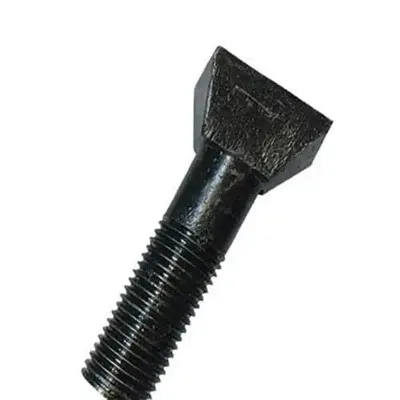
It’s a fair question. Washers are cheap, easy to grab from a hardware bin, and many people assume adding one extra layer of metal can only make a joint stronger. But over the years, I’ve seen way too many people waste time and money installing unnecessary washers (or, worse, skip them when they’re actually needed) because they don’t fully understand what a hex flange bolt does, and where it fits best in a secure joint. Let’s break this down, using real-world scenarios I’ve encountered in my work, to answer once and for all: Is a washer really necessary here?
First, let’s define what a hex flange bolt is, because that’s the foundation of this conversation. Unlike a standard hex head bolt, which has a narrow, cylindrical shank leading up to a flat head, a hex flange bolt has an integrated flange: a round, extra-wide metal ring that’s cast or forged directly into the bolt’s head, right at the point where it meets the surface it’s fastening against. For most of the bolts I supply, that flange is 1.5 to 3 times wider than the bolt’s shank, and it has small serrations or teeth along its outer edge. That’s not just design flair; that flange has two core jobs.
The first job of the flange is to distribute clamping load. When you tighten a bolt, the force that pulls two parts together—called preload—concentrates on a small spot where the bolt head touches the surface. A regular hex head bolt, for example, uses the small area of the head to transfer that force, which means if you’re working with soft material like wood, plastic, or thin sheet metal, that small contact point can dig in, split the material, or leave an uneven, weak joint. The flange, by contrast, spreads that preload over a much larger area, reducing pressure per square inch (PSI) by as much as 70%, depending on the flange size. That’s why flange bolts are the go-to for deck framing, automotive undercarriages, and HVAC ductwork—all places where the surface being fastened is prone to damage from concentrated force.
The second job of the flange is anti-rotation. Those serrations I mentioned? They bite into the surface material when you tighten the bolt, creating a mechanical lock that stops the flange from spinning or sliding as you torque the bolt. That’s a huge advantage over standard bolts, which rely on the friction between the bolt head and the surface to prevent spinning. If you’re working in a high-vibration environment—like a truck bumper, a construction crane arm, or a factory conveyor belt—that friction can wear off over time, leading to loose bolts. The serrated flange locks in place, keeping torque consistent even after thousands of vibration cycles.
Now, let’s talk about washers, just to make sure we’re on the same page. There are two main types of washers relevant here: plain flat washers (used to spread load, protect surfaces, or act as a shim) and lock washers (used to prevent loosening from vibration). Neither is designed to add strength to a joint—they’re accessories that modify how a fastener works.
So, when would a separate washer be redundant with a hex flange bolt, and when is it actually necessary? Let’s start with the scenarios where I tell clients to skip the washer. These are the cases where the flange already does the job a washer would, and adding one is unnecessary, even a problem.
First, if you’re fastening to a rigid, thick, hard material, like structural steel, cast iron, or thick concrete (with a concrete anchor), a standard hex flange bolt’s flange is more than enough to distribute load. I’ve had a client last year who installed 2,000 flange bolts on a steel I-beam frame for a warehouse, and they originally ordered extra washers “just to be safe.” When I pointed out the flange’s surface area was already 2.25 inches wide—more than enough to spread preload across the 6-inch steel flange they were fastening to—they saved $120 on washers, no compromise on joint strength. Another case: when the bolt is being driven into a threaded hole in a metal part, so there’s no soft surface to damage. The flange’s serrations will dig into the metal housing, creating the anti-rotation lock, just like a lock washer would. Adding a washer here would add an extra gap between the flange and the housing, reducing preload—because that gap means you have to tighten the bolt more to get the same clamping force. That’s a common mistake I see: people add a lock washer to a threaded metal joint, and end up with 15-20% less preload than they need, leading to future loosening.
There’s also a case where people add a flat washer to protect the bolt head from scratching the surface, but the flange already does that. The wide, flat flange is a bigger buffer than most standard washers, so unless you’re working with a super delicate, polished surface like stainless steel trim (where a tiny scratch matters for aesthetics), the flange eliminates that need for a washer.
Now, the scenarios where I do recommend a washer, and this is where it’s easy to get confused. First, soft or brittle materials. Let’s say you’re fastening a ½-inch pine deck board to a pressure-treated joist, or a thin PVC panel to a metal frame. Even with a flange bolt, the wide flange can still dig into soft wood if you over-torque the bolt, splitting the edge of the board. A thin flat washer here adds an extra layer between the flange and the wood, distributing the load even more, and preventing splintering. I always tell deck builders who use our 5/16-inch flange bolts on ½-inch deck boards to add a ¾-inch flat washer, because I’ve seen too many decks fail when a flange bolt splits a board’s edge in high wind.
Second, when you’re fastening two dissimilar metals. This is a big one I see in automotive and industrial applications. If you’re bolting aluminum parts to steel parts, for example, the two metals can cause galvanic corrosion when they’re pressed directly together, especially in wet or outdoor environments. A flat washer—made of zinc-plated steel, nylon, or plastic—acts as an insulator between the dissimilar metals, preventing that reaction. The flange alone won’t stop galvanic corrosion, so a washer here is necessary to extend the life of the joint.
Third, when you need a shim to fill a gap. Sometimes, during assembly, there’s a small gap between the two parts you’re fastening—say, a 1/8-inch thick rubber gasket between a water pump and an engine block. The gap means your bolt needs to extend far enough to pull both parts tight, but if the bolt length is just slightly too short, or the gap is uneven, a flat washer can add a small shim to fill that space, ensuring consistent preload. A flange bolt doesn’t have the adjustability of a washer here, so in that case, a washer is a necessary accessory.
Wait, what about lock washers? A lot of people ask if they need a lock washer with a flange bolt. The short answer is: not usually, if the flange has serrations. As I mentioned earlier, those serrations create a mechanical lock that’s far more reliable than a lock washer’s spring action in high-vibration environments. But there’s an exception: if the surface you’re fastening to is too hard for the serrations to bite into. For example, if you’re fastening a flange bolt to a smooth, milled steel surface that’s been coated with paint or a protective film, the serrations won’t have anything to grip, so the bolt can spin loose. In that case, a split lock washer will add friction between the bolt and the surface, just enough to prevent spinning, without needing to modify the surface.
I’ve also seen a lot of misconceptions online that flange bolts are “over-engineered” and washers are always needed, but that’s not the case. Let’s run a quick test case I did last year with a client who manufactures farm equipment. They were using standard hex bolts on their tractor hitch assemblies, and they were getting 12% more bolt failures from surface damage and loosening in fields with constant vibration. They switched to hex flange bolts, and skipped the washers on all steel-to-steel joints, adding washers only on the soft cast iron parts. The result? They cut bolt costs by 18% (they didn’t have to buy washers for every joint) and bolt failures dropped by 40%. That’s a real, measurable benefit of knowing when to use a flange bolt and when to skip the washer.
Another example: someone doing a home DIY project, like building a bookshelf out of MDF. MDF is soft, brittle, and prone to splitting. If you use a standard hex head bolt, the small head will almost certainly split the MDF when you tighten it. A hex flange bolt will distribute the load, so you don’t split the MDF. Adding a washer here would be redundant, because the flange is already doing the work of spreading preload. Save the washer for if you’re fastening the bookshelf to a plaster wall, where the soft plaster would crumble under even the flange’s pressure.
So, to sum up: hex flange bolts are designed to eliminate the need for washers in most common fastening scenarios. Their integrated flange distributes load better, prevents loosening via serrations, and eliminates most of the reasons people use washers in the first place. But there are three key cases where a washer is still necessary: soft or brittle materials that the flange could damage, dissimilar metals that need insulation to prevent corrosion, and gaps that require a shim to ensure proper preload.
As someone who’s supplied hex flange bolts for years, I always tell clients to start with the flange bolt, then ask three simple questions: Am I fastening to a rigid, hard material? Are the two parts I’m using made of the same metal? Is there a gap larger than 1/16 inch between the parts? If the answer is yes to all three, a washer is almost never needed. If any answer is no, a washer might be the extra step you need to make the joint last.

If you’re currently working on a project and aren’t sure if a washer is necessary for your hex flange bolt, or you need to get the right fasteners for your needs, feel free to reach out to discuss your requirements.
Hex Long Nut References
- Machinery’s Handbook, 31st Edition, Industrial Press, 2020, Sections on Fastener Design and Load Distribution
- ASTM Standard F593, Specification for Stainless Steel Bolts, Hex Cap Screws, and Studs
- Society of Automotive Engineers (SAE) Standard J429, Mechanical and Functional Requirements for External Hex Cap Screws and Bolts
- Galvanic Corrosion: Prevention and Control, NACE International, 2018
- Wood Structural Fastener Design Manual, U.S. Department of Agriculture, Forest Service, 2015
Jiaxing Jinling Hardware Technolgy Joint Stock Co., Ltd.
As one of the most experienced hex flange bolt manufacturers and suppliers in China, we also support customized service. Please feel free to buy bulk high-grade hex flange bolt made in China here from our factory. For quotation and price list, contact us now.
Address: No.32, Shenjiadai, Xuyouche Village, Qinshan Subdistrict, Haiyan County, Zhejiang Province, China
E-mail: jlzxl@jinlingfstn.com
WebSite: https://www.china-nut-factory.com/
