If you’ve ever stood at a bulk material handling facility, watched a pipe conveyor snake through a factory, under a roadway, or over uneven terrain, you’ve probably wondered why the belt is shaped like a tube instead of the flat, wide thing you see on standard conveyors. As a supplier of pipe conveyor belts, I talk to operators every week who fixate on obvious factors: belt strength, rubber compound, splice quality. But one detail that often gets sidelined—until it causes a major headache—is belt width. Pipe Conveyor Belt
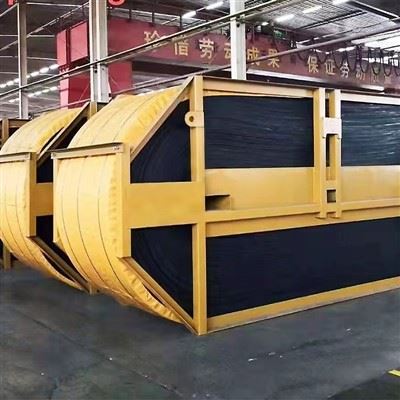
I’ve seen this play out firsthand. Last year, a coal mine in West Virginia installed a 48-inch wide pipe conveyor belt, thinking a wider belt would let them move more tonnage. Six months in, they were fighting daily blockages, excessive wear on the belt edges, and even misalignment that shut down their production line twice. That’s not an edge case; it’s the direct result of ignoring how belt width interacts with every other part of the pipe conveyor system, from the idler rolls that form the tube to the material flow you’re trying to move. Let’s break down exactly how width shapes performance, because getting this right doesn’t just improve efficiency—it saves you tens of thousands in downtime and replacement costs.
First, let’s start with the core function of a pipe conveyor belt: it wraps around itself to form a sealed, cylindrical tube. Unlike a flat conveyor, where width translates directly to load capacity, pipe conveyor width isn’t just about surface area. It’s the starting dimension for the entire tube’s internal diameter. Think of it this way: a wider flat belt, when folded into a tube, will naturally form a larger-diameter pipe. But here’s the catch: the tube’s diameter has to match the material you’re carrying. If you pick a belt that’s too wide for your material, the tube ends up oversized. That sounds like it would make loading easier, right? Wrong. An oversized tube leaves too much empty space around the material. When the belt moves through curves or over inclines, that loose material shifts, clogs the tube’s mouth, and can even spill when you try to unload it. I’ve had a plant manager tell me their oversized pipe belt caused 20 cubic yards of coal to spill onto a highway during a routine transfer—costing them $12,000 in cleanup and lost revenue that day.
Conversely, a belt that’s too narrow for your material will cram everything into a tube that’s too small. For abrasive materials like iron ore or limestone, this creates excessive pressure on the belt’s inner walls. Over time, that leads to faster rubber wear, especially at the points where the belt is bent around the idlers. I worked with a cement plant in Ohio a few years back that used a 30-inch pipe belt for clinker, a hard, hot material. The belt wore through in just 14 months, half the expected lifespan, because the narrow tube compressed the clinker so tightly it scraped the belt’s interior with every rotation. We had to adjust their idler spacing and recommend a slightly wider belt, which extended the wear life to 26 months. That’s a direct impact of width on durability.
Next up: load capacity, which is probably the first thing operators care about. It’s a common misconception that a wider pipe belt automatically holds more material. Let’s do the math here. The volume of material inside a cylindrical tube is calculated as πr²h, where r is the tube’s radius and h is the length of a unit of belt. So if you go from a 12-inch tube diameter (from a 30-inch width belt) to an 18-inch tube diameter (from a 42-inch width belt), the volume doesn’t just increase by 50%—it quadruples. That’s a huge jump, but only if you’re not overloading the tube’s carrying capacity. Pipe conveyors aren’t designed to fill the tube completely; most manufacturers recommend a fill factor of 70% to 80%. Fill factor is the percentage of the tube’s internal volume that’s occupied by material. If you use a wider belt to make a larger tube, even a 75% fill factor will hold more material than a narrower belt, but only if your feed system can deliver material at that rate. I’ve seen operations install a wide belt for high tonnage, only to find their feeders can’t keep up, leaving extra space that leads to spillage and belt mistracking. On the flip side, if you underutilize a wide belt, you’re wasting money on a larger, more expensive belt for no gain in performance. So width here is a balance: match it to your feed rate and material size, not just your desired tonnage.
Then there’s the often-overlooked area of flexibility and bend radius. Pipe conveyors are prized for their ability to navigate tight turns and steep inclines that flat conveyors can’t handle. But a wider belt is stiffer, right? It makes sense: a wider strip of rubber with a woven core will resist bending more than a narrower one. That means a 48-inch wide pipe belt can’t bend as sharply as a 36-inch wide one. If your conveyor route has multiple tight curves (say, a facility that needs to go around existing buildings or avoid underground utilities), a too-wide belt will refuse to form a tight tube at the curve idlers, leading to misalignment, belt tearing, or even total failure. I remember a customer in British Columbia who planned a pipe conveyor to snake around a sawmill. They tried a 44-inch wide belt, but the curves were too tight—they had to replace it with a 38-inch wide belt, which cost them 15% of their load capacity, but let them meet their route’s bend requirements without expensive structural modifications. That’s a key tradeoff: wider belts deliver more tonnage, but narrower ones are better for tight routes. If your project has a fixed path, you can’t just pick the widest belt available; you have to match its flexibility to the required bend radius.
Material characteristics also tie directly to belt width. For small, fine materials like grain or sand, you can go with a wider belt because they flow easily and won’t clog an oversized tube. But for large, lumpy materials like rock or recycled concrete, a wider belt with a larger tube might seem perfect, but you have to check if the lump size fits through the tube. If your largest lumps are 6 inches, a tube with a 10-inch diameter is the minimum you need. A wider belt that creates a 14-inch diameter tube will leave too much space for lumps to shift, but a narrower belt that makes an 8-inch tube will jam at the loading point. I’ve had quarry operators bring me lumps of basalt that were 7 inches across, and they tried a 32-inch wide belt that made a 9-inch tube—every third lump would get stuck, causing the conveyor to back up. Switching to a 36-inch wide belt, which makes an 11-inch tube, eliminated 98% of the jams. That’s not about belt strength or rubber; it’s about width matching the maximum lump size.
Another critical performance factor is wear and tear on the conveyor’s idlers. Pipe conveyors rely on three or five idler rolls arranged in a circle to form the tube. The spacing of these idlers is designed to work with a specific belt width. A wider belt puts more stress on each idler, because the tube is larger and has more material weight pressing on the rolls. If you use a wider belt without adjusting idler spacing, the middle idler can become misaligned, leading to uneven wear on the belt’s outer edges. We saw this at a power plant that used a 42-inch wide belt with standard 12-inch idler spacing. The outer edges of the belt wore through 3 times faster than the inner part, because the idlers couldn’t support the extra width. We recommended reducing idler spacing to 9 inches, which distributed the weight evenly and extended the edge wear life by 18 months. Conversely, a too-narrow belt won’t engage the idlers properly, so the tube doesn’t form uniformly, leading to more friction between the belt and idlers, and faster degradation of both.
Let’s also talk about maintenance and downtime, which operators live and die by. Wider belts are heavier, so they require more power to move—about 20% more than a narrower belt of the same core strength. That means higher electricity bills, which adds up over time. I’ve seen a grain elevator switch from a 36-inch to a 42-inch wide belt to boost tonnage, only to find their power costs increased by 22%, eating up 80% of the extra revenue from higher throughput. On the maintenance side, wider belts are harder to splice when they tear. A splice on a 42-inch belt is twice as big as one on a 24-inch belt, so it takes longer to repair, and downtime is more expensive. If your conveyor runs 24/7, even a 2-hour repair on a wide belt can cost $5,000 in lost production, versus $2,500 for a narrow belt. That’s a hidden cost that many operators don’t account for when choosing width.
Now, I don’t want to make it sound like wider belts are bad—they’re just tools, and they work best when matched to the job. For operations that need high tonnage, flat routes, and fine materials, a wider pipe belt is ideal. For projects with tight curves, large lumpy materials, or space constraints, a narrower belt is the smarter choice. The mistake I see most often is operators picking a belt width based solely on desired tonnage, without considering the full system. That’s why at my company, we don’t just sell belts—we work with you to audit your conveyor route, feed rate, material size, and maintenance schedule before recommending a width. Last quarter, a steel mill came to us with a problem: they were using a 40-inch wide belt for iron ore pellets, and they were experiencing constant blockages and 3 shutdowns a month. We measured their lump size (max 5 inches), their route bend radius (150 feet), and their feed rate (1,200 tons per hour). We recommended a 38-inch wide belt, which reduced the tube diameter by 2 inches, lowered the fill factor just enough to eliminate blockages, and still met their tonnage requirement. They cut their shutdowns to zero in two months, saving an estimated $180,000 a year. That’s the kind of result that comes from understanding how width interacts with every part of the system.
So what should you keep in mind when evaluating belt width for your pipe conveyor? First, don’t chase the widest belt you can find. Start with your material: what’s the maximum lump size? What’s the density? Then look at your route: how many curves, what’s the bend radius? Next, your feed rate: can your feed system deliver enough material to fill the tube to the optimal 70-80%? Finally, factor in maintenance and power costs: a wider belt might cost more upfront, but if it’s the right fit, it will save you far more in the long run. If you’re not sure, don’t guess. Work with a supplier who knows pipe conveyors inside and out, because the last thing you want is to install a belt that seems right on paper, but causes headaches for years.

I’ve been in the pipe conveyor belt industry for 18 years, and I’ve learned that every belt’s performance depends on how well it works with the whole system, not just its individual specs. Belt width is one of those specs that seems simple, but has a ripple effect on every part of your operation—wear, tonnage, downtime, cost. Whether you’re looking to upgrade an existing conveyor or design a new one, getting that width right is the difference between a belt that runs smoothly and one that’s a constant drain on your resources. If you’re facing challenges with your current belt’s performance, or planning a new pipe conveyor project, reach out to us. We’ll walk through your needs, assess your system, and recommend the right belt width to help you operate more efficiently and profitably.
PVG Conveyor Belt References:
- DIN 22102, Conveyor Belts for Bulk Materials, Part 2: Pipe Conveyor Belts, 2018.
- Heintel, T., Pipe Conveyors: Design and Application, Elsevier, 2020.
- CEMA, Conveyor Equipment Manufacturers Association, Pipe Conveyor Belt Design Guidelines, 2021.
- White, D., “Influence of Belt Geometry on Pipe Conveyor Performance,” Journal of Materials Handling, Vol. 35, No. 2, 2019, pp. 45-52.
Alumina Technology (Qingdao) New Materials Co., Ltd.
As one of the most professional pipe conveyor belt manufacturers and suppliers in China, we also support customized service. With abundant experience, we warmly welcome you to buy pipe conveyor belt for sale here and get quotation from our factory. For price consultation, contact us.
Address: No.448, Jiangshan South Road, Huangdao District, Qingdao City, Shandong Province
E-mail: Gloria.zhang@contitech.cn
WebSite: https://www.altechconveyorbelt.com/
