If you’ve ever walked through a busy warehouse, visited a manufacturing floor, or even ordered a piece of furniture that arrived in a neat, stackable crate, chances are you’ve interacted with a wire mesh container—often called a stillage, bin cage, or wire basket. As a supplier who’s worked with these products for years, I’m constantly surprised by how many people don’t realize just how versatile these containers are. They’re not just “metal boxes” for holding parts; their porous structure, stackable design, and durable construction make them ideal for tasks across dozens of industries, from automotive to agriculture. Let’s break down the most common applications, and why a well-made wire mesh container is still one of the most reliable storage and transport tools on the market. Wire Mesh Container

First, let’s talk about manufacturing. This is probably where wire mesh containers get their most consistent use, and for good reason. On a automotive assembly line, for example, you can’t have loose bolts, small brackets, or electrical connectors rolling around—they need to be organized, easy to grab, and safe from damage. Wire mesh containers solve this perfectly. The mesh sides let line workers see exactly what’s inside without opening the lid, so they don’t waste time rummaging through bins. Their sturdy welded steel frames can hold hundreds of pounds of parts, and when a shift ends, you can nest or stack them to save space on the factory floor overnight. I’ve supplied wire mesh containers to several small automotive parts makers over the years, and many of them tell me these bins cut down on lost small parts by 30% or more. That’s a big deal when a single missing clip can stop an entire assembly line. Beyond automotive, electronics manufacturers use them too—for holding circuit boards, semiconductors, and plastic casings. The mesh breathability means no moisture gets trapped, which prevents rust on metal parts and damage to sensitive electronics. Some of our clients also use them for holding raw materials, like sheets of aluminum or plastic resin pellets, so materials are easy to access but protected from dust and debris.
Next up: retail and e-commerce fulfillment. If you’ve ever ordered a shirt from an online store and received it in a standard box, that order was probably pulled from a wire mesh bin in a warehouse. E-commerce and brick-and-mortar retail rely on these containers for storing inventory because they’re modular—they fit on standard pallet racking, which means warehouse staff can organize stock by size, season, or popularity. For example, a clothing retailer might have one bin for small t-shirts, another for medium jackets, and another for winter hats, all stacked on racks for easy picking. The mesh sides let inventory managers do quick cycle counts without unstacking bins—just glance in and count how many items are left. Another perk for retail: these containers are reusable, which cuts down on waste from cardboard boxes and single-use packaging. I’ve noticed a big shift in recent years toward sustainable operations, and many retailers are switching to wire mesh containers specifically because they can be used for years, not just once. Some even use them in their store backrooms, too, for storing excess inventory, so you won’t see a messy pile of cardboard or loose items in a retail stock area.
Agriculture is another industry where wire mesh containers are indispensable, even if it’s less obvious than in a factory. Farmers and agricultural suppliers use these containers for harvesting, transporting, and storing fresh produce like fruits, vegetables, and even nuts. The porous mesh design is critical here—when you pick tomatoes, apples, or berries, you need air circulation to prevent mold and spoilage. Solid plastic or wooden bins trap moisture, but wire mesh lets air flow through, so produce stays fresh longer. We supply a lot of these containers to fruit orchards in the Pacific Northwest, and farmers tell me they reduce post-harvest waste by almost 25% during peak harvest season, when they’re moving thousands of pounds of fruit at a time. They’re also durable enough to handle rough handling on farm trucks, don’t splinter like wood, and won’t get brittle in cold weather like some plastics. Beyond produce, livestock farmers use wire mesh containers for storing feed, hay bale accessories, and even small tools on their farms. Their stackable design is a huge win for farms, where storage space is often limited—you can nest several empty bins together to free up barn space when they’re not in use.
Then there’s construction and heavy industry. Construction sites are messy, with tools, nails, screws, bolts, and even small construction materials like rebar ties or concrete anchors scattered everywhere. Wire mesh containers solve the problem of lost tools and materials on job sites. A framer, for example, can keep all their drills, sockets, and nails in one bin, instead of leaving them scattered across the site where they can get lost or damaged by rain or dirt. The metal construction means these bins can handle heavy use—some are rated to hold 2,000 pounds or more—so they’re strong enough for even the heaviest construction materials. We also supply these containers to scrap yards and recycling centers. Scrap yards use them to sort metal scraps, plastic, and other recyclable materials, since the mesh lets workers see different materials at a glance, and the sturdy frame can hold heavy scrap loads. Recycling centers also use them to store oversized recyclables like cardboard bales, paper, or metal cans, and their stackable design means you can move more materials with fewer trips on a truck.
Another underrated application: healthcare and pharmaceuticals. It might seem surprising to use metal containers in hospitals or labs, but wire mesh containers are actually very common here, especially for storing and transporting medical supplies, sterile equipment, and even small pharmaceutical products. The mesh design makes it easy to sterilize items—they can be placed in autoclaves, and the steam penetrates the mesh fully, so there’s no hidden moisture or bacteria trapped inside. Hospitals use them to organize surgical tools, bandages, gloves, and other sterile supplies, so nurses and surgeons can quickly grab what they need without digging through a bin. Pharmaceutical companies use wire mesh containers for holding raw materials for drugs, as well as finished product packaging, because the metal is easy to clean and resistant to chemicals, which is critical in healthcare settings where cross-contamination is a risk. We’ve supplied these containers to small medical device manufacturers, too, who use them for holding small components like stethoscope parts or sensor components, since the sturdy construction protects delicate parts from damage.
I could go on—wire mesh containers are also used in food processing, for holding ingredients and finished food products; in warehousing for moving pallets of goods; and even in events, for setting up temporary storage for party supplies or equipment. But here’s the thing that many people don’t know: not all wire mesh containers are created equal. A flimsy, cheaply made bin might seem like a good deal at first, but it will bend, break, or trap moisture, leading to lost products or even worker injuries on a job site. That’s why as a supplier, we work with clients to custom-build containers for their specific needs—whether they need a small bin for 50-pound parts, a large one for 2,000-pound pallets, or a bin with a lid for outdoor storage. We also offer options like food-grade coatings for agriculture or food processing, anti-static coatings for electronics manufacturing, and corrosion-resistant finishes for outdoor construction use.
If you’re dealing with storage, transport, or organization in any of these industries, a wire mesh container is almost certainly going to be a better investment than disposable cardboard, flimsy plastic, or unorganized loose items. They’re durable, reusable, space-saving, and versatile enough to adapt to almost any task. If you’re looking to upgrade your storage or transport solutions, I’m here to help. Whether you need standard sizes or custom-built containers to fit your exact needs, we can work with you to find the right option at a price that fits your budget. Reach out to talk through your requirements and get a quote tailored to your business.
Standard Fasteners References
- Industrial Metal Containers Association. (2022). Wire Mesh Storage and Transport Solutions: Industry Applications and Best Practices.
- USDA Agricultural Marketing Service. (2021). Post-Harvest Handling for Fresh Produce: Container Design and Freshness Preservation.
- National Retail Federation. (2023). Sustainable Warehousing: Reusable Storage Solutions for Fulfillment Centers.
- Occupational Safety and Health Administration (OSHA). (2022). Warehouse Safety: Organized Storage and Damage Prevention for Industrial Containers.
- International Society for Pharmaceutical Engineering (ISPE). (2021). Sterile Supply Storage: Design Requirements for Wire Mesh Containers in Healthcare Settings.
Qingdao Yuanyida Industrial and Trade Co., Ltd.
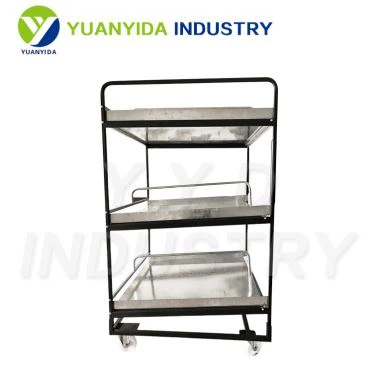
Qingdao Yuanyida Industrial and Trade Co., Ltd. is one of the most professional wire mesh container manufacturers and suppliers in China. Feel free to wholesale high quality and hot selling wire mesh container from our factory. There a wide selection of logistics trolleys at your choice. Also, customized service is available.
Address: Factory Add: No.1 Yunxing Rd, Yinghai Industrial Park, Jiaozhou, Qingdao, CHINA 266300
E-mail: info@qd-yuanyida.com
WebSite: https://www.yydindustry.com/
