As a barrier fence supplier, I get asked this question more times than I can count at trade shows, on customer calls, and even when I’m dropping off samples at local job sites. “Do our fence products qualify for tax credits?” It’s a fair question—small business owners, property managers, and homeowners alike are all looking for ways to cut costs, especially with inflation still lingering in most markets. But the answer isn’t a simple yes or no; it depends on what kind of barrier fence you’re talking about, where it’s installed, and which tax credit program you’re referencing. Let me break this down the way I explain it to my customers, based on years of navigating tax guidelines and working with clients to make sure they get the savings they’re entitled to. Barrier Fence
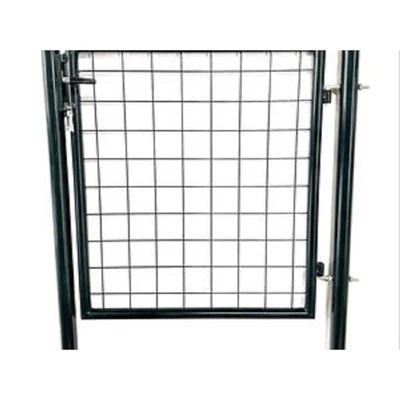
First, let’s clarify what tax credits we’re even talking about here. For commercial properties, the big ones are the U.S. Department of Energy’s (DOE) Commercial Energy Efficiency Tax Deduction, often referred to as Section 179D. For residential properties, there’s the Residential Clean Energy Credit, part of the Inflation Reduction Act (IRA) passed in 2022, plus some state-level incentives that vary wildly. A lot of people mix these two up, so it’s important to split them out.
Let’s start with Section 179D, because that’s the one most of my commercial customers care about. This program is designed to encourage businesses to invest in energy-efficient building systems. For a barrier fence to qualify here, it has to be part of a system that reduces the building’s total energy use by at least 50% compared to a reference building that meets minimum code requirements. Wait, barrier fences—how do they tie into energy efficiency? I used to wonder the same thing, too, until a client of mine installed a wind barrier fence around their industrial warehouse. The fence was made with perforated metal panels that slowed down wind gusts across the building’s loading docks. Before the fence, wind would pull hot air into the warehouse in summer and cold air out in winter, making the HVAC system work 15% harder to maintain consistent temperatures. After installation, the HVAC energy use dropped by 18%—that’s more than enough to hit the 50% energy reduction threshold when you add that savings to other efficiency upgrades the client made.
But not all commercial barrier fences qualify under 179D. The key here is that the fence has to be an energy-efficiency measure, not just a security or safety fence. A chain-link fence topped with barbed wire to keep trespassers out? That’s a security fence, no energy benefit, no credit. The perforated wind barrier I mentioned earlier? That’s different—it’s engineered specifically to reduce heating and cooling load on adjacent buildings, so it falls under the envelope systems category of Section 179D. There’s also noise barrier fences, especially those installed along highways or near commercial properties. Quiet walls, as they’re often called, can reduce the amount of noise that seeps into adjacent office or residential spaces, but wait—does that count for energy credits? Actually, no, unless the noise barrier is integrated with insulation that also helps regulate temperature. I had a client who installed a noise barrier with closed-cell insulation panels; the insulation cut their building’s heat loss in winter, so that part qualified for 179D, while the sound-dampening portion didn’t, but they still got a partial deduction for the energy-efficiency part.
Then there’s the residential side, where the Inflation Reduction Act’s Residential Clean Energy Credit comes into play. This one is a 30% tax credit for qualified residential energy efficiency improvements, available through 2032. A lot of homeowners don’t realize that barrier fences can qualify here too, though it’s a newer part of the program. The IRA expanded the definition of qualifying energy property to include certain perimeter barriers that reduce energy use for homes. Specifically, wind barrier fences installed on the north side of a home in a cold climate, or on the south side in a hot, windy climate, can qualify if they’re designed to reduce heat loss or gain. I worked with a homeowner in Minnesota who installed a solid vinyl wind barrier around their entire backyard; that fence cut their home’s heating bill by 12% in the first winter, and they were able to claim 30% of the fence’s cost as a tax credit. On the flip side, a privacy fence in Florida that doesn’t impact wind flow or temperature regulation? That’s just a privacy fence, no credit.
It’s not just about the type of fence, though. Installation location matters a lot. For commercial barriers, they have to be installed on the property that owns the building, and the energy savings have to be verified by a third party—usually a licensed engineer—who documents the energy reduction. For residential fences, you’ll need to keep receipts for the cost of materials and installation, and make sure the fence is installed in a way that actually provides the energy benefit. My team always advises residential customers to talk to their HVAC contractor before installing a wind barrier, to confirm where it should go to get the maximum energy savings, which makes the credit more likely to pass IRS scrutiny.
I should also mention the common pitfalls here, because so many customers miss out on credits because of small details. One big one is confusing tax credits with tax deductions. A deduction reduces your taxable income, while a credit reduces your tax bill dollar for dollar. That’s a huge difference. For example, if you spend $10,000 on a qualifying fence, a 30% credit means you get $3,000 off your taxes, while a deduction might only save you $2,000 depending on your tax bracket. A lot of my customers ask me to confirm if our fences are on the IRS’s list of approved materials, and while we don’t have a formal list, we work with third-party testing labs to show that our wind barrier panels reduce wind speed by 40-50%, which translates to measurable energy savings— that’s the documentation most customers need to back up their credit claims.
Another pitfall is state-level incentives. A lot of states add their own tax credits or rebates for energy-efficient barrier fences. For example, in Texas, there’s a state energy rebate program that adds an extra 10% to the federal credit for commercial wind barriers installed near industrial facilities. In California, homeowners can get up to $1,500 in additional rebates for solar shade barriers that reduce the need for air conditioning. These programs change every year, so I always tell customers to check their state’s energy office website, or work with a local tax advisor who specializes in energy credits. As a supplier, I try to keep a running list of these programs for the areas I serve, so I can point customers in the right direction.
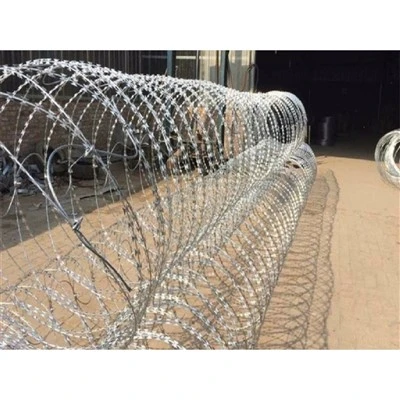
Now, let’s talk about what doesn’t qualify, because that’s just as important. Security fences designed to keep people out—like the barbed wire or razor wire fences around factories—don’t qualify, because they don’t provide any energy benefit. Safety fences, like the temporary construction fences or pool safety fences, are for accident prevention, not energy efficiency, so no credit there. Decorative privacy fences in areas with mild climates where wind doesn’t affect energy use? Probably not, unless you can prove they reduce heat gain from the sun—something I’ve seen a few customers do with lattice-top privacy fences that create shade for outdoor living spaces, which can reduce the amount of heat that radiates into the home.
I also want to share a success story that stuck with me a couple years ago. A small organic farm in Iowa reached out to me because they were struggling with high energy costs for their greenhouse. The wind gusts in Iowa in spring and fall would blow through the greenhouse, raising the heating bill by almost 20% during planting season. We installed a 6-foot-tall perforated wind barrier fence around the west side of the greenhouse, engineered to slow wind down without blocking airflow that’s needed for crop growth. The farm applied for the 179D deduction, worked with an engineer to verify the energy savings, and ended up getting a $4,200 deduction on their taxes that year. They told me that covered almost half the cost of the fence, which made it a no-brainer for them. That’s exactly why I love what I do—helping customers save money while getting a product that solves their problem, whether that’s wind protection or security.
One thing I always emphasize to customers is that tax credits for barrier fences aren’t universal. They’re not a get-out-of-jail-free card where every fence qualifies. But when a fence is designed for energy efficiency, and you have the right documentation to prove it, you can get significant savings. I’ve had customers come to me thinking they can’t get any tax relief, and leave with a few thousand dollars back on their taxes, just because they had the right information.
If you’re a property owner thinking about installing a barrier fence, here’s what I recommend: First, figure out your main goal. Is it security, privacy, wind protection, or noise reduction? If wind protection is part of it, talk to a supplier who offers energy-efficient barrier fencing, not just standard chain-link or wood fences. Second, talk to a tax advisor who’s familiar with energy credits, especially Section 179D for commercial or the IRA credit for residential. They can help you confirm if your fence will qualify, and what documentation you need. Third, get the energy savings verified. For commercial, that’s a third-party engineer; for residential, that might be a simple energy audit from your local utility company.
As a barrier fence supplier, I’ve seen firsthand how these credits can make a big difference for small businesses and homeowners. I’ve also seen too many people install fences that don’t qualify, just because they didn’t do their research. That’s why I always make time to answer questions about tax credits, even if it means taking a few extra minutes on a call to walk a customer through the guidelines. At the end of the day, I want my customers to get the best product for their needs, and the best deal possible.
If you’re considering installing a barrier fence and want to learn more about whether it could qualify for tax credits, don’t hesitate to reach out to my team for a consultation. We can walk you through the different types of fences that qualify, what documentation you’ll need, and even connect you with tax advisors and energy auditors who specialize in this area.
Industrial Wire Products References:
- U.S. Department of Energy: Commercial Energy Efficiency Tax Deduction (Section 179D)
- Internal Revenue Service: Inflation Reduction Act Residential Clean Energy Credit Guidelines
- North American Insulation Manufacturers Association: Energy Performance of Perforated Barrier Fences
- State Energy Program: Residential and Commercial Energy Incentives by State (2024 Edition)
Firmstone (Tianjin) International Limited
Firmstone (Tianjin) International Limited is one of the most professional barrier fence manufacturers and suppliers in China, featured by quality products and good service. Please feel free to buy bulk advanced barrier fence made in China here from our factory. Welcome to contact us for quotation.
Address: 411, Prophet Valley, No.10, Meiyuan Road, Huayuan Industrial District, Xiqing District, Tianjin
E-mail: vivianjia@firmstonewire.com
WebSite: https://www.firmstonefactory.com/
