If you’ve ever held a car door handle that didn’t snap when you shut it, a medical implant that fits snugly and lasts a lifetime, or a bridge that sways gently in wind without breaking, you’ve benefited from material testing that relies on electro-hydraulic servo (EHS) technology. For nearly two decades, I’ve worked in this space—first as an engineer calibrating test frames for aerospace alloys, then as a sales lead for an EHS system supplier, where I’ve helped clients from university labs to automotive giants solve problems that no other testing technology could. What always surprises new partners is how EHS isn’t just another piece of lab equipment; it’s the backbone of testing that makes every product we interact with safer, stronger, and more reliable. Let’s break down exactly how we use EHS in material testing, why it matters, and why it’s still the gold standard 50 years after its introduction. Electro-Hydraulic Servo System
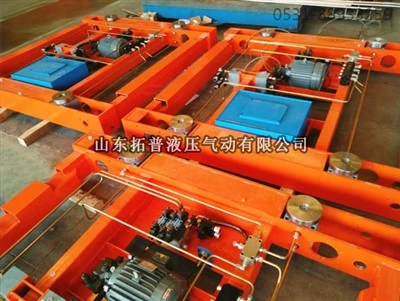
First, let’s get one thing straight: electro-hydraulic servo systems are not the same as the old hydraulic pumps you might see on a construction crane. Those use brute, constant pressure, and can’t deliver precise, dynamic movements. EHS marries two technologies: electrical servo motors, which give programmable, fine-tuned control, and hydraulic actuators, which deliver the massive, smooth force needed to test tough materials like steel, titanium, or reinforced concrete. The magic is in the servo valve— a tiny, precision-built component that adjusts the flow of hydraulic fluid in real time, responding to signals from a computer at rates faster than the blink of an eye. For material testing, that responsiveness is non-negotiable. When you’re pulling a stainless steel rod to its breaking point, or bending a composite aircraft wing thousands of times to simulate years of flight, even a 0.1-second delay in force control can give you data that’s useless, or worse, dangerous.
Let’s start with the most common use case: static material testing. This is the stuff people picture when they think of a tensile strength test—pulling a metal bar until it stretches and snaps, or compressing a concrete cube until it cracks. Early test frames used mechanical screws, which worked fine for simple tests, but they couldn’t hold a force perfectly steady for hours at a time. If you’re testing a material for a bridge bearing, for example, you need to apply a constant load of 100,000 pounds for 72 hours straight to see if it creeps, deforms, or fails over time. Mechanical systems would drift, their accuracy dropping by as much as 5% after a few hours, which might lead an engineer to reject a perfectly good bearing or approve a faulty one. EHS systems? We can hold that 100,000-pound load within 0.5% of accuracy for days on end. That’s not a guess—it’s real data our clients at civil engineering firms rely on to get projects approved by regulatory bodies like AASHTO (American Association of State Highway and Transportation Officials). Last year, we worked with a team testing bridge girders for a new highway in Texas; their old mechanical test frame gave inconsistent creep data, so they switched to our EHS system and cut their test time by 30% because they no longer had to repeat failed tests due to inaccurate load control.
But EHS really shines when we move past static tests to dynamic testing—where materials are subjected to forces that change rapidly, just like they would in real life. Think about car crash tests, or simulating the vibrations a jet engine part experiences during takeoff and landing. Mechanical systems can’t handle that level of dynamic movement; they’re too rigid, too slow, and can’t adjust to changing loads on the fly. EHS, though, can produce waveforms—shapes of force over time—that match almost any condition you can imagine. For example, fatigue testing is one of the most common applications for EHS. Fatigue is what happens when a material is subjected to repeated stress, even if that stress is way below its ultimate strength. A car suspension part might only last 10,000 miles in real life, but a lab test needs to simulate the equivalent of 10 years of driving on potholed roads, 24/7, in a matter of weeks. EHS can apply a dynamic load that mimics the exact frequency and amplitude of those road vibrations, adjusting in real time if the material starts to deform slightly. Without that precision, you’d either test a part to break too early, leading to unnecessary costs, or miss a flaw that would cause it to fail prematurely in the field. I remember a client in the automotive industry a few years back who was having issues with brake calipers failing under extreme conditions. They used an EHS system to simulate 1 million brake applications, each at different temperatures and force levels, and found that a tiny flaw in the caliper’s casting was only visible when the load changed at a specific rate—something their old test equipment couldn’t replicate. That small fix saved them over $2 million in warranty claims that year.
Another underrated use of EHS in material testing is advanced testing for composite materials, which are everywhere now—from carbon fiber bike frames to Boeing 787 wings. Composites are anisotropic, meaning their strength changes depending on which direction you pull or bend them. Testing composites requires applying multi-axial loads: pulling along the length, bending up and down, twisting side to side, all at the same time. That’s a level of control no other technology can match. EHS systems can have up to 16 independent actuators, all synchronized to apply different loads at different rates, exactly as the material would experience in use. For the wind energy sector, which relies on giant composite turbine blades, this is critical. A turbine blade has to withstand wind forces, gravitational pull, and even lightning strikes, all while rotating 20 times a minute. Last year, we supplied an EHS system to a wind energy research lab in Denmark to test 80-meter turbine blades. The system applied dynamic loads in 6 different axes, simulating 20 years of wind conditions in just 6 weeks of testing. Without EHS, they couldn’t have measured the subtle delamination (separation of composite layers) that happens deep inside the blade, which would cause it to fail mid-operation. That’s not just a win for the lab—it’s a win for every homeowner who gets their electricity from wind.
Let’s also talk about why EHS is still evolving, even after decades of use. A common misconception is that EHS is old technology, replaced by electric servo systems. But electric systems have a big flaw: they can’t deliver the same level of force-to-weight ratio as EHS. If you need to apply 200,000 pounds of force to test a concrete beam, an electric actuator would be massive, expensive, and slow, while an EHS actuator is compact, powerful, and responsive. That’s why EHS is still the standard for high-force testing, from aerospace to civil engineering. We’ve worked hard over the years to address its weaknesses, too: early EHS systems were maintenance-heavy, with hydraulic fluid needing frequent changes and servo valves that required regular calibration. Now, with self-monitoring sensors and predictive maintenance software, our EHS systems alert users to a potential valve issue or fluid leak before it causes a test to fail, cutting downtime by 40% on average for our clients. We’ve also integrated with modern data analysis tools, so test results are automatically logged, compared to industry standards, and shared in real time with engineers, no manual data entry needed.
Of course, no technology is perfect, and EHS requires trained personnel to operate it correctly. A poorly calibrated EHS system can give bad data, just like any other testing equipment. That’s why as a supplier, we don’t just sell you a machine—we provide training, on-site calibration, and 24/7 technical support. I’ve seen too many labs buy an EHS system and struggle to use it because they didn’t have the expertise to set up the test waveforms correctly. Our team works with clients from the first test design to the final report, making sure they get the data they need, on time, and accurately. For a small university lab, that might mean teaching grad students how to set up a tensile test for a new biodegradable plastic. For a global aerospace manufacturer, that might mean supporting a test of a new titanium engine component that needs to meet FAA regulations.
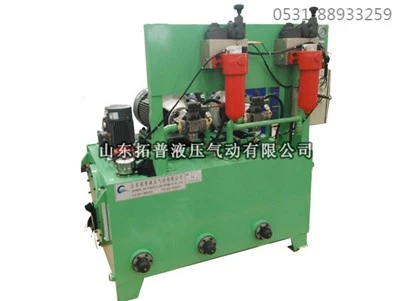
If you’re involved in material testing—whether you’re an engineer designing new parts, a lab manager running tests, or a regulatory professional ensuring products meet safety standards—you know how much depends on accurate, reliable test data. Electro-hydraulic servo technology isn’t just a tool; it’s the foundation of that data. It’s the reason a car seat belt doesn’t snap in a crash, why a hip implant lasts 20 years, why a wind turbine blade doesn’t break in a storm. For nearly 20 years, I’ve watched EHS evolve from a niche technology used only in big aerospace labs to a workhorse across every industry that relies on strong, safe materials.
Electro-Hydraulic Servo System If you’re looking to upgrade your testing capabilities, or if you’re dealing with inconsistent test data that’s holding back your product development, we’d be happy to connect with you to discuss how an electro-hydraulic servo system can solve your specific needs. Whether you’re testing static strength, fatigue life, multi-axial composite performance, or any other material property, our team has the expertise to design a system that fits your budget and your testing goals. We work with clients of all sizes, from small startup labs to multinational corporations, and we’re committed to delivering solutions that are precise, reliable, and built to last.
References
- ASTM International. Standard Test Methods for Tensile Properties of Metallic Materials. ASTM E8/E8M-21, 2021.
- American Association of State Highway and Transportation Officials (AASHTO). Standard Method of Test for Static Load Test of Bridge Decks and Bridge Superstructures. AASHTO TP 81-14, 2014.
- Fatigue and Fracture of Composites. ASTM D3479/D3479M-19, 2019.
- Doebelin, E. O. Measurement Systems: Application and Design. McGraw-Hill, 2004.
- Wind Turbine Blade Testing Guidelines. International Electrotechnical Commission (IEC) 61400-23, 2014.
Shandong Huate Tuojiang Intelligent Equipment Co., Ltd.
As one of the leading manufacturers and suppliers of electro-hydraulic servo system in China, we’re featured by quality products and good price. Please rest assured to buy advanced electro-hydraulic servo system for sale here from our factory. Welcome to view our website for more information.
Address: Sino-German Cooperation Industrial Park, Licheng District, Jinan City, Shandong Province
E-mail: sdhttj01@163.com
WebSite: https://www.httjznzb.com/
