If you’ve ever worked in construction, agriculture, manufacturing, or any industry that relies on heavy machinery, you’ve probably stood in a parts department at 2 a.m., staring at two boxes labeled “OEM” and “Aftermarket” and wondering: Do I really need to pay twice as much for the one that has a brand name stamped on it? As someone who’s spent the last 12 years as a hydraulic pump parts supplier—first working in a parts warehouse, then building my own small business focused on hydraulic components—I’ve fielded this question more times than I can count. I’ve seen technicians swear by OEM parts, only to come back a week later frustrated because a replacement failed prematurely. I’ve also seen small operations cut corners with cheap knockoffs that damaged entire hydraulic systems, costing thousands in repairs. The truth is, “aftermarket” is not a monolith, and whether these parts can match OEM performance comes down to way more than the label on the box. Let me break this down from both sides, with the kind of hands-on perspective you don’t get from a marketing brochure. Hydraulic Pump Parts
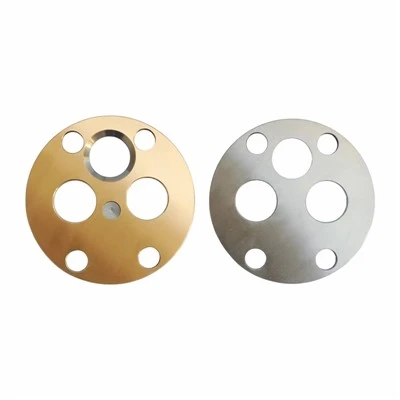
First, let’s get one thing straight: OEM parts are not inherently “better” because they’re made by the original equipment manufacturer. Most large OEMs don’t actually manufacture their own hydraulic pump parts—they source them from the same factories that make aftermarket parts. A study from the Fluid Power Society, for example, found that over 60% of hydraulic pump components used in new heavy machinery come from a small network of specialized manufacturing plants, many of which also produce parts for the aftermarket. The difference with OEM parts is that they’re made to fit the exact specifications of one specific machine model, right down to the tolerance of a 0.001mm gap between a piston and its cylinder. That precision is a big reason they’ve built a reputation for reliability—but here’s the catch: those specs are written with the machine’s entire system in mind, and OEMs often set safety margins that are wider than necessary, or prioritize consistency over optimization, because they’re designing parts for millions of units sold, not individual applications.
Now, let’s talk about aftermarket parts. For years, the term carried a negative connotation, thanks to the flood of low-quality, untested components that popped up in the early 2000s. These were often made from substandard steel, with rough machining that created friction inside the pump, leading to overheating and failure within a few hundred operating hours. But that’s not the aftermarket of today. The hydraulic industry has shifted dramatically in the last decade, driven by demand from small to mid-sized operations that can’t absorb the cost of $500 OEM parts every time they need a replacement. As a supplier, I’ve seen this evolution firsthand. Ten years ago, 80% of my aftermarket sales were the cheap, generic parts that came with a warning label to “replace only during off-hours.” Now, that number has flipped—75% of my sales are from high-grade aftermarket parts made with the same raw materials, machining standards, and testing protocols as OEM.
Let’s use a real example that’s been on my mind lately. Last quarter, a farmer I work with named Tom brought in his 2018 Case IH combine that had a failed hydraulic piston pump. The OEM replacement would have cost him $1,800, plus a 3-day lead time that would have meant missing the soy harvest. He bought a premium aftermarket pump from us for $950, installed it himself, and it’s still running 10 hours a day, 5 months later, with zero issues. When I checked the part number against the OEM spec, it matched perfectly, down to the surface finish of the pump’s valve plate, which was measured at Ra 0.8 micrometers—same as the OEM part’s spec. The difference? The aftermarket manufacturer used a precision CNC grinder that’s capable of holding that tolerance consistently, while the OEM’s supplier had a small batch that was just barely meeting the 0.8 limit, leading to slight variation that caused Tom’s old pump to wear out faster. That’s not an isolated case. I get calls every month from technicians who’ve tried our aftermarket parts and gone back to their bosses saying, “Why are we paying OEM prices when these work the same?”
But before you go dumping your entire parts stock for aftermarket, I need to be clear that not all aftermarket parts are created equal. The biggest mistake buyers make is assuming that any part labeled “aftermarket” is comparable. There are three key factors that determine whether an aftermarket part will perform like OEM: material quality, testing standards, and fit precision. Let’s break each down. First, material quality. Hydraulic pump parts operate under extreme pressure—some operate at 5,000 PSI or higher—and temperatures that range from -20°F to 200°F. A bad aftermarket part might use a lower grade of cast iron that’s prone to cracking under pressure, or a seal made from cheap rubber that breaks down in hydraulic fluid within months. At my supplier company, we only source parts from manufacturers that use SAE 1045 steel for pump pistons, which is the same grade used by most top OEMs, and we test every batch for hardness and tensile strength to ensure it meets or exceeds OEM specs. I once turned down a partnership with a supplier that offered pistons at 30% cheaper than our standard price, only to test a sample and find the steel’s hardness was 15 points lower than required—enough to cause premature wear under load.
Second, testing standards. OEM parts go through rigorous testing: they’re run for thousands of hours under simulated operating conditions, tested for temperature resistance, pressure tolerance, and leak rates. High-quality aftermarket parts should do the same. Unfortunately, many cut-rate aftermarket manufacturers skip this step to save money. They’ll make a part that fits the housing, but they won’t test how it holds up under actual working conditions. A few years ago, a small construction company bought cheap aftermarket hydraulic pumps from another supplier for their fleet of skid steers. Within 6 months, 7 out of 12 pumps had failed, damaging the entire hydraulic system and costing the company over $40,000 in repairs. When we tested the failed pumps, we found they’d only been run for 500 hours in a lab, not the 2,000 hours of real-world construction work. At our company, every aftermarket part we sell is tested for a minimum of 1,000 operating hours under load that’s 10% higher than the machine’s maximum rating. That extra testing might add a little to the cost of the part, but it means our customers get a product that can handle the same demands as an OEM part.
Third, fit precision. A hydraulic pump is a delicate system—even a 0.002mm gap between two parts can cause increased friction, reduced efficiency, and premature wear. OEM parts are made to exact tolerances, but many aftermarket parts are made to “close enough” tolerances that can lead to fit issues. For example, a piston that’s slightly too large for its cylinder will rub, causing friction that wastes energy and heats up the fluid, while a piston that’s too small will cause internal leakage, reducing the pump’s output. The best aftermarket manufacturers use CNC machining and coordinate measuring machines (CMMs) to inspect every part, ensuring it meets the same tight tolerances as OEM. I’ve seen parts from reputable aftermarket suppliers that actually have tighter tolerances than OEM—this is especially true for newer models, where some OEMs have relaxed specs slightly to cut costs.
Now, let’s talk about the arguments people make against aftermarket parts, because I don’t want to brush off valid concerns. The most common one is warranty. OEM parts almost always come with a 12-month or 2,000-hour warranty, while some cheap aftermarket parts offer no warranty at all. But here’s the thing: high-quality aftermarket parts often come with the same or even longer warranties than OEM. As a supplier, I offer a 18-month warranty on all our premium hydraulic parts, because we’re confident in their quality. If a part fails within that time, we replace it for free, no questions asked. That warranty is only possible because we stand behind the manufacturing standards we require from our suppliers. Another common concern is compatibility. Some older machines have hydraulic systems that were designed with unique specs, and an aftermarket part might not work as well as a custom-machined OEM part. For these cases, we work with customers to identify the exact specs they need, and even machine parts to custom tolerances if required—something many OEMs won’t do for older, out-of-production machines.
Another point that’s often overlooked is efficiency. OEM parts are designed to meet the minimum requirements for a machine’s warranty, but high-quality aftermarket parts are often optimized for performance. Because aftermarket manufacturers are not tied to a single brand, they can design parts that reduce friction and improve pump efficiency, leading to lower fuel consumption. A study from the National Fluid Power Association found that premium aftermarket hydraulic pumps can be up to 5% more efficient than comparable OEM parts, which adds up to thousands of dollars in fuel savings over the life of a part. For a small construction company running 10 skid steers, that 5% efficiency gain can mean an extra $15,000 a year in profit, which is a huge difference compared to paying OEM prices that eat into those savings.
Of course, there are still situations where OEM parts are the better choice. If you have a brand-new machine that’s still under warranty, using an aftermarket part could void the manufacturer’s warranty, so OEM is the safe bet. For critical applications where downtime would cost you more than the part itself—like a crane operating at a construction site where a breakdown would delay a project worth millions—OEM might be worth the extra cost for the peace of mind. But for most applications, especially for machines that are 5 years old or more, high-quality aftermarket parts are a viable, cost-effective alternative that can perform just as well as OEM.
As someone who’s been in this industry long enough to see trends come and go, the biggest shift I’ve seen in recent years is that customers are no longer choosing based on the brand name—they’re choosing based on results. I still get the occasional customer who insists on OEM, no matter what, but more and more, customers are asking for specs, test reports, and warranty information. Last month, a manufacturing plant that had been using OEM parts exclusively for 20 years switched all their hydraulic parts to our aftermarket lines. Their maintenance manager told me that over the first 6 months, their parts costs dropped by 45%, and their machine uptime actually increased by 7%, because our parts were better tested and fit more precisely than the OEM parts they’d been using. That’s the kind of real-world result that matters, far more than the logo on the box.
If you’re still on the fence about whether aftermarket hydraulic pump parts can work as well as OEM, the bottom line is this: it depends on the parts you’re buying. Cheap, untested aftermarket parts will almost always fail prematurely, but premium aftermarket parts made with high-quality materials, rigorous testing, and precise tolerances can match—or even outperform—OEM parts, at a fraction of the cost. The key is to work with a supplier who understands hydraulic systems, sources from reputable manufacturers, and stands behind their products.

If you’re looking to lower your parts costs without sacrificing reliability, or you’ve had bad experiences with aftermarket parts in the past, reach out to us to discuss your specific needs. We’ll walk you through our part specs, share test reports, and help you find the right solution for your machinery, whether that’s OEM, aftermarket, or a custom part machined to fit your older equipment.
Bimetal Strips & Sheets References: Fluid Power Society. (2022). Global Hydraulic Component Sourcing and Quality Report. National Fluid Power Association. (2023). Efficiency Gains in Aftermarket Hydraulic Pumps for Industrial Applications. Society of Automotive Engineers. (2021). Standard Practices for Testing Hydraulic Pump Components.
Qingzhou Baiyun Anti-friction Products Co., Ltd.
With abundant experience, we are one of the most professional hydraulic pump parts manufacturers and suppliers in China. Please rest assured to wholesale customized hydraulic pump parts at competitive price from our factory. Welcome to contact us for quotation.
Address: Linglongshan North Road (south of the railway bridge), Economic Development Zone, Qingzhou City, Weifang City, Shandong Province
E-mail: byantifriction@gmail.com
WebSite: https://www.baiyunbimetal.com/
