If you’re an engineer, facility manager, or design lead navigating industrial motor specifications, you’ve probably typed “MV Motors torque output” into a search bar more times than you can count. As someone who’s worked with MV Motors for 12 years—supplying motors to factories, power plants, and material handling operations across North America—I can tell you the answer isn’t a single number. It depends on so many variables, I’ve had to rewrite torque calculations for clients at 2 a.m. more than once because they misaligned their motor’s application with their load requirements. MV Motor
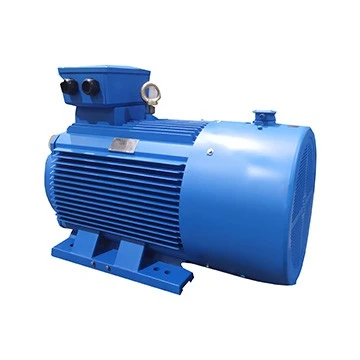
Let’s start with the basics: MV Motors, or medium voltage motors, run on 1kV to 35kV (per NEMA and IEC standards), which puts them in a different category from small low-voltage motors (under 1kV) and high-voltage generators. Torque, simply put, is rotational force—the “oomph” a motor needs to start a load (called starting torque) and keep it moving under constant stress (pull-up torque) or during sudden spikes (breakdown torque). For MV Motors, torque isn’t a one-size-fits-all figure; it’s tailored to the application that dictates the motor’s design.
First, let’s break down the core torque categories for MV Motors, because you can’t talk about output without defining which torque we’re referencing. Starting torque (also called locked rotor torque, LRT) is the maximum torque the motor produces when it’s first turned on, before the rotor starts spinning. For most standard induction-type MV Motors—the most common type we supply for fans, pumps, and conveyors—starting torque ranges from 150% to 300% of the motor’s rated full-load torque. Wait, that’s a range, not a number—here’s why. If you’re powering a centrifugal pump, which has a soft start (low load until it builds pressure), you don’t need high starting torque, so we typically spec motors with 150–200% LRT, which keeps costs down. But if you’re driving a belt conveyor that’s been stationary for 8 hours, or a crusher with compacted material, you need that extra kick to overcome static friction. For those applications, we supply MV Motors with 250–300% LRT, sometimes even higher for heavy-duty mining or processing equipment.
Next, full-load torque (FLT) is the torque the motor produces to run at its rated speed, which is where most applications operate 95% of the time. Calculating full-load torque is straightforward, but it’s easy to miscalculate if you skip a key variable. The formula is FLT = (5252 × Horsepower) / Rated Speed. Wait, let’s make that real: a 100HP MV Motor running at 1800 RPM (synchronous speed for 60Hz systems) would have FLT of ~291 lb-ft. But if that same motor is 500HP, running at 1200 RPM, FLT jumps to ~2188 lb-ft. Does that mean bigger HP equals more torque? Not exactly—speed plays a huge role here. A high-speed MV Motor (3600 RPM, for example) will have lower torque than a low-speed motor of the same HP. That’s why we can’t just say “a 200HP MV Motor has X torque”—we need to know speed first. Pull-up torque, the torque between starting and full speed, is another key number: for standard induction motors, it’s usually 100–150% of FLT, and it’s critical for loads that accelerate gradually, like large fans. If your pull-up torque is too low, the motor might stall mid-acceleration, which is a nightmare for plant operations.
Then there’s breakdown torque, the maximum torque the motor can produce without stalling or dropping speed. For MV Motors, this is a safety net—usually 250–350% of FLT. Breakdown torque matters for applications that experience sudden load spikes, like a conveyor that jams, or a pump that hits a pressure surge. If the motor’s breakdown torque is too low, it will trip on overload protection, leading to unplanned downtime. As a supplier, we work with clients to size breakdown torque correctly; I’ve had a client who tried to use a standard MV Motor for their crusher, and the breakdown torque was too low—resulting in 3 unplanned outages in a month. We swapped it for a heavy-duty model with 320% breakdown torque, and they haven’t had an issue since.
Now, let’s get into what actually determines torque output for the MV Motors we supply. First, motor type: induction motors are the most common (over 80% of the MV Motors we sell), and their torque is tied to rotor design—deep-bar rotors give higher starting torque, while squirrel-cage rotors offer lower starting torque but higher efficiency. Then there’s design class: NEMA design B motors (standard) have 150–200% LRT, design C motors have 200–250% LRT for medium-starting-torque loads, and design D motors have 250–300% LRT for high-starting-torque applications. That’s a key differentiation for our sales team; we always ask clients to specify their load type so we can match the design class.
Voltage also plays a role, but not how you might think. Higher voltage motors don’t directly mean higher torque, but they do allow for more efficient power delivery, which supports consistent torque output under heavy loads. For example, a 4160V 200HP motor will deliver the same full-load torque as a 2300V 200HP motor, but the 4160V model will lose less power to heat when running near its limit, so its torque stays steady longer. That’s why for facilities with long power runs or large central motors, we recommend higher voltage MV Motors—they maintain torque better than low-voltage alternatives.
Size is another factor, but again, paired with speed. A 500HP 1800 RPM MV Motor will have ~1455 lb-ft of FLT, while a 500HP 900 RPM motor (slower, for heavy-duty loads) will have ~2910 lb-ft of FLT. That doubling of torque for half the speed is a fundamental motor characteristic, and it’s why low-speed MV Motors are so popular for mining, marine propulsion, and large compressors—they deliver more rotational force without needing extra horsepower.
I should also clarify common misconceptions I hear from clients all the time. First: “More HP means more torque.” Not if speed drops. If you have a 100HP 3600 RPM motor vs. a 100HP 1800 RPM motor, the slower one has twice the torque, same HP. Second: “All MV Motors have the same torque.” Nope—we’ve had clients switch from a cheap import MV Motor to a heavy-duty model from our line, and their torque output was 15% higher at full load, even with the same HP rating. Quality materials (like thicker stator laminations, better rotor bars) prevent torque loss from heat and wear, which is why we prioritize US-made components for the motors we supply. Third: “Torque only matters for starting.” Wrong—even constant-load applications need consistent torque. A pump running 24/7 at 80% of its load will lose torque over time if the motor is mismatched, leading to higher energy bills and premature failure.
So, to answer the question “What is the torque output of MV Motors?”—the short answer is: it depends on the motor’s design, HP, speed, and application. But as a supplier, we don’t just give a number; we work with clients to spec the exact torque they need. For example, last quarter we supplied a 500HP 1200 RPM NEMA Design C MV Motor to a grain processing plant. Their load was a grain conveyor that needed 2200 lb-ft of starting torque to move wet, heavy grain after downtime, and we matched that with 2400 lb-ft of LRT, 1300 lb-ft of FLT, and 3500 lb-ft of breakdown torque to handle occasional jams. That motor has been running 12 hours a day for 6 months without a single overload trip, which is exactly what we aim for.
If you’re still trying to nail down the right torque for your operation, the worst thing you can do is go by generic specs. Too low a torque, and you’ll deal with stalling, downtime, and potential equipment damage. Too high a torque, and you’re overspending on a motor that doesn’t need that extra oomph. We’ve helped hundreds of clients avoid both mistakes by walking through their load requirements—static load, peak load, speed, operating hours, and even power supply conditions—to spec the perfect MV Motor for their needs. Whether you’re replacing an old motor that keeps failing, designing a new line for your facility, or just curious about how torque impacts your operations, we can break down the numbers and find the right fit.
Don’t guess at your motor’s torque requirements. Reach out to us to discuss your specific application, and we’ll help you select the MV Motor that delivers the exact torque output you need to keep your operations running smoothly.
Starters & Drivers References
NEMA Standards Publication MG 1-2021: Motors and Generators
IEC 60034: Rotating Electrical Machines
Industrial Motor Application and Selection Guide, Electrical Construction & Maintenance Magazine, 2022
Xian Putai Electric Motor Equipment Co., Ltd.
Putai Electric Motor Equipment Co., Ltd. is one of the most professional mv motor manufacturers and suppliers in China, also supports customized service with low price. Welcome to buy advanced mv motor in stock here from our factory. If you have any enquiry about quotation, please feel free to email us.
Address: No.188 Liuhe Road Yangzhou Jiangsu Province, China
E-mail: sales@putaimotor.com
WebSite: https://www.putaimotor.com/
