If you’ve ever taken a deep breath on a smoggy day, filtered coffee without grit at the bottom of your mug, or kept your drinking water safe while camping, you’ve likely interacted with non-woven fabric for filtration—and maybe didn’t even notice. For years, I’ve supplied this material to hospitals, food and beverage makers, and environmental tech startups, and the question I get most often is, “What makes non-woven fabric so much better than woven or even plastic filters?” It’s a fair ask, and the answer boils down to three things: structure, customization, and real-world performance that beats many traditional filtration materials for both small-scale and industrial uses. Non Woven Fabric
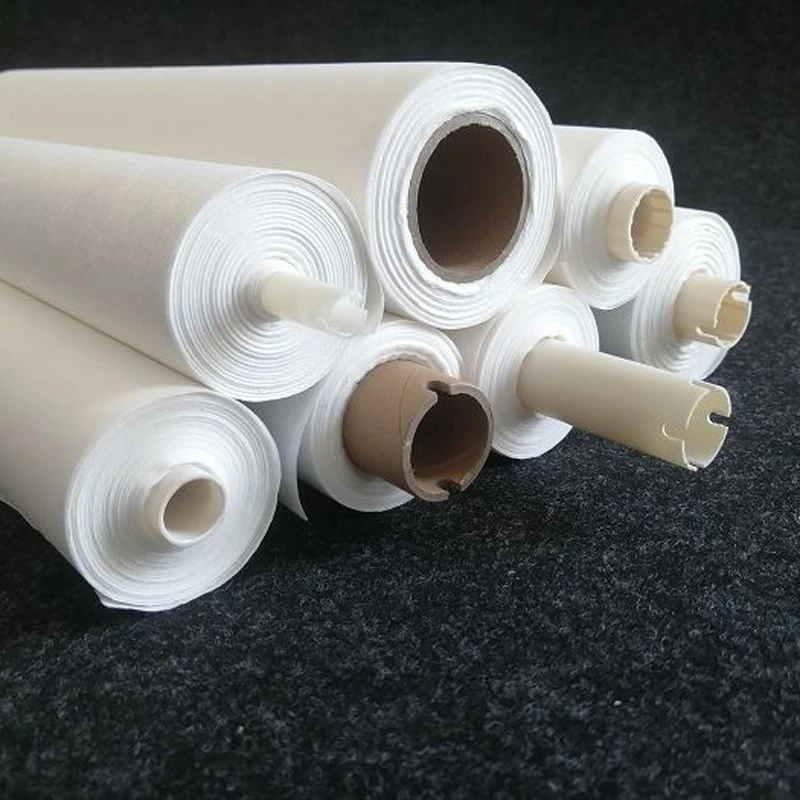
Let’s start with the basics, because not everyone I work with is a chemical engineer or a plant manager. Non-woven fabrics are made by bonding fibers together mechanically, thermally, or chemically, rather than weaving or knitting them into a pattern like cotton or polyester sheets. For filtration, that structure is a superpower. Unlike woven fabrics, which have consistent gaps between threads, non-woven fabrics can have pores that are tiny, random, and perfectly tuned to catch different particles without letting them clog right away. Woven filters, for example, often have a uniform pore size that acts like a sieve—if a particle is a hair smaller, it slips through, and if it’s just a bit bigger, it gets stuck on the surface and blocks dozens of surrounding pores. Non-woven’s random fiber network creates a “depth filtration” zone: particles get trapped inside the layers of fibers, not just on top, which means the filter lasts longer and works better over its lifespan.
That depth filtration is why non-woven fabric is the go-to for so many applications I supply. Take hospital and lab settings: we make non-woven filters for surgical masks, sterile air vents in operating rooms, and even the membranes that filter blood during dialysis. For dialysis, the filter needs to catch waste particles from blood—things as small as 0.01 microns—without letting red blood cells pass through. Woven or plastic membranes can’t do that without being too rigid, but non-woven fibers can be spun to a diameter of just a few hundred nanometers, creating a tight, flexible network that’s strong enough to handle repeated use without tearing. I’ve had a pediatric nurse tell me that our non-woven mask filters don’t cause the dry, irritated eyes some other masks do, because the fabric breathes better than plastic film filters. That’s a small detail, but it matters for frontline workers who wear masks for 12-hour shifts.
Another big use is industrial water treatment. Last year, I worked with a municipal water utility that was upgrading its pre-filtration system to remove sediment and algae before the water goes through reverse osmosis (RO) membranes. Before, they were using sand filters that needed backwashing every 48 hours, which used thousands of gallons of water a day and added extra maintenance costs. They switched to our polypropylene non-woven filters, and the backwash cycle went up to 10 days. The non-woven fabric’s pore structure catches the larger sediment and algae right in the depth layers, so the RO membranes don’t get clogged as quickly. The utility told me they saved over $15,000 a year on water and maintenance—all from switching to a material that’s cheaper to produce than sand filters and easier to replace.
Customization is another reason non-woven stands out. Woven fabrics have fixed fiber types and pore sizes, but non-woven can be tailored almost exactly to a specific need. If a customer needs a filter for coffee that catches fine coffee grounds but lets oils through for a rich flavor, we can adjust the fiber blend: mix polyester for strength with cellulose for absorbency, and tune the pore size to 20 microns. If they need a high-temperature filter for industrial fumes, we can use fiberglass fibers that withstand 500°F and keep pores stable even when hot. I once worked with a craft brewery that wanted a filter for their IPA that didn’t strip the beer’s hop aroma—standard filters would absorb the volatile hop oils, but our custom non-woven blend let those oils pass through while catching yeast particles. They went from having to filter twice a week to once a month, and their beer’s flavor got rave reviews from tasters.
Of course, non-woven isn’t perfect. It does have some drawbacks—for example, some low-quality non-woven fabrics can shed tiny fiber particles into the filtered material, which is a problem for food or medical applications. That’s why I only supply non-woven that’s bonded with thermally or chemically treated fibers, not just loosely pressed together. Also, while non-woven is more cost-effective in the long run for many uses, the initial setup to custom-make a filter can be higher than using standard woven filters. But for most customers, the tradeoff is worth it. The filters last longer, work better, and reduce overall operational costs, which adds up quickly.
I’ve seen how a good non-woven filter can make a real difference, and that’s why I love supplying this material. Whether it’s a small coffee roaster looking to improve their filter, a factory needing to cut down on maintenance, or a hospital trying to keep patients safe, non-woven filtration solves problems that other materials can’t. If you’re considering switching your filtration system, or if you have a specific need you’re trying to meet, I’m here to talk through the best solution. We can work with your team to adjust fiber types, pore sizes, and quantities to fit your exact needs, no matter the scale.

Feel free to reach out to discuss your filtration requirements and explore how our non-woven fabric can help your operations run more efficiently.
Jumbo Roll Tissue References
- "Nonwoven Filter Media: Properties and Applications." Textile Progress, vol. 52, no. 2, 2020, pp. 112-145.
- Ramakrishna, Seeram, et al. "An Overview of Nonwoven Filters for Filtration Applications." Journal of Membrane Science, vol. 542, 2017, pp. 295-315.
- "Sustainable Nonwoven Fabrics for Water and Air Filtration." Industrial & Engineering Chemistry Research, vol. 59, no. 34, 2020, pp. 15012-15028.
- "Nonwoven Filters in Medical and Pharmaceutical Applications." Journal of Industrial Textiles, vol. 48, no. 5, 2019, pp. 897-921.
Suzhou DDES Electronics Co., Ltd.
As one of the most professional non woven fabric manufacturers in China, we have world-leading production equipment and strong manufacturing capabilities. Please rest assured to wholesale high quality non woven fabric at low price from our factory. We also accept customized orders.
Address: No.4, No.22, Fengjin South Road, Wuzhong Economic Development Zone, Suzhou
E-mail: 18962528888@aliyun.com
WebSite: https://www.cleanwipe-chn.com/
