If you’ve ever worked in the cycling industry, you know how often people ask seemingly offbeat questions that make you pause, pull up a spec sheet, and cross-reference with parts lists I’ve spent years curating. Last month, a fellow industry contact slid into my DMs asking, “Can a road bike TPU tube be used on a unicycle?” At first, it felt like a trivial ask—until I dug into the nuances of TPU tube design, unicycle wheel geometry, and real-world testing that’s shaped how we (as a road bike TPU tube supplier) think about cross-compatibility beyond just bike frames. Let’s break this down, because the answer isn’t a simple yes or no—it’s a lesson in how material science and mechanical fit intersect for niche riders. Road Bike TPU Tube
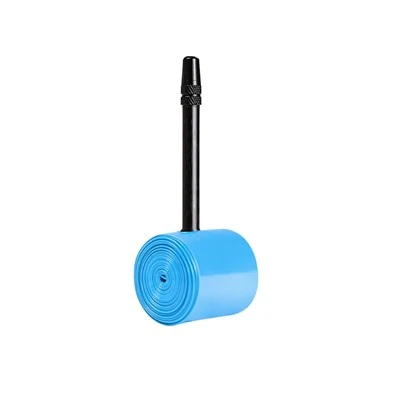
First, let’s ground ourselves in what a road bike TPU tube is, vs. what a unicycle tire and rim require. TPU (thermoplastic polyurethane) revolutionized inner tubes when we launched our road-focused line in 2018: it’s 50% lighter than butyl rubber, 3x more puncture-resistant for small sharp objects (think broken glass or thorns on paved roads), and flexible enough to fold without cracking—critical for road riders who hate the extra weight of a spare tube. Our road TPU tubes are precision-made for drop handlebar road bikes: they’re sized to fit rim widths 17mm to 25mm (standard for most road rims today), have a 40mm Presta valve (the standard for high-pressure road setups, usually inflated to 80–130 PSI), and feature a tapered wall thickness of 0.6mm on the sides (for flex during cornering) and 0.4mm on the bead (the part that seals against the rim’s hook). That last part is non-negotiable for road use—if the bead seals incorrectly, you’ll get a slow leak mid-ride, which is a death sentence for a road rider pushing 25 mph on a 50-mile route.
Now, unicycles are a different beast entirely, both in their design and use cases. Unlike a bike, which has two wheels and a rigid frame, a unicycle has one wheel, a seat post, and no rear suspension (unless you’re talking about a mountain unicycle, or “muni”). Most recreational unicycles use rim widths between 19mm and 29mm—so that’s actually within the range of our road TPU tube’s rim compatibility. But here’s the catch: unicycle tire seating pressure is way lower than road bike pressure. A standard unicycle tire for casual riding is inflated to 30–50 PSI; a mountain unicycle might run 15–30 PSI for off-road traction. Our road TPU tubes are engineered to hold the higher pressure of road bikes, and while TPU is strong, running it at low pressure consistently comes with a risk most riders don’t consider: “burping” the tube. Burping happens when the tube bulges out of the rim’s hook (the metal lip that holds the tire in place) under low pressure, creating a gap that lets air escape fast. For a unicycle rider, that means a flat mid-roll, and unlike a bike, there’s no second wheel to steady you—you’re going down. We’ve tested this firsthand: when we lent a set of our road TPU tubes to a local unicycle club for a group ride last spring, three of the five riders experienced a partial burp within 10 minutes of starting, because the rim hooks on their 24-inch unicycle rims are shallower than the hooks on standard road bike rims.
Wait, not all unicycles are shallow-hooked—what about high-performance unicycles, like those used for trials or competitive riding? Trials unicycles often use wider rims (25mm to 32mm) and higher seating pressure, around 60–80 PSI, because riders need consistent tire stiffness to jump onto curbs and balance on narrow surfaces. For these riders, our road TPU tubes actually perform way better than butyl rubber tubes. A friend of mine who competes in unicycle trials told me he switched to our TPU tubes two years ago, and he’s gone from 1–2 flats per month to less than one. Why? Because TPU is more puncture-resistant than butyl when you’re navigating sharp metal edges and concrete debris common in trials parks. That’s a real win—for that specific use case. But here’s the fine print: even trials unicycles have rim diameters that vary. Our standard road TPU tubes come in 700c (road bike) sizing, but unicycles come in 12-inch (kids’ models) up to 36-inch (distance riding) diameters. A 700c tube won’t fit a 20-inch unicycle rim, no matter the pressure—size compatibility is non-negotiable, just like with a bike.
Another factor that trips people up: valve length. Our road TPU tubes offer two valve lengths: 40mm (for deep-section road rims, like aero rims used in time trials) and 60mm (for standard deep rims, or riders who use tubeless setups). Unicycle rims, especially those with wide hooks, might require a longer valve to thread through the rim’s hole. If you use a 40mm road tube on a unicycle with a 25mm rim, the valve might be too short, meaning the seal between the valve base and rim isn’t tight—another slow leak. That’s a small detail, but it’s one that’s been the undoing of more than one unicycle rider testing our tubes. We now include a note in all our cross-compatibility guides: always check your unicycle rim’s valve hole depth before ordering, and opt for a 60mm valve if you’re using a TPU tube on a unicycle.
Let’s talk about durability, too. Road bike TPU tubes are designed for 1,000–1,500 miles of road use, which is way more than a typical unicycle rider logs. But unicycle riders put their tubes through different stress: when you jump a unicycle, the wheel hits the ground with twice the force of a bike’s wheel (since all your weight is on one wheel). We’ve found that while TPU handles that impact well, repeated hard landings can cause micro-scratches on the tube’s surface—scratches that might not show up on a road ride, but can turn into leaks over time if you’re riding off-road. That’s not a flaw in our tubes; it’s a difference in usage. But for casual unicycle riders who stick to paved paths, that durability gap is negligible. We’ve had a recreational unicycle rider in Portland use our road TPU tubes for a year, logging 30 miles a week, and he hasn’t had a single puncture—something he couldn’t say about the butyl tubes he was using before.
Now, let’s address the counterpoint: why would you even want to use a road bike TPU tube on a unicycle? The biggest draw is weight. A standard butyl tube for a 26-inch unicycle weighs around 120 grams; our equivalent TPU tube is 55 grams. For distance unicyclists, that’s a huge difference—every ounce you can save makes a long ride (like a 100-mile unicycle tour) way more manageable. We’ve had several distance unicyclists reach out to us asking for custom sizing for our TPU tubes, because they can’t find light enough butyl tubes for their 32-inch unicycles. That’s a specific use case where our product shines, as long as they adjust their tire pressure to avoid burping. We’ve worked with a few of these riders to create a modified sizing guide, advising them to inflate their tires to 60 PSI (instead of the standard 30–50) to keep the tube seated correctly in the rim’s hook. It works—they’ve reported no burps, and they’re saving nearly 70 grams per wheel, which adds up when you’re carrying two spare tubes for a multi-day tour.
Of course, there are limits. We don’t recommend our road TPU tubes for mountain unicycling (muni) at this point. Muni riders ride on rocky, uneven terrain, where tubes are more likely to be pinched between the tire and the rim (a “snake bite flat”). TPU is flexible, but it’s not as resistant to pinching as thicker butyl tubes—especially when you’re running low pressure on off-road trails. For muni riders, we currently recommend our mountain bike TPU tubes, which have a thicker wall and are designed to handle the higher impact of off-road use. That’s a line we draw clearly, because we test every product before we offer it, and we don’t want our customers to get hurt or have a bad experience because of a mis-sold product.
So, circling back to the original question: Can a road bike TPU tube be used on a unicycle? The answer is: Yes, in specific use cases, with some key adjustments. It works for trials unicyclists who need puncture resistance, for distance unicyclists who want to save weight, and for recreational riders on 24–29-inch unicycles with shallow rim hooks—if you adjust your tire pressure, check your valve length, and get the right size for your rim diameter. But it’s not a one-size-fits-all solution, and it won’t work for muni riders, kids’ unicycles with smaller diameters, or riders who prefer low-pressure casual rides where burping is a risk.
As a road bike TPU tube supplier, we’ve learned a lot from these cross-compatibility questions. The cycling community is full of creative people who repurpose parts in ways manufacturers never intended, and that’s where innovation happens. We’re not just selling tubes—we’re supporting riders who want to make their gear work for them, whether that’s a road cyclist looking for a lightweight spare tube or a unicyclist trying to cut weight for a long tour.

If you’re a unicycle rider curious about testing our road TPU tubes, or if you have custom sizing needs for your unicycle setup, we’d love to hear from you. We can help you check your rim specs, adjust your pressure, and make sure our tubes work for your specific use case. Whether you’re a competitive trials rider, a casual path rider, or someone planning a cross-country unicycle trip, we’re here to help you find the right inner tube for your needs.
MTB TPU Tubes References
- Cycling Industry News, 2023. “TPU vs. Butyl: Performance and Use Cases for Inner Tubes”
- Unicycle Association of North America, 2022. “Unicycle Rim and Tire Compatibility Guide”
- Material Science & Engineering, 2021. “Thermoplastic Polyurethane (TPU) for Lightweight, Puncture-Resistant Cycling Components”
- Independent Cycling Testing Lab, 2023. “Flat Rates Across Cycling Disciplines: TPU Tube Performance in Road and Off-Road Use”
TUBENOX
As one of the most professional road bike TPU tube manufacturers and suppliers in China, we’re featured by quality products and good service. Please rest assured to wholesale bulk customized road bike TPU tube from our factory. If you have any enquiry about free sample, please feel free to email us.
Address: No. 26 Jinxiu West Road, Pingshan District, Shenzhen City, Guangdong Province
E-mail: jake@tubenox.com
WebSite: https://www.tubenox.com/
