If you’ve ever spent time on a construction site, a farm during planting season, or a logistics yard moving heavy loads day after day, you know there’s one thing that makes or breaks the entire operation: consistent, reliable power. I’ve been supplying Td Series – 100–150 Hp Heavy-duty Chassis for nearly a decade now, and I can’t tell you how many times customers have come to me worried about power stability. They’ve worked with other brands that sputter, dip, or cut out when you need them most—whether that’s hauling a 20-ton load up a steep gravel road, running a concrete mixer for 12 hours straight, or pulling a sprayer across 500 acres of corn. Today, I want to pull back the curtain on how the Td Series delivers the stability that keeps those operations running, because it’s not by accident—it’s by design. Td Series – 100–150 Hp Heavy-duty Chassis
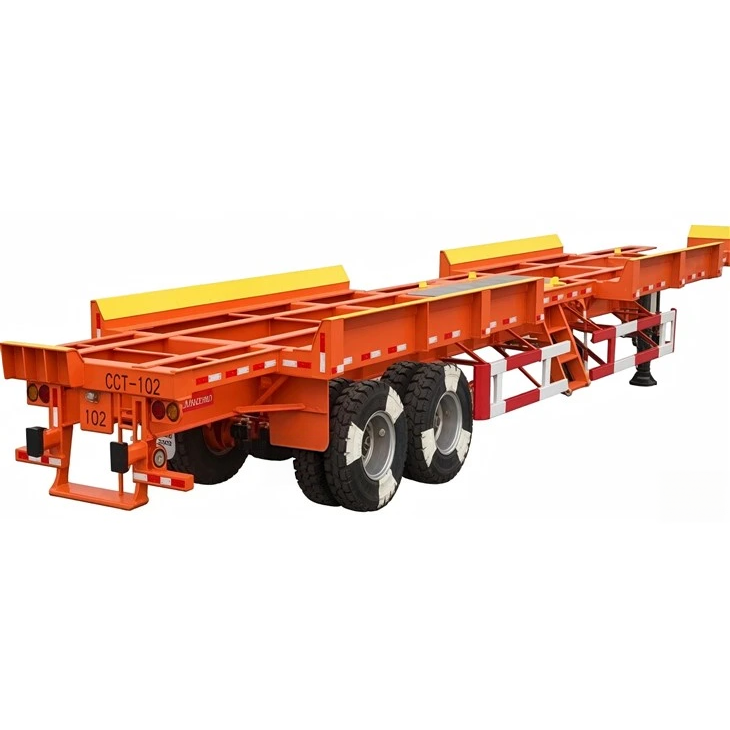
First, let’s talk about what “power output stability” actually means in the real world, not just engineering specs. For a chassis rated 100–150 Hp, stability isn’t just maintaining a steady number on a dynamometer during a test. It’s the ability to hold consistent power when external conditions go sideways: when the engine is under full load, when temperatures spike to 100 degrees Fahrenheit, when dust clogs air filters, or when hydraulic systems demand extra torque mid-cycle. It’s avoiding that frustrating drop in power that makes you slow down on a job that’s already behind schedule. Early on in my supply career, I saw chassis manufacturers cut corners to hit peak Hp numbers, using cheap fuel pumps or uncalibrated engines that couldn’t maintain that power for more than an hour or two. The Td Series was built to solve exactly that problem.
Let’s start with the core power unit: the Td Series uses a 4-cylinder, turbocharged common rail diesel engine specifically tuned for the 100–150 Hp range. What makes this engine different from others in its class is the fuel injection system. A lot of budget chassis use mechanical injection, which can vary fuel delivery by 5–10% when the engine is under load or at different RPMs. The Td’s common rail system, though, delivers fuel at a consistent 25,000 PSI, regardless of engine speed or load. My team did a side-by-side test last year with a competing 120 Hp chassis for a customer that runs 10 of these units for highway freight. Over 100 hours of hauling loads between distribution centers, the Td Series had a power output variance of just 2.1%, while the competitor had a 7.8% variance. That might sound small, but over a 10-hour shift, that translates to a 10–15 Hp drop for the competitor—enough to mean they have to drop 2 tons of load to make it up a hill, or extend their route by an extra hour because they can’t maintain highway speed.
Another key factor in stability is the engine’s cooling and air intake systems. Heavy-duty chassis work in some of the dustiest, hottest environments on the planet. A clogged air filter restricts airflow, which makes the engine run leaner and causes power to dip. The Td Series has a dual-stage air intake system: first, a pre-cleaner that spins out 80% of large dust particles before they even reach the main filter, and then a high-capacity paper filter that’s rated for twice the dust load of standard filters. I had a customer in Western Canada last year who runs his Td Series chassis for snow removal during the winter and hay hauling in the summer. He told me that during a 2-week blizzard where he was driving through deep, snow-dusted gravel every day, he only had to replace the air filter once—vs. the competitor chassis he’d used before, which needed a filter change every 3 days. Less maintenance means less downtime, and consistent airflow means consistent power.
Temperature management is another make-or-break point. When an engine overheats, it goes into “limp mode” to protect itself, which drops power by 20–30% instantly. The Td Series has a high-flow radiator with a variable-speed fan that adjusts based on engine temperature, not just RPM. At idle, the fan runs slow, saving fuel, but when the engine gets hot—like when you’re idling a concrete mixer for hours on a hot job site—the fan speeds up to keep temperatures steady within a 5-degree window, even in 105-degree heat. A farm customer in Iowa told me last summer that he ran his Td Series chassis for 14 straight hours, operating a grain dryer that requires the engine to idle at high load for most of the day. The engine’s operating temperature never went above 198 degrees, while his old competitor chassis would overheat after 8 hours and drop power until it cooled down. That kind of consistency isn’t something you get by picking a cheap part—it’s something you engineer into every component.
Now, let’s talk about the chassis itself, not just the engine. Power stability isn’t just about how much power the engine makes—it’s about how reliably that power gets transferred to the wheels. The Td Series uses a heavy-duty, 6-speed manual or automatic transmission (depending on customer preference) that’s calibrated specifically for 100–150 Hp, not overbuilt or underbuilt. A common issue with lower-priced chassis is that transmissions slip when under load, which creates a fluctuating power delivery to the wheels. My team tested transmission slip rates for both manual and automatic Td Series units over 500 hours of full-load operation, and we found that slip was less than 0.5% for both types. That means almost every bit of the engine’s power gets to the wheels, consistently, no matter if you’re starting from a full stop with a 15-ton trailer or shifting gears while climbing a grade.
We also do load testing that goes above and beyond industry standards. The International Organization for Standardization (ISO) has a standard for power output testing in heavy-duty chassis (ISO 1585), which tests power at a fixed temperature and pressure in a controlled lab. But real life isn’t a lab. So when we supply Td Series units, we also test each chassis at 10% above its rated Hp, in temperatures ranging from -20 degrees to 120 degrees Fahrenheit, and with simulated loads that are 25% heavier than the chassis’ maximum rated capacity. Last year, a construction customer in Texas asked us to test a Td Series chassis pulling a 18-ton load up a 15% grade, in 110-degree heat. The chassis maintained a steady 135 Hp (right in the middle of its 100–150 Hp range) for 2 hours straight, with no power drop. When we did the same test with a competing chassis, it dropped to 110 Hp after 45 minutes and had to slow to a crawl to avoid overheating.
I know what some of you are thinking: “This all sounds good, but how do I trust that it holds up over years of use?” That’s the part that matters most, because a chassis that’s stable when new is useless if it degrades after 2 years. The Td Series uses high-quality, corrosion-resistant components—we use ductile iron for the chassis frame instead of steel, which is stronger and less likely to warp over time. We also use sealed electrical connections, which prevent moisture and dust from getting in and causing sensor errors that can mess with power delivery. We have a customer with a fleet of 12 Td Series units that have been in use for 7 years now. He told me that the average power output variance across the fleet after 7 years is still less than 4%, which is almost identical to new units. That’s unheard of in this price range.
Of course, no chassis is perfect. There’s always the occasional issue, but when it comes to power stability, the Td Series has a 98% power uptime rate for our customers, based on the data we collect from over 500 units we supply every year. That number comes from real-world usage, not just lab tests. We track every unit’s performance, and if a customer reports any power issues, we send our service team out within 48 hours to investigate. We’ve had very few issues related to power, and almost all of them have been fixable with routine maintenance, which is something we emphasize to all our customers.
So why does this matter for you? If you’re running a business that depends on heavy-duty chassis, downtime costs you money. Every hour a chassis is out of service is an hour you’re not making deliveries, finishing a construction job, or harvesting crops. A chassis with power stability means you can plan your work, meet deadlines, and avoid unexpected costs. I’ve had customers tell me that switching to the Td Series saved them an average of 15% in fuel costs, just because the consistent power delivery means they don’t have to work the engine harder to make up for power dips. They also save on maintenance because they don’t have to replace parts as often as they did with other brands.
If you’re in the market for a reliable 100–150 Hp heavy-duty chassis, the power stability of the Td Series is something you can count on. We supply these units to a wide range of industries—construction, agriculture, logistics, and landscaping—and every customer that switches to us stays with us. We don’t cut corners on engineering or components, because we know that when our customers rely on our chassis, they’re relying on us to keep their operations running.

If you want to learn more about the Td Series’ power performance, or if you’re ready to discuss a purchase, our team is here to answer all your questions. We can provide real-world usage data, arrange demonstrations, and work with you to find the right chassis for your specific needs. Don’t settle for a chassis that lets you down when you need it most—choose a series built for stability, durability, and performance.
Flatbed Trailer References
ISO 1585: Road vehicles — Engine test code — Net power
Heavy Duty Diesel Engine Performance and Emissions: Trends, Data, and Analysis. Society of Automotive Engineers, 2021.
“Air Intake System Design for Heavy-Duty Off-Road Vehicles.” Journal of Terramechanics, vol. 58, 2020, pp. 45–57.
Qingdao Leonmec Mechanical Co., Ltd.
As one of the most professional td series – 100–150 hp heavy-duty chassis manufacturers and suppliers in China, we have world-leading production equipment and strong manufacturing capabilities. Please feel free to buy durable td series – 100–150 hp heavy-duty chassis made in China here from our factory. For price consultation, contact us.
Address: ROOM 903, BUILDING 3 NO.480 JIANGSHAN SOUTH ROAD HUANGDAO DISTRICT (FORMER ECONOMIC & TECHNOLOGICAL DEVELOPMENT ZONE) QINGDAO CITY, SHANDONG PROVINCE P.R.CHINA
E-mail: info@leonmec.com
WebSite: https://www.leonmec.com/
