If you’ve ever crouched down to tighten a wobbly kitchen cabinet drawer only to have a cheap plastic guide snap in half mid-turn, or struggled to open a sliding door that screeches so loud it makes your teeth hurt, you’ve learned the hard way that hardware fittings are far more than afterthoughts. For over a decade, I’ve run a small, family-owned hardware fittings supply business—we don’t do bulk, bottom-of-the-barrel parts, and every day I hear from contractors, cabinet makers, and homeowners who skipped quality and ended up paying for it later. Today, I want to break down why high-quality hardware isn’t just a “nice-to-have” for your projects—it’s the backbone of durability, safety, long-term cost savings, and even overall design intent. Let’s get into it. Hardware Fittings
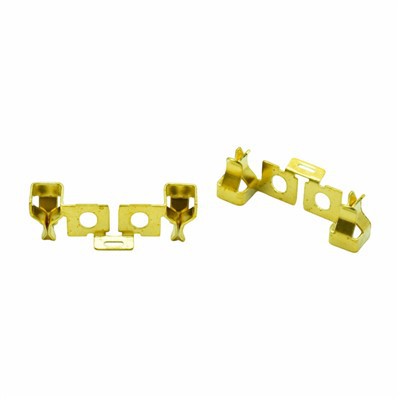
First, let’s define what we’re talking about. Hardware fittings are the small, often overlooked components that make large structures function: drawer slides, door hinges, cabinet latches, shelving brackets, window locks, and even the little pins that hold furniture together. You could have a solid oak cabinet hand-built by a master woodworker, but if you pair it with a $0.50 plastic hinge that rusts after two years, that cabinet will fail. Conversely, a mid-tier cabinet paired with heavy-duty, precision-engineered hardware will outperform and outlast many higher-end alternatives. This isn’t just my opinion—it’s backed by material science and decades of real-world use cases.
Durability is probably the most obvious, but also the most impactful, advantage of high-quality hardware fittings. Cheap hardware is almost always made from low-grade materials: thin gauge steel that bends under light weight, plastic that becomes brittle in extreme temperatures, and zinc alloys that corrode within a few years. High-quality hardware, by contrast, uses materials like solid brass, cold-rolled steel, and stainless steel, all engineered to resist wear, corrosion, and stress. Let’s take drawer slides as an example, a part that gets constant, repetitive use—most kitchen cabinets see their drawers opened and closed 10-20 times a day, or more for households with kids. A budget drawer slide rated for 500 cycles might fail within a year, while a professional-grade slide rated for 10,000+ cycles can last the life of the cabinet. I had a regular customer last year, a small cabinet maker in Portland, come to me with a batch of 40 custom pantry cabinets he’d built using competitor hardware from a big-box store. Within 18 months, 12 of them had broken drawer slides, and 8 had loose hinges that sagged so much the cabinet doors didn’t close right. He ended up switching all his replacement parts to our heavy-duty slides and ball-bearing hinges, and now he only reaches out to us for his projects. That’s the thing about durability: it’s not just about making a part last—it’s about protecting the work you put into the bigger project around it. When you install a new kitchen or built-in bookshelves, you don’t want to have to rip out drawer fronts or replace entire doors five years later because a $2 hinge failed.
Next, safety. This is an area that’s rarely talked about but is non-negotiable, especially for hardware that bears weight or secures movable parts. Think about a heavy wall-mounted shelf holding 50 pounds of cookbooks: a cheap metal bracket that’s only 1/16 of an inch thick might pull out of the wall after a few years, especially if it’s not installed correctly. A high-quality bracket, made from 1/8 inch cold-rolled steel and reinforced with anti-tilt brackets, will safely support that weight for decades. Or take window locks, a critical safety feature for homes with small children or in high-crime areas. A plastic latch that’s easy to pry open is a hazard, while a solid zinc lock with a reinforced bolt can only be opened from the inside with a key or lever. I remember a story a customer shared with me a few years ago: she had a toddler who kept climbing on her dresser drawers to reach her toy box. She’d installed cheap drawer stops that the little one could easily yank out, so her drawers kept opening unexpectedly when she climbed on them. We suggested our soft-close, heavy-duty drawer slides with integrated safety stops that lock into place when pushed past a certain point, and that solved the problem. She told me later that it gave her so much peace of mind knowing her kid couldn’t accidentally pull a drawer over on themselves. Safety also extends to commercial spaces, which have even stricter building codes for hardware like door hinges, exit latches, and fire-rated latches. Cutting corners on hardware here can lead to code violations, fines, and worst of all, injury during an emergency.
Long-term cost savings is another big one, and it’s a myth that high-quality hardware is always more expensive. Let’s do the math on that cheap $0.50 hinge vs. a $2.50 high-quality one. If you’re building a 100-cabinet kitchen, that’s a $50 difference per cabinet, or $500 total upfront. But if the cheap hinges fail every 2 years, you’ll end up paying for a carpenter’s time to come back, remove the old doors and hinges, install new ones, and dispose of the old parts—costing you an extra $200-$300 per visit, every two years. Over 10 years, that’s $1,500 in labor alone, plus the cost of replacement hardware. The high-quality hinges might only need to be replaced once, if at all, in that same 10-year period, so you save money overall. I’ve seen this same equation play out with every type of hardware: shelving brackets, window hardware, even furniture fittings like cam locks for assembling flat-pack furniture. A lot of homeowners and small contractors focus only on the initial sticker price, but they forget to account for maintenance, labor, and replacement costs down the line. For larger projects, like new home construction or commercial build-outs, this adds up even more. A developer I work with in Seattle recently told me that they used to specify budget hardware for their spec homes to keep upfront costs low, but they started getting too many warranty claims from homeowners about sticking drawers and sagging doors. Now they specify our hardware on all their projects, and their warranty rate for hardware-related issues dropped by 90% in two years. That’s not just saving them money on repairs—it’s improving their reputation and leading to more repeat business.
Then there’s design and function, which ties together both durability and user experience. High-quality hardware is precision-engineered, so it operates smoothly, quietly, and consistently, without sticking, screeching, or misaligning. Soft-close drawer slides, for example, use hydraulic dampers to slow the drawer as it closes, so it glides shut quietly instead of slamming, which is not only more pleasant but also reduces wear on the drawer and the cabinet over time. High-quality hinges have adjustable screws that let you realign doors as the house settles, so they stay closed and level for years, no call back needed. For cabinet makers and furniture designers, hardware is also a design detail. Solid brass hinges or knobs have a warm, timeless finish that ages beautifully, while cheap hardware often has a thin plating that chips or fades within a couple years, looking cheap and dated. I’ve had interior designers come to us for custom brass hardware for high-end residential projects, because they know that a polished brass hinge won’t lose its luster, and it complements the design of the cabinet or door instead of detracting from it. Even for industrial or utilitarian projects, function matters: sliding door hardware that rolls smoothly on heavy tracks makes the door easy to use, day in and day out, without straining.
I also want to address a common misconception: that all hardware is the same, so buying cheap is fine. The truth is, there’s a huge difference in quality between the parts sold at big-box stores, local hardware chains, and specialty suppliers like ours. Big-box stores often stock hardware made in mass quantities with minimal quality control, designed to be disposable. Specialty suppliers, on the other hand, source parts from manufacturers that meet strict quality standards, often with testing for weight capacity, cycle life, and corrosion resistance. For example, all our drawer slides are tested to 15,000+ cycles by independent labs, and our stainless steel hardware is rated for saltwater resistance, making it ideal for coastal homes or outdoor kitchens. We also offer a 10-year warranty on all our hardware, something most big-box brands can’t do because their parts are made to fail. At the end of the day, when you buy from a specialty supplier, you’re not just buying a part—you’re buying expertise, quality control, and support if something goes wrong.
Now, let’s talk about when high-quality hardware matters most. It’s not always for every small project—if you’re building a temporary shelf for a garage, or a kid’s playhouse that will only last a few years, budget hardware might make sense. But for projects that are built to last: kitchens, bathrooms, custom furniture, primary homes, commercial spaces, outdoor structures, and any project that will see heavy use, high-quality hardware is non-negotiable. I’ve seen so many projects go from great to disappointing because the hardware was an afterthought, and I’ve seen projects exceed expectations simply because the hardware was chosen right.

At the end of the day, hardware fittings are the quiet workhorses of any built space. They don’t get the same attention as a marble countertop or a solid wood table, but they make those pieces work. If you’re a contractor, a designer, or a homeowner planning a project, don’t cut corners on your hardware. Invest in parts that are built to last, that are safe, that work smoothly, and that complement the design of your project. If you’re ready to upgrade your hardware for your next build or renovation, I’m here to help. We can walk through your project, recommend the right parts for your specific needs, and answer any questions you have about quality, durability, and fit.
Socket References:
- American Wood Council. (2021). Hardware Selection and Installation for Wood Cabinets & Built-Ins. Wood Products Association.
- National Kitchen & Bath Association. (2022). Kitchen Hardware Performance Standards & Best Practices. NKBA Industry Report.
- International Code Council. (2020). Residential Building Code Requirements for Window and Door Hardware. ICC Safety Standards.
- Material Performance Institute. (2019). Corrosion Resistance of Common Hardware Materials: Long-Term Field Testing Data. MPI Technical Bulletin.
- Journal of Architectural Engineering. (2021). Cost-Benefit Analysis of High-Quality vs. Budget Hardware for Residential Construction. Vol. 27, Issue 2.
Foshan Haosheng Technology Co., Ltd.
As one of the leading hardware fittings manufacturers and suppliers in China, we warmly welcome you to buy advanced hardware fittings made in China here and get pricelist from our factory. All customized products are with high quality and competitive price.
Address: No.4, Jinsha Liansha Shangliang Development Zone Avenue, Danzao Town, Nanhai District, Foshan City, Guangdong Province, China
E-mail: 13925140140@163.com
WebSite: https://www.hssocket.com/
