If you’ve ever waited for a passenger lift in an office building, hotel, or residential high-rise, the last thing you want to think about is whether the braking system will fail. As a passenger lifts supplier with over a decade of working on installs, retrofits, and emergency maintenance calls across commercial and residential properties, I’ve spent countless hours digging into how lift braking systems work—and, more importantly, how they’re backed up. Lift safety isn’t just a regulatory checkbox; it’s the backbone of everything we do when we put our name on a project. Most people only notice a lift when it’s stuck, but every single lift has not one, not two, but multiple layered backup braking systems designed to stop it safely, even if the primary system malfunctions. Today, I want to break these systems down in plain, practical terms, from the ones that kick in every time the lift stops, to the ultra-redundant backups that only activate in the rarest of emergency scenarios. Passenger Lifts

Let’s start with the primary braking system, because it’s the first line of defense, even before we talk backups. Most modern passenger lifts use an electro-mechanical disc brake mounted directly on the lift’s traction sheave—the large wheel that the steel hoist cables wrap around to move the car up and down. This brake is spring-loaded, meaning it relies on strong, heavy springs to apply pressure and clamp the disc, not electricity. To make the lift move, the lift’s control panel sends an electrical signal to an electromagnet that overcomes the spring tension, pulling the brake pads away from the disc so the sheave can spin freely. It’s a simple, reliable design that’s tested during every single lift cycle: every time the lift arrives at a floor, the power to the electromagnet cuts, the springs slam the pads onto the disc, and the lift comes to a smooth, controlled stop. But nothing is 100% fail-proof, right? What if the electromagnet burns out? What if there’s a power outage that cuts off the signal before the brake applies? That’s where the first backup braking system comes in, and it’s the one most people never even know exists because it works so quietly in the background: the secondary brake, sometimes called the holding brake or the safety brake’s helper.
Wait, let’s clarify the difference between the secondary brake and the next system, because a lot of mix-ups happen here. The secondary brake is still mounted on the traction sheave, right alongside the primary brake. It’s also spring-loaded, but it’s designed to activate only if the primary brake fails to engage when the control panel calls for it. For example, if the primary brake’s electromagnet fails to release when you hit the “call lift” button on your floor, the secondary brake’s independent circuit will detect that the sheave isn’t moving when it should, and engage its own spring pressure to hold the lift in place. It’s like having a spare door lock for your house: the primary deadbolt is the main one, and the secondary deadbolt kicks in if the first one doesn’t turn. What’s even better about the secondary brake is that it’s completely independent of the primary’s wiring. Different power source, different sensor, different set of springs—so a single fault in the primary system can’t take both out at once. In my 12 years as a lifts supplier, we’ve only had one call where a primary brake’s electromagnet failed, and the secondary brake caught it right away, holding the lift steady between two floors until our technicians arrived. The passenger never even felt a jolt, which is exactly how these systems are supposed to work.
But let’s get to the big one—the system that’s responsible for stopping the lift if the entire traction system fails. This is the over-speed governor and the safety gear, and it’s the only emergency braking system that clamps directly onto the lift’s guide rails, not the sheave, so it works even if all the hoist cables break or the sheave stops turning. Here’s how it works, and it’s brilliant in its simplicity: the over-speed governor is a small pulley mounted at the top of the lift shaft, connected by a thin steel cable to a weighted arm inside the lift car. Every time the lift moves, the governor pulley spins at exactly the same speed as the car. If the car starts moving faster than its rated speed—say, 120% of its maximum speed, which is the threshold set by global lift safety codes—the governor pulley spins so fast that a centrifugal mechanism inside it flings weights outward. Those weights push a trigger that clamps the governor cable shut, like how a bicycle brake lever squeezes the brake cable. When the cable is clamped, it yanks a lever inside the lift car that activates the safety gear. The safety gear is two heavy, wedge-shaped metal blocks mounted on the bottom of the lift car, on either side of the guide rails. When the lever is pulled, the wedges are forced outward, pressing hard against the guide rails with enough force to stop the car dead—no sliding, no rollback.
What’s critical here is that the over-speed governor and safety gear are 100% mechanical, no electricity required. Even if the entire building loses power, the control panel is fried, and the hoist cables are broken, this system still works, because it relies only on the lift’s own motion and centrifugal force. I can’t tell you how many retrofit projects I’ve worked on where older lifts had outdated governor systems, and updating that was the single biggest safety improvement our clients asked for. One property manager in Chicago told me he used to dread winter storms, but after we upgraded the over-speed governor on 12 of his building’s lifts, he slept easier during power outages. It’s worth noting that this system is not designed to bring the lift to a quick, jarring stop—modern safety gear clamps on gradually, so passengers feel a solid, steady stop, not a jolt that could cause injury. That’s another layer of design: these backups are not just about stopping the lift, they’re about stopping it safely, without endangering anyone inside.
Wait a second—are there more backup systems? What if the car is falling instead of just moving too fast? Let’s talk about the emergency rescue braking, which is the system that kicks in when a lift gets stuck between floors, or if the car starts to free-fall beyond the over-speed governor’s threshold. First, most lifts have a battery backup system that kicks in during power outages, right? That battery powers the control panel, the door motors, and a small auxiliary motor that can slowly move the car to the nearest floor and open the doors. But even if the battery fails, there’s another fail-safe: the counterweight brakes. Wait, let’s explain counterweights briefly, because they’re key to how lifts work. A typical passenger lift has a counterweight that weighs about 40% of the maximum load the car can carry—so if the car has 10 people (average 150 lbs each, that’s 1,500 lbs), the counterweight is 600 lbs, so the traction motor only has to move half the weight, not the full car plus passengers. If the hoist cables break, the counterweight will fall down the shaft, pulling the car up, but most modern lifts have a counterweight safety brake that clamps onto the guide rails the same way the car’s safety gear does. Wait, no—actually, counterweight safety brakes are a separate system, designed to stop the counterweight from falling, which would stop the car from rising too fast or falling.
Then there’s the door interlock system, which is often overlooked as a braking-related safety feature, but it’s a critical backup that prevents unwanted movement. If you’ve ever tried to open a lift door when the car isn’t at your floor, you know it won’t budge—that’s the door interlock. It’s a set of electrical switches and mechanical latches that only let the doors open if the car is level with the floor, and the lift’s control panel sends the right signal. If the doors weren’t properly locked, the lift couldn’t move, because any movement would trigger a sensor that cuts power to the drive system. So in a way, that’s a backup braking system too—if the control panel thinks the doors are open, it won’t let the lift move, which stops it from being in motion when it shouldn’t be.
I often get asked by clients: “How many backups do you really need? Isn’t over-engineering a problem?” Let’s be clear—lift safety is regulated by strict codes all over the world, from ASME A17.1 in North America to EN 81 in Europe, and these codes don’t just suggest backups, they require them. Every passenger lift has to have at least two independent braking systems, plus the over-speed governor and safety gear, plus door interlocks, plus power backup. As a supplier, we never cut corners on these systems, because the cost of a mistake is not just monetary—it’s human. I’ve seen photos of old lifts with only one braking system, installed in the 1950s, and they’re terrifying by today’s standards. Now, every single component is tested before the lift even leaves our warehouse, and we test every single system again during installation, and every year during annual maintenance, as required by law.
Let me paint a scenario to put this all in perspective. It’s a Tuesday afternoon, peak hour in a 20-story office building. A lift is full of 12 people, all heading down to the parking garage. The primary disc brake’s electromagnet malfunctions, failing to release when the call is sent. The lift doesn’t move, because the secondary brake engages instantly, holding the car steady. A technician is called, but on the way, the entire building loses power due to a construction accident. The primary and secondary brakes work on springs, so they still hold the car. But wait, what if the lift was in motion when the power went out? Say, the lift was moving up to the 10th floor, and the power cuts. The control panel would send a signal to the primary brake, which engages immediately, but if that failed, the secondary brake would engage. If both failed, the over-speed governor would detect the lift slowing or speeding up (wait, no—if power cuts and the lift is moving, the governor detects speed, so if it starts moving faster than 120% of rated speed, it activates the safety gear. That’s the chain. No single point of failure.
So, what does this mean for building owners and residents? It means that every passenger lift you ride in has layers of protection that you’ll never see, designed to keep you safe even in the worst-case scenario. As a lifts supplier, our job isn’t just to install a lift that moves people from floor to floor—it’s to make sure that when something goes wrong, the backup systems work as they’re supposed to, every single time. If you’re a building owner looking to upgrade an old lift, or install a new one, don’t settle for a system that only has one brake. Ask about the secondary brakes, the over-speed governor, the safety gear, and the power backup. These aren’t fancy add-ons—they’re the core of lift safety.
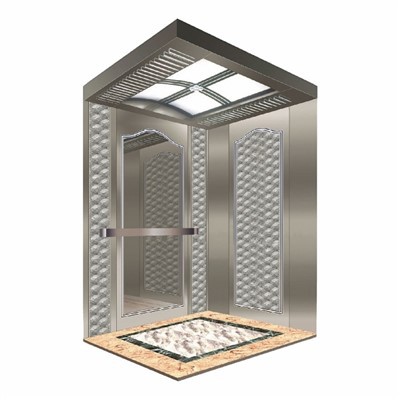
If you’re looking to discuss your lift project, whether it’s a new installation, a retrofit, or routine maintenance, we’re here to help. We’ve worked on projects from small residential high-rises to large commercial office towers, and we know that safety is non-negotiable for every client. Feel free to reach out to us to learn more about our braking systems and how we can tailor a solution for your needs.
References
Car Elevator En 81-1: Safety Rules For The Construction And Installation Of Passenger Lifts.
ASME A17.1-2020: Safety Standard for Elevators and Escalators.
National Elevator Industry, Inc. (NEII): Braking Systems in Modern Passenger Lifts, 2022.
Elevator World: Over-Speed Governors and Safety Gear: Core Emergency Braking Components, 2021.
Weibo Elevator Co., Ltd.
We’re well-known as one of the leading passenger lifts manufacturers and suppliers in China, specialized in providing high quality custom service for global clients. We warmly welcome you to buy high-grade passenger lifts at competitive price from our factory.
Address: Dongxiang Road, Nanxun Economic Development District, Huzhou City, Zhejiang Province, China
E-mail: zoey@webstar.net.cn
WebSite: https://www.webstar-elevators.com/
