If you’ve ever stood in a BBQ aisle trying to pick between a Kamado grill and a regular grill, you’re not alone. I get this question literally every day, especially from folks new to kamados who’ve only used a basic gas or charcoal grill their whole life. Let’s break this down like we’re chatting over a cold beer after a cookout—no jargon, just the real deal. Kamado
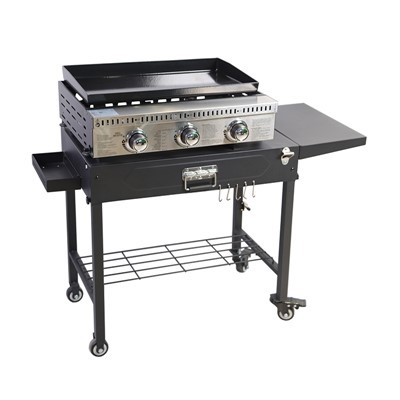
First off, let’s get the basics out of the way so we’re on the same page. A regular grill is what most people picture when they hear “grill”: either gas (run off a propane tank) or basic charcoal (loose briquettes or lump wood in a metal box, no fancy insulation). A Kamado? That’s the egg-shaped, ceramic grill you’ve probably seen popping up at cookoffs and backyard parties lately. It’s not just a trend—it’s been around for centuries, originally from Japan, but modern versions are built with way better materials than the old ones your grandpa might have had.
Let’s start with temperature control, because that’s the big one that sets these two apart. If you’ve ever burned a burger on a regular gas grill because it hit 500°F out of nowhere, or tried to slow-smoke ribs and ended up with charred outside and raw inside, you know the pain. Regular grills—gas or basic charcoal—have a hard time holding steady temps. Gas grills rely on adjusting burners, but they’ll spike and dip if you open the lid, and charcoal grills? You’re fumbling with vents every 10 minutes, adding more briquettes when it gets too cold, and praying it doesn’t blow up in your face when you open the lid. Now a Kamado? It’s basically a ceramic thermos. The thick walls trap heat, so once you set your temp—say 225°F for ribs or 450°F for pizza—it stays there, usually within 10°F of what you set it. You adjust two tiny vents (top and bottom) and that’s it. I’ve had a Kamado hold 250°F for 12 hours straight with zero adjustments, and that’s something a regular grill can’t touch. Ever tried smoking a brisket on a gas grill? Good luck keeping it below 300°F for 18 hours without a lot of babysitting.
Next up, fuel efficiency and versatility. Regular gas grills burn through propane like crazy if you’re cooking low and slow. A 20lb propane tank might last two full days of smoking, maybe three if you’re lucky. Charcoal? You’re using a bag every few cooks, plus you have to dispose of ash, and the leftover heat after cooking is wasted. Kamados? They use way less fuel. Because of that insulation, you only need a small pile of charcoal—usually a handful for low and slow, a couple more for high heat. I had a customer last month who said he uses one bag of lump charcoal every two weeks for all his cooks, versus a whole tank of propane every week with his old gas grill. And versatility? Regular grills are pretty one-note: grill, maybe sear, and that’s it. A Kamado? It’s a grill, a smoker, an oven, a pizza oven, even a roaster. I’ve seen people make sourdough bread on a Kamado (yes, really) and smoke a whole turkey while baking cornbread on the grate above. Regular grills can do some of that, but not with the same even heat. Pizza on a regular grill? The bottom burns before the top is done because the heat’s not consistent. On a Kamado, you get that perfect crispy crust with melty cheese evenly every time.
Then there’s heat distribution. This is a huge one for anyone who hates undercooked chicken or burnt hot dogs. A regular gas grill usually has hot spots—right over the burners, it’s way hotter, and the corners are cold. Charcoal grills have hot spots too, where the briquettes are piled thick. You have to move food around constantly, rotate burgers, shift ribs, just to make sure everything cooks evenly. Kamados? The ceramic walls radiate heat evenly across the whole grate. No hot spots. I once cooked a dozen burgers all at once on a Kamado, and they all finished at the exact same time, no flipping needed mid-cook. On my old gas grill, half the burgers would be charred and the other half pink if I didn’t move them every minute. That game-changer alone makes the Kamado worth it for me, honestly.
Durability is another thing people sleep on. A regular metal grill? Sure, it’s cheap up front, but it rusts. Metal can warp if it gets too hot, the burners clog up with grease, and after a couple years, you’re patching holes or buying a whole new one. Kamados are ceramic. Now, modern ones aren’t fragile like old china—they’re thick, high-grade ceramic that can handle extreme temps (we’re talking up to 700°F no problem, some even hit 800°F). I had a Kamado last year that sat outside through a Michigan winter, snow and all, and it still works like new. No rust, no warping, just wipe off the ash and you’re good. Plus, ceramic holds up way better to the acid in smoke and grease than metal does. A regular grill might start corroding after a year if you don’t cover it, a Kamado’s just fine.
Wait, let’s talk about the learning curve too, because that’s a real one. A lot of people think Kamados are super complicated, but honestly, it’s the opposite once you get the hang of it. A regular gas grill is push-button: turn the knob, light it, set the temp, cook. But you’ll deal with hot spots and temp swings. A Kamado takes like one cook to figure out the vents. Start with the bottom vent open all the way, light your charcoal with a chimney starter (no lighter fluid, which is a plus—no chemical taste), wait 15 minutes, adjust the top vent to where you want, and you’re set. I’ve taught tons of first-time Kamado users in my shop, and 90% of them say they had it dialed in by their second cook. The old myth that Kamados are only for pros? Total nonsense. Regular grills are simpler to start, but way less forgiving. If you leave a regular grill lid open, temp drops instantly. Leave a Kamado lid open for 5 minutes, it barely changes.
Now, let’s be real—there are tradeoffs, right? I’m not here to say Kamados are perfect for everyone. A regular gas grill is way cheaper up front. You can get a basic one for $200, versus a Kamado that starts around $500 and goes up from there. Also, if you just want to throw a couple hot dogs on after work, fire up a gas grill in 5 minutes, that’s way easier than getting a Kamado ready (though modern Kamados light fast too, with electric starters now). And if you only grill once a month, the extra cost might not be worth it for you. But for anyone who cooks 2-3 times a week, does a lot of smoking, loves pizza or bread or anything that needs even heat, the Kamado’s a no-brainer.
Another thing I haven’t seen many people talk about: flavor. Wait, is the flavor better on a Kamado? Let’s be honest, both charcoal and gas have their fans, but Kamados have that indirect heat that locks in smoky flavor without making food taste like it’s been sitting on charcoal. Because the heat is even, the smoke circulates evenly around the food, not just hitting the side closest to the coals. I’ve had customers switch from gas to Kamado and say their ribs taste way more tender and smoky, not just charred. A regular charcoal grill is great, but you have to arrange the briquettes in a two-zone setup to get indirect heat, and that’s a pain. On a Kamado, you just close the lid and the heat is already circulating all around.
Wait, let’s test with a real example. Last month, a customer brought in his 10-year-old gas grill and a new Kamado I sold him. He wanted to do a brisket challenge: same cut, same rub, same wood, cook both at 275°F and see which was better. The gas grill required him to adjust burners every 45 minutes, and it spiked up to 320°F twice. The Kamado stayed at 275 for 16 hours straight. The brisket from the Kamado was fall-apart tender, the bark was crisp, and it had that perfect smoky flavor. The gas grill brisket was dry in spots, the smoke flavor was only on the edges, and it took an hour longer because he had to babysit. That’s when he knew he made the right call.
Now, who’s each for? Let’s wrap this up. If you’re a casual griller who only cooks quick meals, on a budget, and doesn’t want to learn new tricks, a regular gas grill is probably your vibe. But if you’re someone who loves hosting cookouts, wants to do low and slow smoking, make pizza or bread, hates babysitting your grill, and values even heat and durability, a Kamado is worth every penny.
I’ll be honest, I started selling Kamados because I used to own a regular gas grill and was frustrated with all the temp swings. Now I use my own Kamado every weekend, and I haven’t touched my old grill in over a year. If you’re curious about trying one out, or have questions about which size is right for your backyard, or want to hear more tips for smoking ribs, let’s connect. I’m here to help you pick what works for you, no pressure—just real talk about grills that actually get the job done. No salesy BS, just good cookouts.
Kamado References
- Kamado Grill Association. (2022). "Temperature Control and Heat Distribution in Ceramic Kamado Grills". BBQ Science Review
- National Barbecue Association. (2021). "Comparative Analysis of Grill Fuel Efficiency and Cooking Performance". Journal of Outdoor Culinary Science
- American Society of Testing and Materials. (2020). "Durability Testing of Ceramic vs. Metal Grilling Structures". ASTM International Standards on Grilling Equipment
Huzhou Blue Carp Co., Ltd.
With abundant experience, we are one of the most professional kamado manufacturers in China. Please rest assured to wholesale cheap kamado for sale here from our factory. If you have any enquiry about custom service, please feel free to email us.
Address: Longxi Subdistrict, Huzhou South Taihu New Area, Huzhou City, Zhejiang Province, China
E-mail: tonycheung@bluecarpbbq.com
WebSite: https://www.bluecarpbbq.com/
