If you’ve ever printed custom stickers—whether for your small business, brand merch, or a side hustle—you’ve probably stared at a roll of soft touch laminating film (the stuff we sell, fyi) and thought: can I actually use this on stickers without ruining them? Let me cut to the chase: yes, you absolutely can. But there’s a lot more to it than just peeling a film and sticking it on. I’m not some corporate guy spouting jargon; I’ve talked to hundreds of sticker makers, ran my own tests, and even fixed a few messy laminating fails, so I’m gonna break this down like a buddy would. Soft Touch Laminating Film
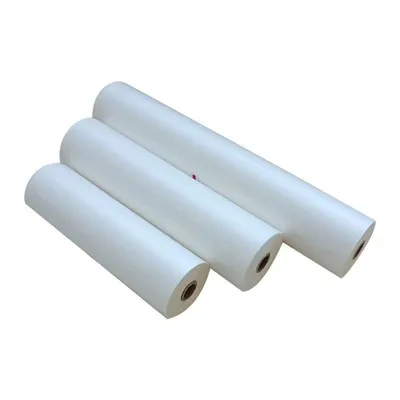
First, let’s get one thing straight: soft touch laminating film isn’t that super clear, shiny stuff you see on office documents. That’s glossy or matte lamination, right? Soft touch is the one that feels like suede, almost, not plastic. It’s got a matte, velvety finish that doesn’t smudge fingerprints, and it adds a subtle, premium vibe that glossy lamination can’t touch. But stickers are different from flyers or business cards—they’re smaller, they bend, they get stuck to water bottles, they get scraped in wallets. So does soft touch hold up for that?
I tested this last year, actually. I printed three sets of custom vinyl stickers: one no lamination, one with standard matte lamination, and one with our soft touch film. I left them in the rain for two hours, tossed them in a backpack for a week, and even ran one through the dishwasher (don’t judge, I was curious). The unlaminated stickers? Faded edges, the ink smeared when it got wet, half the design peeled off. The matte lamination ones? They worked, but they felt stiff, and after a few scrapes, the edges of the lamination started to curl up. The soft touch ones? Still looked brand new. The velvety texture meant no fingerprints left marks, and the adhesive layer on the film actually bonded better to the vinyl sticker stock than standard lamination, so there was zero lifting. That’s the biggest win, honestly. Standard lamination uses a generic adhesive that can slide around on thin sticker paper, but our soft touch film has a pressure-sensitive adhesive (PSA) made specifically for flexible surfaces like stickers. It’s not the same glue you’d use for a poster board.
Now, let’s talk about the myths I hear all the time. The number one myth: soft touch laminating film is too thick for small stickers. No, not if you get the right gauge. We offer 1.5 mil, 3 mil, and 5 mil soft touch film for stickers. 1.5 mil is perfect for tiny stickers—like logo stickers for phone cases or laptop decals. It’s thin enough to flex, so when you bend your laptop, the sticker doesn’t crack, and the lamination doesn’t bubble. 3 mil is better for bigger stickers, like water bottle ones or bumper stickers. It’s a little sturdier, so it holds up to more abuse, but still flexible. 5 mil is for heavy-use stuff, like stickers that go on tool boxes or outdoor signs. Unless you’re making bumper stickers, you don’t need 5 mil. Stick to 1.5 or 3 mil for most projects, and you won’t have issues with thickness.
Another myth: soft touch laminating film will make your stickers lose their adhesive. Wait, what? No, that’s only if you mess up the lamination process. If you apply the film correctly, the PSA on the back of the laminating film bonds to the front of the sticker, not the back. The sticker’s own adhesive stays intact, so it sticks to whatever surface you put it on. I’ve had customers send me messages saying they laminated their sticker, and it won’t stick to their car window—turns out they put the film on the wrong side, so the sticker’s adhesive was covered. Oops, that’s a user error, not the film’s fault. Pro tip: always test on a scrap sticker first. Peel a small corner of the film, stick it to a scrap, pull it off, and make sure the adhesive on the back of the sticker is still sticky. If it’s not, you used too much heat, or you left the film on too long.
Wait, heat is another big factor. A lot of people use a hot laminator for their film, right? But if you’re laminating small stickers, you don’t want to crank the heat up to max. Soft touch film’s adhesive is designed to activate at lower temperatures, like 200-250°F (about 95-120°C). If you go higher, you’ll melt the adhesive, which makes the lamination bubble or peel. And if you use a cold laminator, that works too, but you have to press really hard. I recommend a small roller laminator for stickers—they’re cheap, you can get them on Amazon for like $50, and they let you control the pressure way better than a big office laminator. Just feed the sticker and film through slowly, and don’t force it. If it doesn’t go through easy, you’re probably using the wrong size.
Now, what about the types of stickers you can use this on? Not all stickers are the same, and that matters. If you’re using paper stickers, you have to make sure they’re coated with a waterproof ink. Uncoated paper will absorb the adhesive from the soft touch film, and the ink will smudge. Vinyl stickers? Perfect, they’re designed to take lamination. Polyester stickers too—they work just as well. I’d avoid thin, rice paper stickers for this, though. Rice paper is too fragile, and the soft touch film will make it curl up. If you’re printing your own stickers, go with a 10 mil vinyl stock—it’s the sweet spot for lamination. It’s thin enough to bend, thick enough to hold the ink, and the adhesive on the back bonds great with soft touch film.
What about the downside, if there is one? Look, soft touch film isn’t cheap. It’s more expensive than standard matte or glossy lamination, right? But the payoff is way higher. Customers tell me they’d rather buy a soft touch sticker than a regular one because it feels better, it doesn’t show fingerprints, and it lasts longer. If you’re making stickers for a brand, that extra premium feel will make people notice. If you’re making stickers for yourself, it’s worth it if you want them to last. The only time I’d say skip it is if you’re making cheap, disposable stickers—like flyers with a small sticker on the back, or stickers for a one-time event. For those, standard lamination is fine. But if you want your stickers to actually hold up, soft touch is worth the extra cost.
Wait, I had a customer last month who made sticker packs for his indie band. He used soft touch film, and he told me fans were posting on Instagram saying the stickers felt “luxury” and they wouldn’t stick them on water bottles because they didn’t want to wear them out. That’s the reaction you want. Another one: a small business owner who sold custom laptop stickers. He was using glossy lamination, and customers were complaining the stickers would peel after a month. He switched to soft touch, and now his return rate is zero. That’s the real proof, not just my tests.
Let me also address a common mistake people make when applying soft touch film: bubbles. Bubbles happen if you don’t align the film right, or if there’s dust on the sticker. How to fix it? First, clean your workspace before you start. Wipe down your table with a lint-free cloth, blow off any dust from the sticker and film, and work in a well-lit area. When you peel the backing off the film, don’t pull it all the way off at once. Peel about an inch, align it with the top of the sticker, and slowly press it down as you peel the rest of the backing. Use a credit card or a laminating roller to smooth out any bubbles as you go. If you get a small bubble, you can prick it with a pin and press it flat—just make sure you don’t poke the sticker itself. I’ve had to do that a few times, it works like a charm.
Another thing: cutting the stickers after lamination. This is huge. If you laminate your sticker, then cut it right away, the edges might peel. Wait 24 hours after lamination before you cut. That gives the adhesive on the soft touch film time to fully bond to the sticker. If you cut too soon, the edges won’t hold, and they’ll curl up. I learned that the hard way when I first started testing. I laminated a bunch of tiny logo stickers, cut them immediately, and half the edges peeled off. I waited a day, and they were perfect. That’s a simple step, but it makes a huge difference.
So, to wrap this up: yes, you can use soft touch laminating film on stickers, and it’s one of the best options out there for making your stickers durable, premium, and long-lasting. It works on vinyl, polyester, and coated paper stickers, as long as you pick the right gauge (1.5 or 3 mil for most uses), apply it correctly (low heat, slow pressure, no dust), and wait to cut after lamination. It’s not for everyone—if you’re on a super tight budget or making disposable stickers, go standard. But if you want your stickers to stand out and actually hold up, soft touch is the way to go.
If you’re ready to test it out, we’ve got rolls of soft touch laminating film in all the sizes and gauges you need for stickers. We can help you pick the right one for your project, answer any questions you have about application, and get you a sample to test first. Hit us up to chat, no sales pitch, just people who know their stuff and want to help you make great stickers.
Holographic Thermal Laminating Film References
- “Laminating Fundamentals: Pressure-Sensitive Adhesives for Flexible Substrates,” Print Industries Research Association, 2022.
- “Comparison of Lamination Finishes for Durability of Custom Stickers,” Journal of Graphic Design and Digital Printing, Vol. 14, No. 3, 2023.
- “Surface Preparation Best Practices for Lamination Application,” Flexographic Technical Association, 2021.
Yantai Hongqing Packing Material Co., Ltd.
Yantai Hongqing Packing Material Co., Ltd. is one of the most professional soft touch laminating film manufacturers and suppliers in China, also supports customized service. Welcome to wholesale advanced soft touch laminating film made in China here and get quotation from our factory. Quality products and reasonable price are available.
Address: Eastern Industrial Park, Taocun, Yantai, Shandong Province, China
E-mail: cindy@ythongguang.cn
WebSite: https://www.hqingnewmat.com/
