Hey there, if you’ve ever wandered through a industrial facility—say, a water treatment plant, a refinery, or even a large-scale HVAC setup—chances are you’ve brushed against a valve without even noticing. But if you’ve ever needed to shut off or adjust the flow of something like raw water, oil, or steam, odds are a gate valve was involved. Today, we’re breaking down a type that’s super common but often confused: the non-rising stem gate valve. As a gate valve supplier, I’ve seen how picking the right one makes or breaks a project—so let’s cut through the jargon and get to the real details. Gate Valve
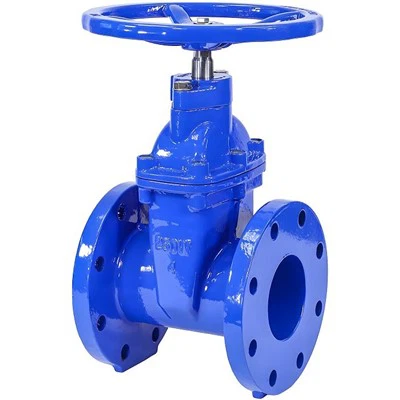
First off, let’s remember what a basic gate valve does. Its whole schtick is a flat, wedge-shaped “gate” that slides into the flow path of your pipe to block or let fluid pass. Turn the handwheel, the gate moves up to open (letting flow through) or down to close (stopping it tight). The big difference between a rising stem gate valve and this non-rising version? The stem—the metal rod that connects your handwheel to the gate—doesn’t stick up out of the valve body when you open it. That’s the key, right there. No tall stem creeping above the valve, no extra headroom needed to operate it.
Let me paint a quick picture to make this click. If you’ve got a pipe buried underground, or a pipe running along a wall where the space above it is tight (say, a warehouse ceiling that’s barely enough for people to stand under, or a refinery rack where every inch of space is accounted for), a rising stem valve would stick up like a sore thumb. You couldn’t fit that extra 6 inches (or foot, whatever) of stem, so you’d grab a non-rising one. Simple as that.
But wait—what’s the tradeoff there? Why isn’t everyone using non-rising? Because with a non-rising stem, the threads for the handwheel are usually inside the valve body, or at least down low. When you turn the handwheel, the wheel spins, and the stem itself moves up and down inside the valve—so you don’t see it from the top. That means the threads are exposed to whatever fluid is flowing through the pipe, right? If you’re dealing with clean water or mild chemicals, that’s no big deal. But if you’ve got super corrosive stuff, or gritty, dirty media like sewage or slurry, those threads can gunk up, wear out faster, or even corrode over time. That’s why non-rising valves are mostly used for static applications—you don’t open and close them every 5 minutes. Think: a main line shutoff that you only adjust once a year, or a backup valve that sits idle most of the time. Rising stems are better for frequent operation, because their threads are out in the open, easier to lubricate, and less exposed to the pipe’s contents.
Now, let’s get into the nitty-gritty of how these work, because a lot of people mix up gate valves with globe valves or ball valves. Gate valves are all about full flow, right? When they’re fully open, there’s no obstruction in the pipe—so pressure drop is super low. That’s a huge plus for pipelines that need to move a lot of stuff without wasting energy. A non-rising gate valve keeps that same benefit, because the gate still slides completely out of the flow path. The only difference is where the stem hides.
Another thing I get asked all the time: do non-rising stem gate valves handle high pressure or high temp? It depends on the material, but a lot of standard ones we supply are rated for up to like 150 or 300 PSI, and temps up to around 400°F. If you need something heavier, we can make them from stainless steel, cast iron, or even alloy steel for harsher conditions. The rising vs non-rising stem doesn’t change the pressure rating that much—it’s more about the space and operating frequency.
Let me throw in a common use case to make this relatable. Last year, we had a customer who was working on a renovation of a old municipal water pumping station. The original pipes were all buried under a concrete slab, and they didn’t have the height to add rising stem valves—the slab was only 3 feet above the pipe, and a rising stem would have stuck up 2 feet, which would have been way too close to the ceiling of the room above. So we supplied non-rising stem gate valves, and they’ve been running smooth for over a year now. They only use them to shut off flow during annual maintenance, so the infrequent operation means the threads haven’t gunked up at all. Perfect fit.
Compare that to a factory that makes plastic parts, where they have to adjust the water flow to cooling lines every hour. They’d never use a non-rising valve there—because they’re turning the handwheel all the time, so having to move the handwheel instead of watching a stem rise is a small hassle, but the space isn’t an issue. And the frequent use means they can lubricate the threads easily, keeping the valve working for years.
Now, let’s clear up a myth: some people think non-rising stem gate valves are less reliable. That’s not true—if you install them right for their intended use. If you stick them in a spot where you open/close them 10 times a day, yeah, they’ll wear out faster. But if you use them for their designed purpose—infrequent shutoff in tight spaces—they’re just as reliable as any other gate valve. The key is matching the valve to the job, which is where a good supplier comes in. We don’t just sell valves—we help people pick the right one for their specific setup.
Wait, also—what about the handwheel size? For non-rising valves, since the stem is moving inside, sometimes you need a slightly bigger handwheel to get the same torque to move the gate, right? That’s a tiny detail, but it makes a big difference. If your handwheel is too small, you’ll have a hard time turning it when the valve’s been closed for a while and the gate’s seized a little. We size the handwheels correctly for each valve we supply, so you don’t run into that problem.
Another thing I see a lot: people confuse non-rising stems with extended stems. No, extended stems are for underground valves—they let you operate the valve from the ground, instead of digging down to the handwheel. Non-rising is just about the stem not sticking up when open, no matter where the valve is. They’re two totally different things, and mixing them up leads to bad purchases. That’s why we take the time to ask customers about their space, how often they’ll use the valve, and what fluid they’re moving before we even suggest a type.
Let me also talk about maintenance, because that’s part of why these valves are popular. For a non-rising stem gate valve, since the stem doesn’t move above the valve, you don’t have to check for leaks at the top of the stem (a common spot for rising valves to drip). That’s a big plus for indoor setups where a leak would damage equipment or floors. The only maintenance you really need to do is occasionally grease the handwheel threads (wait, no—wait, the threads that are moving are inside, right? Oh, right, for non-rising, the upper threads on the handwheel are usually the ones you grease, not the ones inside the body. So just a little grease on the handwheel stem a couple times a year, and you’re good. Way less upkeep than a rising valve if space is tight.
Now, why would you choose a gate valve over a ball or globe valve for this? Gate valves are best for fully open or fully closed—you don’t want to use them to throttle flow (like, to adjust how much water goes through a pipe). Because if you leave the gate partially open, it’ll get damaged, and it’ll also cause turbulence that wastes energy and wears out the valve faster. So if you need a shutoff valve that’s either all the way open or all the way closed, gate valve—specifically non-rising if space is an issue—is the way to go. Ball valves are good for throttling, but they have a bit more pressure drop, and for large pipes, they’re way more expensive. Globe valves are even worse for pressure drop, so gate valves win for big pipelines.
Let’s wrap this up with a quick recap, so you don’t have to scroll back: Non-rising stem gate valves are a type of gate valve where the operating stem doesn’t extend above the valve body when open, making them perfect for tight spaces where headroom is limited. They work exactly like regular gate valves (full flow, low pressure drop) but are designed for infrequent operation—since the internal threads are exposed to process fluid, frequent use can lead to wear or clogging. They’re used for underground pipes, indoor wall-mounted lines, buried slab setups, and any spot where you can’t spare the extra height for a rising stem.
If you’re working on a project and you’re not sure if a non-rising stem gate valve is what you need, or if you have questions about sizing, material, or installation, don’t guess. As a gate valve supplier, we’ve got years of experience matching valves to all kinds of applications—from small residential lines to massive refinery pipelines. We can help you pick the right one, get you a quote, and even answer any last-minute questions you have about how these work. Just reach out to our team to chat through your needs.
At the end of the day, choosing the right valve might seem small, but a bad fit can cause delays, leaks, or even costly downtime. We’ve seen that firsthand too many times—so we make it a point to get it right for every customer. Whether you’re upgrading an old system or putting in a new one, a non-rising stem gate valve could be exactly the piece you’ve been missing.
Gate Valve References
- Miller, J. (2020). Industrial Valve Selection: Gate, Globe, and Ball Valves. Mechanical Engineering Publications.
- Water Environment Federation. (2019). Valves and Fittings for Water Infrastructure. WEF Press.
- Smith, R. (2021). Pipe System Components: A Practical Guide for Facility Managers. Industry Press.
- Hydraulic Institute. (2020). Valve Performance and Application Standards. HI Publications.
- National Fire Protection Association. (2018). NFPA 13: Standard for the Installation of Sprinkler Systems. NFPA.
Wuxi PYNOS Flow-tech Co., Ltd.
As one of the leading gate valve manufacturers and suppliers in China, we offer a wide range of products with superior quality. We warmly welcome you to buy high quality gate valve made in China here from our factory. We also accept customized orders.
Address: Sales Center: 7th Floor, No.19 Qingyuan RD, Wuxi City, Jiangsu Prov., China
E-mail: Info@pynosvalve.com
WebSite: https://www.pynosvalves.com/
