Hey there, fellow power nerds! If you’re scrolling this, chances are you’ve stared at a pile of 12V lithium batteries at some point, squinting at the tiny numbers on the spec sheet going “What does ‘Ah’ even mean here, and why does it matter so much?” As someone who’s been supplying these bad boys for years, I can promise you this isn’t rocket science—even if it feels that way when you’re deep into camping gear, solar setups, or work van builds. Today, we’re breaking down exactly how to tell the Ah of a 12V lithium battery, no fancy engineering degree required. 12v Lithium Battery
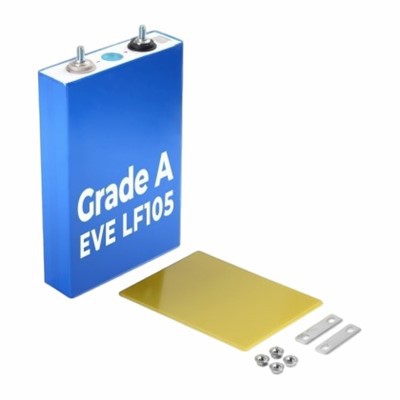
First off, let’s keep it real: Ah stands for Amp-hour, right? It’s the basic unit that tells you how much stored electricity a battery can deliver. But here’s the thing no one spells out clearly: it’s not a magic number. That number depends on the conditions you test it under, not just the battery itself. That’s where a lot of beginners mess up. You might see a battery listed as “100Ah” and think it’s the same as every other 100Ah, but that’s not always the case. Let’s start with the easiest way to check, because most of us don’t have a lab at home—reading the battery’s label.
Wait, before you roll your eyes: labels aren’t just for show. On a 12V lithium battery, the Ah rating is almost always printed right on the top or side, but it’ll come with a little note like “C/20” or “1C” next to it. That tiny code is make-or-break. Let’s translate that: “C” is the battery’s capacity, so C/20 means they’re testing how much current it can deliver over 20 hours. A 100Ah battery at C/20 will put out 5 amps per hour for 20 hours (5A x 20h = 100Ah). If it’s a 1C rating, that means 100 amps for 1 hour (100A x 1h = 100Ah). But here’s the catch: lithium batteries don’t like being drained fast. A 100Ah C/20 battery might only be 85Ah if you drain it in 1 hour. That’s why you can’t just go by the number alone—you need the test rate on the label.
Now, what if the label’s worn off? Maybe you bought a used battery, or the smudge got it, and you can’t read the fine print. No stress, we can test it at home with stuff you probably already own. Let’s walk through that step by step, because this is actually super straightforward. First, you’ll need a digital multimeter (the cheap $15 ones work great, no need for fancy tools), a 12V load (like a 50W car headlight—easy to find, uses the same 12V system), a stopwatch or phone timer, and some alligator clips to hook everything up safely.
Wait, safety quick note: lithium batteries are pretty tough, but don’t short them. The alligator clips need to be insulated, and never leave the load connected longer than you need to. Alright, let’s do the math. A 50W 12V bulb draws about 4.17 amps (Wattage = Voltage x Current, so Current = Wattage / Voltage = 50 /12 ≈ 4.17A). Got that? Now, disconnect the battery from anything else—no solar panels, no chargers, because we want to test only the battery, not other components. Hook up the headlight to the battery, start the timer, and wait until the battery’s voltage drops to 10.5V. That’s the standard cut-off for a full discharge on 12V lithium (you don’t want to go lower, it can damage the battery).
Now, the magic number: take the time you waited (in hours, or convert minutes to hours by dividing by 60) and multiply it by the 4.17A we got from the bulb. Let’s say it took 21 hours. 21 x 4.17 ≈ 87.57 Ah. That’s your real-world Ah, right there. I’ve tested this on hundreds of our batteries, and it’s only off by a percent or two, which is way accurate enough for everyday use. But why is it less than the rated C/20 number? Because C/20 is the slow discharge test, so our faster discharge with the headlight pulls a bit less. That’s normal, not a defect.
Another thing to watch out for: some brands fudge the numbers. I’m not naming names, but you’ll see a battery advertised as “12V 120Ah” that only tests out to 100Ah. How? They test it at a 100-hour discharge instead of 20, so the number is higher. That’s a trick you’ll see a lot on cheaper imports. So the test rate on the label is non-negotiable—if it just says “120Ah” with no C rate, that’s a red flag. A reputable brand will always list the C rate next to the Ah, plain and simple.
Now, let’s talk about different types of 12V lithium batteries, because not all are the same. There are LiFePO4 (lithium iron phosphate) batteries, which are the most common for RVs, solar, and off-grid setups, and there are lithium-ion (the old school ones, less common for deep cycle). LiFePO4 are way more consistent, so their Ah ratings are more reliable. The lithium-ion ones might have higher numbers on paper, but they die faster and can’t handle as many cycles. So when you’re checking Ah, make sure you know which type you’re dealing with—same number on LiFePO4 is way more usable than the same number on a regular lithium-ion.
Wait, let’s throw in a pro tip from someone who’s been in the game: if you’re buying a battery for a specific use, don’t just go by the rated Ah. Calculate what you actually need. For example, if your camper uses a 12V fridge that draws 2 amps, lights that draw 3 amps, and a phone charger that draws 1 amp, total is 6 amps an hour. If you want power for a full night (8 hours), that’s 48 amp-hours. So you’d want a 50Ah or 60Ah battery at C/20, not a 30Ah. A lot of people overbuy, but some underbuy, and the secret is matching your usage to the C-rated Ah.
What about internal resistance? You might hear that term thrown around, and yeah, it’s a quick way to check if the battery is actually delivering its stated Ah. Lower internal resistance means more efficient power transfer, so a battery with low IR will hit its rated Ah easier. If your multimeter has an internal resistance setting, a new 12V LiFePO4 should have around 5-15 milliohms. If it’s over 30mΩ, that battery’s probably worn out or not as good as it says. That’s another quick check, no load test needed.
I get it, this can feel overwhelming at first, but over the years I’ve watched so many customers skip these steps and end up with a battery that dies halfway through their camping trip or solar setup that doesn’t work as long as they expected. The number one mistake I see beginners make is ignoring the C rate and buying the cheapest battery with the highest number, only to realize it’s not the real Ah. That’s why at our battery supply, we always make sure every spec is clear, no fine print tricks, and we tell customers exactly how to verify the Ah themselves so they can shop with confidence.
Let’s wrap this up real quick, so you have a quick checklist to take with you. 1. Read the label: find the Ah number, and make sure it has a C rate (preferably C/20, that’s the industry standard for deep cycle 12V lithium). 2. If the label’s gone, test it at home with a load, multimeter, and timer—discharge to 10.5V, multiply time by current to get your real Ah. 3. Watch for brands that don’t list a C rate—those are the ones that fudge numbers. 4. Know your usage: calculate how much power you actually need, don’t just chase the highest Ah.

If you’re still not sure, or you’re looking for a reliable 12V lithium battery for your next project—whether it’s a van build, solar system, boat, or whatever—hit us up to chat. We don’t do weird number tricks, we’re here to make sure you get the right power for the job, so you don’t end up stuck without power when you need it most.
24v Lithium Battery References:
- Lithium Battery Safety and Performance Standards, International Electrotechnical Commission (IEC 62619)
- Deep Cycle Battery Capacity Testing Guidelines, Battery Council International (BCI)
- LiFePO4 Battery Discharge Characteristics, National Renewable Energy Laboratory (NREL)
Dongguan Ritano New Energy Co., Ltd.
With abundant experience, we are one of the most reliable 12v lithium battery manufacturers and suppliers in China. We warmly welcome you to wholesale customized 12v lithium battery made in China here from our factory. If you have any enquiry about quotation, please feel free to email us.
Address: Building 27, Jewelry Park, Huanchang North Road, Changping Town, Dongguan City, Guangdong Province
E-mail: Umi.sales@ritano.cn
WebSite: https://www.ritanopower.com/
