If you’re a commercial building owner, restaurant operator, grocery store manager, or anyone responsible for keeping perishables stocked and safe, you’ve probably noticed SEER ratings on everything from home AC units to industrial chillers. But when it comes to commercial refrigeration units, that three-letter acronym means something a little different than it does for residential HVAC systems — and picking the right SEER-rated unit isn’t just a numbers game. As a refrigeration unit supplier who’s worked directly with hundreds of small business owners and large retail chains over the past 12 years, I’ve seen first-hand how choosing the wrong SEER rating can balloon energy bills, cut into profit margins, and even force emergency service calls when a unit can’t keep up with demand. Let’s break down what commercial SEER ratings actually are, how they’re calculated, and what you need to know to make the right choice for your operation. Refrigeration Unit
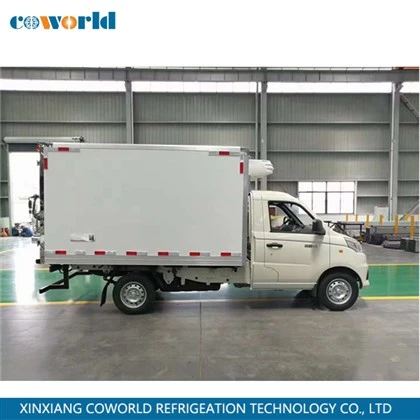
First, let’s clear up the basics: SEER stands for Seasonal Energy Efficiency Ratio. For those who don’t speak industry jargon, that’s a simple way to measure how efficiently a unit uses energy over an entire cooling season, instead of just a single test run. For residential units, SEER ratings range from 13 (the minimum required in most parts of the U.S.) to upwards of 30 for high-efficiency models. But commercial refrigeration is a whole different ballgame — and that’s where a lot of confusion sets in. Unlike residential HVAC, which is designed to cool small spaces intermittently, commercial refrigeration units run 24 hours a day, 7 days a week, 365 days a year. A grocery store’s walk-in cooler, a restaurant’s reach-in prep refrigerator, or a convenience store’s beverage display case don’t shut off at night. That means their energy use is far more consistent, and their efficiency demands a different kind of measurement.
The first big myth I hear all the time is that you can just compare a commercial unit’s SEER rating to a residential one and call it a day. That’s wrong, and for good reason. For commercial refrigeration, we don’t use a standard SEER rating at all — at least, not in the way the EPA defines it for residential systems. Wait, let me back that up a little: the EPA does use SEER as a baseline metric for commercial HVAC, but when it comes to refrigeration specifically, most manufacturers and industry regulators rely on an adjusted, application-specific version of the rating, called integrated SEER (iSEER) or, for many refrigeration units, Energy Efficiency Ratio (EER) — and even then, it’s not the same as residential EER. Let’s clarify that: EER measures efficiency at a single, fixed temperature, while SEER is seasonal, averaging performance across different outdoor temperatures. For commercial refrigeration, where units run non-stop, their performance never fluctuates enough to rely solely on a seasonal average, so combining SEER’s seasonal context with EER’s real-world, constant-use accuracy gives a far better picture of how a unit will perform for you.
Here’s how it works, in practical terms: When we size a commercial refrigeration unit for a client, we don’t just look for the highest SEER rating possible. We have to factor in their location, their daily operating hours, the temperature range they need their products stored at, even the local cost of electricity. For example, a convenience store in Phoenix, where summer temperatures regularly hit 110 degrees Fahrenheit, will have very different efficiency needs than a small café in Minneapolis, where winter lows can dip below zero. A store that keeps its beverage displays at a steady 38 degrees Fahrenheit year-round will use energy differently than a bakery that needs walk-in coolers set to 34 degrees and freezers at -10. That’s why a one-size-fits-all SEER rating doesn’t tell the whole story.
Let’s talk about why SEER matters for commercial refrigeration specifically, because it’s not just about saving money (though that’s a huge part of it). For most food service and retail operations, energy bills are the second-largest operating expense, right after labor. A 2023 study from the North American Association of Food Equipment Manufacturers (NAFEM) found that commercial refrigeration accounts for roughly 40% of a grocery store’s total energy use, and 30% of a full-service restaurant’s. If you have a unit with a lower SEER rating, that translates to higher kilowatt-hours used every day — and for a business operating on thin profit margins (many restaurants only net 3-5% profit, for example), even a 10% increase in energy costs can eat into thousands of dollars a year. I had a client last year, a small family-owned grocery store in Iowa, who replaced a 10-year-old walk-in cooler with a new unit boasting a 21 SEER rating (adjusted for commercial use, not residential). His energy bill dropped by $820 a month. That’s almost $10,000 a year he could put toward restocking fresh produce and giving his staff raises, instead of handing it to the utility company.
But here’s the catch: you don’t want to chase the highest SEER rating if it doesn’t fit your needs. A big-box retail chain might be able to justify a $15,000 high-SEER commercial refrigeration unit because they have the volume to spread the cost, and their location’s electricity costs make the long-term savings worth it. But a small café that only needs a single reach-in refrigerator might find that a mid-range SEER unit is more than enough, and the extra upfront cost of a high-SEER model would take 7-10 years to recoup — far longer than the lifespan of a typical refrigeration unit, which is around 15 years. That’s where working with a reputable supplier matters, because we don’t just sell you the highest-rated unit we can. We crunch the numbers with you: calculate your current energy use, local utility rates, how many hours your unit runs a day, and what storage temperature you need. For example, last quarter, a food truck owner came to us looking for a new undercounter refrigeration unit for his taco truck. He operates 12 hours a day, 6 days a week, in Austin, Texas, where electricity rates are about 15 cents per kWh. We recommended a unit with a 18 commercial SEER rating, which cost $1,200 upfront. A 22 SEER model would have cost him $1,800, and while it would save about $15 a month on energy, it would take 40 months to recoup the extra $600. For a small business with tight cash flow, that $600 could be the difference between restocking inventory and covering a mechanic’s bill, so the mid-range model was the better choice for him.
Now, let’s clear up another common point of confusion: what SEER ratings actually apply to commercial refrigeration, versus other commercial cooling equipment. The EPA’s ENERGY STAR program, which sets efficiency standards for all kinds of appliances, has specific ratings for commercial refrigeration units that are separate from residential HVAC and commercial air conditioners. For most ENERGY STAR-certified commercial refrigeration units, the minimum SEER equivalent (adjusted for commercial use) is around 14, while high-efficiency models can hit 22 or higher. It’s important to note that ENERGY STAR’s commercial refrigeration standards also factor in other efficiency metrics, like defrost cycles, which are a big part of refrigeration energy use. When a unit goes into defrost mode to melt ice buildup on the evaporator coils, that’s a period where it uses extra energy — so a model with smart defrost technology that only runs when needed, not on a fixed schedule, will have a higher effective SEER rating than a model that defrosts every 6 hours regardless of use. That’s another thing we walk clients through: it’s not just the number on the label, but the technology behind it that affects real-world efficiency.
I’ve seen too many business owners make the mistake of buying the cheapest, lowest SEER unit they can find, only to run into problems a few years later. A client in Chicago a few years back installed a 10 SEER walk-in cooler to save $3,000 upfront. Within two years, his energy bills had increased by 25%, and the unit’s compressor failed prematurely — he ended up spending $7,000 on a new compressor plus $4,000 in extra energy costs, totaling more than the difference between buying a mid-range SEER unit and the cheap one. That’s the hidden cost of low-efficiency commercial refrigeration: it’s not just higher bills, but more frequent repairs and shorter unit lifespan. A high-quality, mid-range SEER commercial refrigeration unit will typically last 10-15 years, while a lower SEER unit might only last 7-10, because it’s working harder to maintain the required temperature, leading to more wear and tear on components like compressors and fans.
Another factor that many people overlook when evaluating SEER for commercial refrigeration is humidity control. If you’re in a high-humidity area, like Florida or Louisiana, a unit with a higher SEER rating is more important, because it not only cools the space but also removes excess moisture. A lower SEER unit will work harder to dehumidify humid air, driving up energy use and potentially leading to spoiled products if the temperature and humidity are off. I had a client in Miami who had a problem with his reach-in beverage cooler keeping drinks too warm in the summer, even though it was running. It turned out he had a low SEER unit that couldn’t handle the constant 85-degree, 80% humidity of Miami summers. We replaced it with a 20 SEER unit, and within a month, his beverage temperature dropped 3 degrees, and his energy bill went down by $450 a month. That’s the kind of real-world impact that a SEER rating has when it’s matched to your location’s climate.
So, how do you go about choosing the right SEER-rated commercial refrigeration unit for your business? Here’s the step-by-step process I walk every client through: First, audit your current usage. Pull the last 12 months of energy bills to see how much you’re spending on refrigeration now, and what your average unit runtime is. Second, define your needs: what type of refrigeration do you need (walk-in, reach-in, undercounter, display case)? What temperature range do you need to store your products? How many hours a day does it need to run? Third, check local utility incentives. Many utility companies offer rebates for high-efficiency commercial appliances, which can offset the extra upfront cost of a higher SEER unit. For example, in California, some utilities offer $500-$2,000 rebates for ENERGY STAR-certified commercial refrigeration units, which can cut the cost difference between a mid-range and high SEER model almost in half. Fourth, talk to a supplier who specializes in commercial refrigeration, not just home HVAC. We can help you compare apples to apples, because not all SEER ratings are created equal — a 18 SEER commercial refrigeration unit from one manufacturer might be very different from an 18 SEER unit from another, thanks to differences in coil design, compressor efficiency, and smart technology.
One last thing to mention: regulations. Starting in 2025, the EPA is updating SEER standards for both residential and commercial HVAC equipment, and for commercial refrigeration, the minimum efficiency requirements will go up across most categories. That means if you’re in the market for a new unit now, you’ll want to make sure it meets the upcoming standards to avoid having to replace it sooner than expected. Working with a supplier who stays up to date on these regulations ensures you’re buying a unit that’s compliant for years to come, not just today.
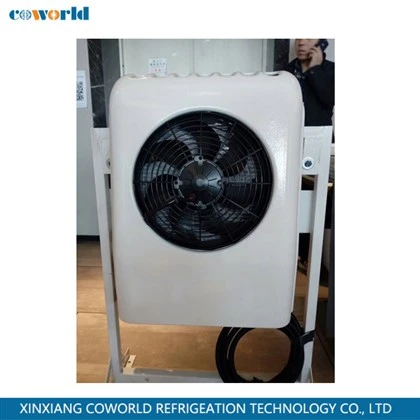
At the end of the day, the SEER rating for commercial refrigeration isn’t just a technical number — it’s a tool to help you save money, reduce waste, and keep your business running smoothly. It’s not about chasing the highest rating possible, but finding the right balance between upfront cost, long-term savings, and your specific operational needs.
Refrigeration Unit If you’re ready to upgrade your commercial refrigeration unit, or have questions about what SEER rating makes sense for your business, don’t hesitate to reach out. We’re here to help you evaluate your options, run the numbers, and find a unit that fits your budget and your needs.
Xinxiang Coworld Refrigeration Technology Co., Ltd.
As one of the most professional refrigeration unit manufacturers and suppliers in China, our products have good reputation in the market. We warmly welcome you to buy cheap refrigeration unit for sale here from our factory. If you have any enquiry about cooperation, please feel free to email us.
Address: B103 ROOM, GT CITY, NO.199 ZHENGZHONG ROAD, HIGH TECH ZONE, XINXIANG CITY, HENAN PROVINCE, CHINA
E-mail: coworldfrio@hotmail.com
WebSite: https://www.coworldthermo.com/
