If you’ve ever walked into a kitchen showroom and run your hand over a marble countertop that feels smoother than glass, or stared at a granite floor in a hotel lobby that catches the light in every corner, you’ve experienced the work of a stone polishing machine first-hand. For years, I’ve supplied these machines to fabricators, construction teams, and home renovators, and the question I get asked most often isn’t “how does it work?”—it’s “what is it actually used for, beyond making stone look pretty?” The answer is more practical, and more versatile, than most people realize. Let’s break down exactly what these machines do, why they matter, and how they’re shaping the stone industry every single day. Stone Polishing Machine

First, let’s start with the basics: stone polishing machines aren’t a single tool. They’re a family of equipment designed to refine, smooth, and finish natural stone surfaces like granite, marble, quartz, limestone, travertine, and even engineered stone. I remember a customer who came to me three years ago, a small countertop fabricator in a rural town, saying he could get by with a sander and a few sanding pads. But after a month of wasting 10 hours a day hand-polishing edges and dealing with inconsistent finishes, he invested in a mid-sized polishing machine—and his business doubled in six months. That story isn’t rare. Too many people underestimate how much time and quality these machines save, especially when you’re working with hard, abrasive stones like granite.
One of the most common uses, and the one most people picture, is polishing countertops for residential and commercial spaces. When a fabricator cuts a slab of granite or marble to the right size for a kitchen island or bathroom vanity, the cut edge is rough, pitted, and often has micro-cracks from the saw blade. A polishing machine, whether it’s a handheld unit for small edges or a full automated line for large production shops, uses a sequence of diamond-impregnated pads (grit sizes ranging from 50 for rough shaping to 3,000 or higher for that mirror finish) to smooth that edge step by step. I’ve seen fabricators achieve a glass-like sheen on a granite edge that was so rough it could have cut you a week prior. Without this step, countertops would look unfinished, and they’d be far more prone to staining and chipping in daily use.
But countertops are just the tip of the iceberg. Stone polishing machines are also critical for floor restoration and maintenance. Old limestone floors in historic buildings, for example, get dulled by decades of foot traffic, spilled cleaners, and wax buildup. I supplied a set of rotary polishing machines to a team restoring a 19th-century library last year, and they used the machines to strip old wax, grind out scratch marks, and re-polish the floor to match its original 1890 sheen. For commercial spaces like malls or airports, automatic floor polishing machines (sometimes called burnishers, though they’re different from the high-speed burnishers used for daily cleaning) are used to keep floors looking new without tearing up the slab every few years. I’ve had clients tell me they can extend the life of a stone floor by 10 to 15 years with regular polishing machine maintenance, which saves hundreds of thousands in replacement costs.
Another use that’s less talked about is precision stone shaping and profiling. If you’ve ever seen a countertop with a bullnose edge (rounded) or an ogee edge (a curved, decorative edge that’s common in traditional homes), that’s not just sanding—it’s profiling. Many modern stone polishing machines have interchangeable profiling attachments that let fabricators create complex edge shapes consistently, even for large batches. A few months ago, a custom home builder came to me needing 20 bathroom vanities with a mitered ogee edge for a luxury development. Hand-shaping each edge would have taken three days per vanity; with our automatic profiling attachment, the machine did the same job in 45 minutes per vanity, with zero inconsistencies across all 20. That level of precision is impossible to get by hand, especially for large production runs.
Even for smaller, decorative stone projects, these machines are essential. Think about fireplace surrounds, garden statues, or custom tile murals. A landscape artist I work with uses a handheld stone polishing machine to finish outdoor tile fountains—grit sizes for outdoor work are different (they’re more slip-resistant, but still smooth enough to avoid rough edges that could cut swimmers). Without the right polish, outdoor stone can also develop mildew or discoloration in uneven, rough spots, so the polishing step not only looks better but protects the stone too.
Now, let’s talk about why these machines are different from regular woodworking sanders or metal polishers. Stone is far harder and more abrasive than wood or metal, so stone polishing machines use diamond tools instead of sandpaper. I get asked all the time if a regular orbital sander will work on stone—no, it won’t. The grit would wear out in minutes, and you’d end up with inconsistent scratches that are almost impossible to fix. Diamond pads, which I source for my machines, are coated with tiny diamond particles that cut through stone slowly and evenly, which is why the polishing process is a sequence of finer and finer grits: it’s not just smoothing, it’s gradually refining the surface to get the desired hardness and sheen.
Another key use of stone polishing machines is surface preparation for sealant application. Wait, sealant? I know it’s counterintuitive, but a rough, uneven surface won’t absorb sealant evenly. Before a fabricator seals a countertop to protect it from wine or coffee stains, they’ll use a polishing machine with a low-grit pad to open up the stone’s pores just enough for the sealant to penetrate. This ensures the sealant lasts for years, instead of peeling off in a few months. A fabricator I worked with found that skipping this step cut their sealant lifespan in half, so now it’s a standard part of their process.
I’ve also seen stone polishing machines used in the reclamation industry. Old buildings being torn down often have stone facades or columns that still look good, but they’re dirty and weathered. Instead of sending the stone to a landfill, reclamation companies use pressure washers first, then a polishing machine to strip the weathered top layer and restore the stone’s original look. This is a huge win for sustainability—reclaimed stone has a unique character that new quarried stone can’t match, and polishing machines make it usable again.
Of course, there are different types of stone polishing machines for different jobs. Handheld units are great for small jobs, touch-ups, or job sites where you can’t bring a large machine. For example, when renovating a kitchen in a finished home, you can’t move a 500-pound automated line through the front door, so a handheld machine lets fabricators polish on-site. For large production shops, automated lines with multiple heads that run through a sequence of grit pads are the way to go—they can polish an entire countertop in 10 minutes, compared to an hour by hand. I even supply machines for quarries: after blocks are cut from the mountain, a polishing machine is used to finish the block surface before it’s shipped to fabricators, which saves time on the shop floor.
Now, let’s talk about a common misconception: many people think stone polishing machines are only for new stone, but they’re also critical for stone repair. If a granite countertop gets a deep scratch from a knife, or a marble vanity has a stain that won’t lift, a polishing machine can grind down the scratch or stained layer and re-polish the surface to match the rest. I’ve had customers bring in a countertop that they thought was ruined, and after a few hours with a polishing machine, it looked like new. That’s a game-changer for homeowners who don’t want to replace their entire countertop for a small damage.
What’s next for stone polishing machines? I’ve seen a rise in automated machines with AI calibration, which can detect the thickness of a stone slab and adjust the pressure and grit sequence automatically. This takes the guesswork out of the process, so a new fabricator can get a professional finish their first time out, instead of needing years of experience. There’s also a growing focus on eco-friendly machines that use less water (stone polishing requires water to cool the diamond pads and reduce dust) and recycle that water instead of sending it to waste. I supply machines with closed-loop water systems that cut water use by 70%, which is great for quarries in arid regions.
I’ve been in this industry for 12 years now, and one thing I’ve learned is that a stone isn’t just a raw material—it’s a product that adds value to a home or building. The polishing machine is the tool that turns a rough, heavy slab into something that people will interact with every day, something that feels luxurious and lasts for decades. I’ve seen a customer’s face when they first run their hand over a polished granite countertop they spent months working on, and that’s why I love what I do.
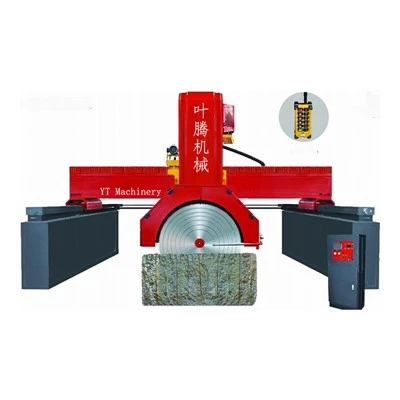
If you’re a fabricator, a construction manager, a homeowner planning a renovation, or anyone working with natural stone and looking to improve your process, I’m here to answer any questions and help you find the right stone polishing machine for your needs. Whether you need a small handheld unit for touch-ups, an automated line for production, or a machine for floor restoration, we can discuss your project and find a solution that fits your budget and goals. Don’t hesitate to reach out to start a conversation about how stone polishing machines can work for you.
Stone Machine References:
Natural Stone Institute. "Surface Finishes for Natural Stone: A Guide for Fabricators and Installers." 2022.
Construction Materials magazine. "Sustainability in Stone Processing: The Role of Polishing Equipment." 2021.
International Masonry Institute. "Restoring Historic Stone Surfaces: Best Practices for Polishing and Maintenance." 2020.
Stone World Magazine. "Automation in Stone Fabrication: Trends in Polishing Technology." 2023.
Nanan Yeteng Machinery Co., Ltd.
With abundant experience, we are one of the most professional stone polishing machine manufacturers and suppliers in China. Please feel free to wholesale durable stone polishing machine in stock here from our factory. All customized machines are with high quality and competitive price.
Address: Nan’An Ye Teng Machinery Co Ltd(No,Dk24-F, Hailian Hi Tech Business Incubator, Shuitou Town, Nanan City Fujian China)
E-mail: 17758730131@163.com
WebSite: https://www.yetengmachine.com/
