Hey there, thanks for dropping by—chances are you’re either deep in a construction project, troubleshooting a facade gap that’s been bugging you, or just curious about how structural sealants actually work. Today, we’re breaking down one of the most common questions I get every week from contractors, architects, and even DIYers who’ve stumbled our way: What’s the actual maximum gap a structural sealant can fill? Structural Sealant
Let me start by being real—no sales fluff here. When I first started in the structural sealant game 12 years ago, I thought this was a straightforward answer. Spoiler: it’s not. Back then, I’d get a call from a guy on a jobsite panicking because he had a 2-inch gap between two aluminum facade panels, asking if we had a sealant that could “just slop in there and hold.” I’d have to tell him, no, that’s not how structural sealants work—and that confusion is why I’m writing this today.
First, let’s clear up the difference between structural sealants and regular old caulking. I see this mix-up all the time. Regular caulking (like the $2 tube you grab at Home Depot for your bathroom) is for minor gaps—sealing out water, not holding things together. Structural sealants (what we supply) are engineered to do two big jobs: bond two rigid materials (usually glass, metal, concrete, or stone) together and move with thermal expansion, wind, or building settlement. That movement is key here—sealants have to stretch and compress without breaking, which is where that maximum gap limit comes in.
So, what’s the number? The short answer is: it depends on three big factors: the type of structural sealant, the joint movement capability, and the material it’s bonding. But let’s get specific, because vague answers don’t help anyone on a tight deadline.
First, the main types of structural sealants out there: silicone, polyurethane, and structural acrylics (though acrylics are rarely used for heavy structural jobs). Silicone is the workhorse—90% of the structural sealant on commercial facade projects is silicone, because it’s flexible, weatherproof, and sticks to almost everything. For standard-grade structural silicone, the maximum gap you’ll see in industry specifications is usually around ½ inch (12.7 mm). Wait, I know what you’re thinking—“Half an inch? That’s it?” Let me explain why.
Silicone sealants have something called a “movement capability rating,” written like 25LM or 50LM. The number is the percentage of movement the sealant can handle, and the “LM” means it’s low-modulus (more flexible, better for structural joints). A 25LM sealant can stretch 25% past its original length, and compress 25% back. Here’s the math that makes this make sense: joint depth (how thick the sealant is in the gap) should be roughly ½ to ⅔ of the joint width (the actual gap between the two materials). That’s a rule most contractors learn early—if you fill a gap too deep, the sealant doesn’t bond properly, and it can get stuck in tension or compression, which breaks it over time.
So if your joint is ½ inch wide, the ideal depth is ¼ to ⅓ inch. If you tried to use a ½ inch deep sealant on a 1-inch gap, you’d be violating that rule—and that’s when you get failures, like sealants pulling away from the glass or splitting. Now, what if you have a bigger gap, like ¾ of an inch? That’s where high-performance structural silicones come in. We supply a 50LM structural silicone that can handle gaps up to ¾ inch (19 mm) wide. That’s the sweet spot for most heavy commercial projects, like skyscraper facades or large storefronts.
But wait, polyurethane structural sealants? They’re less common for facade work, but sometimes used for concrete joints or metal framing. Their maximum gap is a bit trickier—usually around ⅜ inch (9.5 mm) to ½ inch, because they’re a bit stiffer than silicone, so they can’t stretch as far without breaking. That’s why we don’t push polyurethane for big gaps—silicone is just more reliable there.
Now, let’s talk about the exceptions, because there are always edge cases. What if you have a gap larger than ¾ inch, like 1 inch, between two precast concrete panels? Can you still use structural sealant? The answer is yes, but with a caveat. You can’t just slather sealant into that 1-inch gap. First, you need to use a backer rod—this is a foam or plastic rod that you stuff into the gap to control the depth of the sealant. So for a 1-inch gap, you’d use a ⅔-inch backer rod, which leaves you with a ⅓-inch depth for the sealant. Wait, but that still doesn’t hit the maximum gap. Oh right—for extra-wide gaps, you have to use a structural sealant designed for high movement, like our 50LM silicone, and you have to make sure the joint is engineered to handle that movement. Also, some projects use two-part structural sealants for gaps up to 1.25 inches (31.75 mm), but that’s super specialized and not common for standard jobs.
Another big factor: what materials are you bonding? If you’re sticking glass to metal, that’s a standard joint, so you can hit those maximum gap numbers. But if you’re bonding a porous material like concrete to metal, the sealant will absorb into the concrete a bit, which can reduce its effective ability to stretch. So in that case, you’d want to go a bit smaller than the maximum gap—maybe ⅜ inch instead of ½ inch, to account for that absorption. I learned that the hard way early on: we had a customer who tried to use a ½-inch gap structural silicone on concrete and steel, and within a year, half the joints were splitting because the concrete sucked up too much of the sealant, leaving less material to move.
Let’s also talk about what happens if you go over the maximum gap. I’ve seen this way too many times. A restaurant in downtown Chicago had a facade with 1-inch gaps between stone panels, and the contractor used a regular caulking (not structural) to fill it. Within two years, the stone panels started shifting in the winter, and the caulking split, letting water seep in and damage the interior. Another time, a general contractor on a strip mall project used a half-inch gap silicone on a ¾-inch gap, and after a year, the expansion from summer heat stretched the sealant too far, causing it to pull away from the panels. The fix for both was removing the old sealant, using the correct backer rod and our 50LM structural silicone, and they haven’t had issues since.
Wait, but what about small gaps? Does the maximum gap also apply to tiny joints? Technically, yes, but for gaps under ⅛ inch, you don’t need to use full structural sealant—regular caulking works fine, and it’s cheaper. We always tell customers not to overpay for structural sealant when they don’t need it. The maximum gap rule is really for joints that are big enough to need structural support, not just minor sealing.
Now, let’s get into the specs you should actually check, because I don’t want anyone just taking my word for it. Every structural sealant has a manufacturer’s data sheet (MDS) that lists the movement capability and maximum joint width. That’s the real source of truth—not a random blog, not a contractor’s old story from a job they did 20 years ago. For example, our standard structural silicone has an MDS that says maximum joint width is ½ inch, 25LM. Our high-performance line is ¾ inch, 50LM. If you’re working on a project that requires industry certifications, like ASTM C1184 (the standard for structural silicones), you have to stick to those numbers—no exceptions.
Let’s also address a common myth I hear: “I can just add more sealant to fill a bigger gap.” No. Sealant is a flexible material, but it only has so much tensile strength. If you have a 1-inch gap and you try to fill it with a single bead of sealant, the middle part of that bead isn’t bonded to anything, so when the joint moves, that middle section can split. That’s why the backer rod is non-negotiable for gaps larger than ½ inch—it creates the ideal joint depth-to-width ratio so the entire sealant bead is bonded to both sides of the joint, no dead space in the middle.
For those of you doing smaller projects, like a backyard patio or a custom window frame, the same rules apply. If you’re bonding two metal window frames together, the gap is probably ¼ inch, so a standard structural silicone will work. If you’re doing a big outdoor deck with metal railings, the gaps might be a bit bigger—check the MDS on whatever sealant you use, and don’t try to wing it.
Now, I want to be clear about when you can’t use structural sealant, even if you follow the gap rules. Structural sealant is for joints that need to hold two materials together through movement. If you have a gap that’s completely stationary—like two fixed concrete blocks that never move—you can use a cheaper sealant. Structural sealant is for dynamic joints, which is 99% of the joints in commercial construction and most residential exterior projects.
Let’s wrap this up with a quick cheat sheet, because I know you’re already scrolling back to jot this down:
- Standard 25LM structural silicone: Max gap = ½ inch, ideal joint depth = ¼ to ⅓ inch
- High-performance 50LM structural silicone: Max gap = ¾ inch, ideal depth = ⅓ to ½ inch
- Gaps over ¾ inch: Use backer rod to adjust depth, or specialized two-part structural sealant for gaps up to 1.25 inches
- Porous materials (concrete, stone): Shrink gap by ⅛ inch to account for material absorption
- Always check the manufacturer’s data sheet for your specific sealant
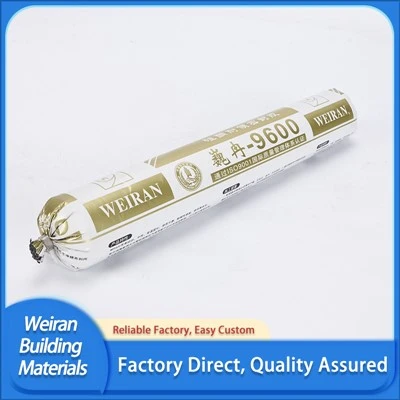
If you’re still unsure about what gap you need for your project, or you need help picking the right sealant, we’re here to help. We’ve worked with contractors, architects, and DIYers on everything from small home renovations to large skyscraper facades, and we can walk you through the specs, backer rod recommendations, and anything else you need to get the job done right—no pressure, no sales pitches, just real advice.
Anchor Bolt Feel free to reach out whenever you’re ready to chat about your project and find the perfect structural sealant for your needs.
References
- ASTM International. (2021). Standard Specification for Structural Silicone Sealants for Structural Glazing and Related Applications. ASTM C1184-21.
- Construction Sealant and Waterproofing Association. (2022). Joint Design and Installation Guidelines for Structural Sealants. CSWA Publication 101.
- Dow Chemical. (2023). Structural Silicone Sealant Technical Data and Application Guidelines. Dow Construction Solutions.
Shandong Weiran Building Materials Co., Ltd.
Shandong Weiran Building Materials Co., Ltd. is one of the most experienced structural sealant manufacturers and suppliers in China, also supports customized service with low price. Welcome to buy bulk high quality structural sealant in stock here from our factory. Contact us for quotation.
Address: No.1, Street-front Shop, Jia 19, No.137 East Xingyuan Road, Zhangdian District, Zibo City, Shandong Province, China
E-mail: qinjuan@sdwrjc.com
WebSite: https://www.sdwrjc.com/
