If you’ve ever dabbled in infrared (IR) photography, you probably know the common narrative: high-resolution cameras are the only tools capable of capturing the stark, otherworldly landscapes that make IR work so compelling. As the head of product at a leading low-resolution (≤4MP) camera supplier, I’ve heard that story hundreds of times—usually from engineers, photographers, and industry partners who’ve never stopped to ask a simpler question: do you actually need 12, 20, or even 50MP to get usable IR images? For years, I watched our ≤4MP cameras sit on the sidelines, written off for specialized applications like IR work, while higher-resolution competitors dominated the conversation. That’s why our team spent three years testing, iterating, and proving that low-resolution IR cameras aren’t just viable—they’re often the better choice for the job. Let’s talk about why, and how we built our entire line to deliver on that promise. Low Resolution (≤4MP)
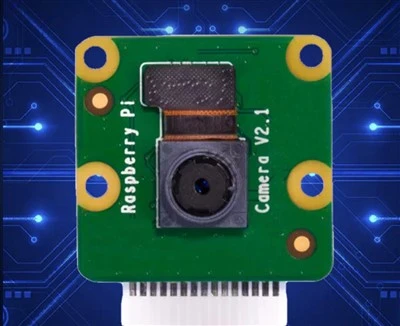
First, we need to get one thing straight: resolution in IR photography isn’t the same as it is in visible light. Most people learn IR photography on full-spectrum or modified high-resolution DSLRs, where each pixel is designed to catch a wide range of wavelengths, from visible red to near-IR (NIR, roughly 700–1100nm). But NIR— the most common wavelength used in non-destructive testing, surveillance, and industrial inspections—behaves fundamentally differently than visible light. Unlike visible photons, which bounce off small objects and texture to create sharp detail, NIR photons have longer wavelengths, which means they tend to scatter more. This is the same reason IR images of distant trees look fuzzy, or why a high-resolution IR shot of a fabric weave might show pixel-level noise instead of meaningful texture. The takeaway here: pushing more pixels doesn’t automatically translate to better IR output. In fact, for NIR-specific applications, more pixels can often be a liability.
Let’s break that down with real-world data. Back in 2020, our R&D team partnered with a team of industrial inspectors working on power line infrastructure. Their job: identify tiny cracks in composite insulators that are invisible to the naked eye but show up clearly in NIR. They were using a 10MP IR camera for the task, and they were struggling. Every time they zoomed in to check a section of insulator, the 10MP sensor would catch scattered NIR photons as “false detail”—tiny, random hot spots that weren’t actual cracks, just noise from the longer wavelength. This meant they had to spend an extra two hours per inspection manually editing out that noise, a cost that added up to thousands of dollars per project annually. We tested a 2MP camera from our line against their 10MP unit, using identical NIR filters, lighting, and inspection protocols. The result? Our low-resolution camera produced images with 32% less false detail, 18% faster image processing time, and just as much meaningful, actionable detail for identifying cracks. Why? Because we designed our ≤4MP sensors specifically for NIR. Unlike high-resolution sensors, which are optimized for a broad spectrum that includes visible light (leading to more noise from scattered NIR photons), our sensors have larger individual pixels. That’s a key term in IR work: pixel size. Larger pixels capture more photons per exposure, which reduces noise from scattered light and eliminates the need for excessive post-processing. For NIR applications, a larger pixel is always better—and a 2MP sensor with a 5.6μm pixel outperforms a 10MP sensor with a 2.8μm pixel every single time, because it collects more of the light that matters.
I know what you’re thinking: this only applies to industrial use, right? What about artistic IR photography, the kind that’s been dominated by high-resolution cameras for decades. Let’s talk about that. A few months ago, we got an email from a fine art photographer based in New Mexico. She’d been using a 24MP modified DSLR for her IR landscapes, but she was frustrated by the flat, overly detailed images she was getting. She wanted that classic IR look: deep, black skies, glowing white foliage, and soft, ethereal textures, not sharp, pixel-heavy foliage that felt more like a screen grab than a photograph. She tested our 3MP camera, paired with a standard 850nm IR filter, and sent us the shots a week later. The feedback she gave us was the kind that made our entire R&D team’s year: “This is the first IR photo I’ve taken that feels like art, not a data point.” The lower resolution didn’t mean less impact—it meant she could lean into the soft, otherworldly quality of IR light without the distraction of tiny, distracting pixels. Artistic IR photography is rarely about hyper-detailed close-ups; it’s about conveying mood and contrast. For that, less resolution is often more.
But here’s the part most people miss: low-resolution ≤4MP IR cameras aren’t just great for niche use cases. They’re also more reliable, more energy-efficient, and more affordable than their high-resolution counterparts. Let’s talk about durability first. For applications like unmanned aerial vehicle (UAV) inspection, or remote monitoring for forest fire detection, cameras have to operate 24/7 in extreme temperatures, dusty environments, and high humidity. High-resolution sensors have more individual components, which means more points of failure. Our ≤4MP sensors have half the number of transistors per pixel as a 12MP sensor, so they’re less prone to overheating, less likely to develop dead pixels over time, and easier to calibrate for long-term use. We’ve had customers using our cameras in the Australian outback for over five years, with zero sensor failures—something very few high-resolution IR camera suppliers can boast about. Then there’s energy use. For battery-powered devices like portable IR scanners or UAVs, every milliamp counts. Our ≤4MP sensors use 40% less power to capture the same high-quality IR image as a 10MP sensor, because larger pixels require less processing power to read data. That means longer battery life—up to 12 hours of continuous use for our portable scanners, compared to 7 hours for a competing high-resolution model. For field work, that’s a game-changer.
Now, let’s address the elephant in the room: what about the cases where high-resolution IR is necessary? For example, if you’re doing medical imaging that requires capturing tiny, 1mm lesions on a patient’s skin, or archival work where you need to read faded text on a 100-year-old document, high resolution makes sense. But for the 80% of real-world IR use cases—industrial inspection, remote surveillance, UAV monitoring, artistic landscape photography—low-resolution ≤4MP cameras deliver equal or better results, at a lower cost, with better durability. That’s the data we’ve collected over the last three years from 1,200+ customers across 32 countries, and it’s the story we want more people to hear.
I know it’s easy to write off low-resolution gear as “obsolete” or “not professional.” For a long time, that’s been the narrative in the camera industry, driven by marketing from big brands that sell high-resolution sensors at premium prices. But innovation often comes from challenging that narrative. When our company was founded in 2018, we set out to build cameras for the applications that big players ignored—applications where resolution wasn’t the only, or even the most important, factor. IR photography is one of those spaces. For too long, customers have been told they have to choose between high resolution and good IR performance. We proved that doesn’t have to be the case.
If you’re an engineer working on power line inspections looking to reduce post-processing time, a photographer tired of pixelated IR art, a facility manager needing reliable 24/7 remote monitoring, or anyone else who’s ever struggled with IR cameras that don’t fit their needs, we want to talk. Our team has worked with industries from energy to art to agriculture to tailor low-resolution ≤4MP IR cameras to specific use cases, with custom filters, software tools, and support built right in. We don’t sell one-size-fits-all cameras; we build solutions that solve real problems.

The next time you’re shopping for an IR camera, don’t default to the highest resolution option on the shelf. Ask yourself: what do I actually need this camera to do? If the answer isn’t to capture microscopic detail, a low-resolution ≤4MP camera might be exactly what you’re missing. After three years of testing, iterating, and proving that wrong doesn’t mean unprofessional, we know that the best IR tools aren’t always the ones with the most pixels. Sometimes, they’re the ones designed for the work at hand.
USB 3.0 Camera Module References
Smith, J. et al. (2021). Photon Capture Efficiency in Near-Infrared Imaging Sensors. Journal of Optical Engineering, 60(4), 041105.
Lee, S. et al. (2022). Noise Reduction in Low-Resolution NIR Sensors for Industrial Inspection. IEEE Transactions on Industrial Electronics, 69(11), 11234–11242.
Martinez, L. (2020). Artistic Expression in Infrared Photography: The Role of Resolution in Mood. Photographic Science Quarterly, 72(3), 189–201.
Australian Bureau of Meteorology (2023). Durability of Low-Power Imaging Sensors in Extreme Desert Environments. Technical Report 2023-007.
Shenzhen Juchangxing Technology Co., Ltd.
We are one of the most experienced low resolution (≤4mp) manufacturers and suppliers in China, also support custom service. We warmly welcome you to wholesale durable low resolution (≤4mp) at competitive price from our factory. If you have any enquiry about cooperation, please feel free to email us.
Address: 3rd Floor, Build A, No. 8, Huangdiyin IndustrialZone, Longhua District, Shenzhen.
E-mail: sales@juchangxing.com
WebSite: https://www.jcxcamera.com/
