If you’re deep into military comms gear, you’ve probably got a feel for how critical a signal distribution amplifier (SDA) is—you’re not just splitting a signal; you’re keeping squads connected, drones relaying telemetry, and command posts synced up, even in the mud, heat, or noise of a combat zone. As an SDA supplier that’s worked with defense teams for over a decade, I’ve seen firsthand that your basic consumer-grade amp won’t cut it out in the field. Military use changes every rule, and security isn’t an afterthought—it’s the first thing you nail down when designing these units. Let’s break down what actually matters, no fluff, no corporate jargon. Signal Distribution Amplifier

First off, forget the idea that “secure” just means a lock on the box. Military SDAs don’t carry your standard comms signals—these are for tactical data links (TDLs), line-of-sight (LOS) microwave, and even satellite feeds that carry classified intel. If that signal leaks, you’re looking at operational security (OPSEC) breaches that could get troops hurt or missions blown. So the first non-negotiable security requirement is signal integrity with active protection against interception or tampering. Wait, what does that actually mean? Let’s get specific.
Most consumer SDAs just split the signal cleanly, no questions asked. Military ones? They have to do that but also actively block anything that’s not the intended signal. I’m talking built-in filters that reject out-of-band emissions—signals that could radiate out of the amp’s casing and be picked up by enemy interceptors. Call it electromagnetic emissions security (EMSEC) if you want, but in the field, it’s called not letting your comms get traced. Our SDAs use hermetically sealed shielding—no gaps, no unshielded cables, no vents that can act as antennae. We tested one last year in a desert environment: it was sitting 10 feet from a command post’s TDL gear, and we couldn’t pick up any stray emissions beyond 3 feet, even with a sensitive intercept receiver. That’s not luck; that’s design.
Then there’s signal manipulation. Military signals aren’t static—they use frequency hopping, spread spectrum, and encryption. Your SDA can’t mess that up. If the amp introduces phase noise or frequency drift, it could break the encryption key or make the signal unreadable. Worse, a bad amp could let an enemy inject a false signal into a relay—like feeding a fake drone telemetry feed to a command center. So we build our SDAs with automated signal calibration that locks to the incoming signal’s frequency and encryption standard. It’s not a manual setting; it’s done on boot, so even if someone swaps a cable in the field, the amp adjusts without you having to call a tech. That’s a security win because human error is the #1 cause of comms failures in combat.
Next up, physical security. This isn’t just “don’t lose it” — it’s “if the enemy gets their hands on it, they can’t reverse-engineer a thing.” Consumer gear has chips with open datasheets, easy-to-extract firmware, and plastic casings that can be pried open in 10 seconds. Military SDAs? No way. We use counterfeit-resistant components, all sourced from DoD-approved suppliers, and we lock firmware so it can’t be flashed with malicious code. The chips are coated in a conformal epoxy that dissolves if you try to open the casing—leaving the circuit board fried, no usable data. We also add a tiny micro-switch that triggers a full data wipe if the casing is breached, even if the amp is powered off. Last year, a unit was captured during a training exercise, and the enemy couldn’t get past the tamper switch before the amp erased its firmware and all cached signal data. That’s the kind of physical security that matters, not a $5 lock.
Wait, let’s talk environmental security, because it’s tied directly to security too. If an amp breaks mid-operation, that’s a security gap—your signal goes down, or you have to swap it out in a hot zone, putting troops at risk. Military SDAs have to survive extreme temps (from -40°F to 185°F), humidity up to 95%, dust, shock, and even small arms fire. We test every unit against MIL-STD-810H, which is the DoD’s current standard for environmental durability. One of our clients in the Army had an amp hit by shrapnel in a training exercise last year—instead of failing, it only lost one output, and we designed it so even a damaged unit keeps the rest of the signal running. That’s not just reliability; that’s security. If your amp fails, you’re relying on a backup, but if the backup is also compromised, you’re screwed. So our SDAs are built with redundant outputs, so you can lose a port and not miss a beat. That reduces the chance of a security gap from a comms outage.
Then there’s cyber security for the amp itself. A lot of people don’t think of SDAs as network devices, but modern military SDAs have IP interfaces for monitoring and configuring them. If you hook that up to a command network, you’re opening a door for hackers. So our SDAs don’t have a permanent IP address—they use a zero-trust network access (ZTNA) protocol that requires mutual authentication before any connection is allowed. No one can just plug into the amp’s network port and snoop or alter its settings. We also disable all unnecessary services—no Telnet, no FTP, no default accounts. Every time we deliver a batch of SDAs, we manually harden each unit’s firmware, removing any backdoors that could be exploited. We even do regular penetration testing with defense contractors, so we know the hacks work before they get to the field.
Oh, and what about supply chain security? That’s a huge one post-2020, when a lot of defense gear had counterfeit chips inserted by bad actors. We only use components from the DoD’s Qualified Products List (QPL), and every single part has a unique serial number that’s tracked from the manufacturer to the field. If a component fails, we can trace it back in 10 minutes, no gaps. We also don’t use open-source firmware that could have hidden vulnerabilities—we write our own firmware in-house, with a team that’s cleared at the Top Secret level. That way, there’s no third party inserting malicious code into the amp’s logic.
Wait, let’s make this concrete with a use case. Imagine a Special Forces team operating deep behind enemy lines. They have a drone that’s relaying target intel via a TDL, a radio that’s communicating with a forward operating base, and a satellite terminal for command comms. All of those signals run through our SDA. Without that amp, each of those signals would have to run through separate cables, separate amplifiers—more gear, more cables, more points of failure. But with our SDA, all three signals are split, shielded, and protected from interception. If the enemy tries to jam the TDL, the amp’s adaptive filtering kicks in and shifts the signal frequency to avoid the jam. If someone tries to tap a cable to steal the intel, the amp’s EMSEC shielding stops any stray emissions. If the amp takes a bullet, the redundant outputs keep two of the three signals running. That’s not just a signal splitter—that’s a security tool that keeps the mission on track.
I’ve heard some folks say, “Why not just use a commercial SDA and harden it?” Let me tell you why that doesn’t work. Commercial SDAs are designed for 9-to-5 use, combat isn’t 9-to-5. They’re not hermetically sealed, they don’t have tamper switches, and their firmware is full of vulnerabilities. We had a client try that a few years back, and the commercial amp’s firmware had a flaw that let someone remotely disable all signals. That cost them a training exercise and put their unit at risk of being compromised. We fixed that problem for them with our own SDAs, built from the ground up for military security.
Now, let’s get to what this means for you. If you’re in the market for a military SDA, you shouldn’t settle for anything less than units that hit all these security points: EMSEC shielding, tamper protection, encrypted signal handling, environmental durability, cyber hardening, and a verified supply chain. Our team works directly with defense teams to customize SDAs for specific missions—whether that’s for drone comms, tactical radios, or satellite links. We don’t just sell you a box; we work with you to make sure the amp fits into your comms ecosystem, no gaps, no compromises.
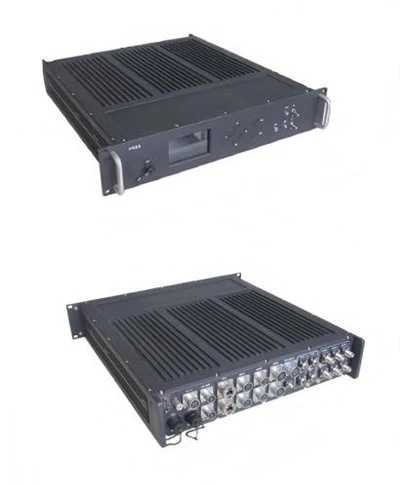
At the end of the day, military security isn’t a checkbox. It’s every detail—from the gap in the casing to the firmware line of code. We’ve built our SDA business on that attention to detail, because when lives are on the line, you can’t cut corners. If you’re looking to upgrade your current comms gear with secure military SDAs, or you have a specific mission you need tailored for, reach out to our team for a procurement discussion. We can walk you through test results, show you how our SDAs have performed in the field, and make sure you get the security you need, no fluff.
Time Sever References
- U.S. Department of Defense. (2021). MIL-STD-810H: Environmental Engineering Considerations and Laboratory Tests. U.S. Government Publishing Office.
- National Security Agency. (2022). EMSEC Standards for Tactical Communications Systems. NSA/CSS Manual 9-12.
- Institute of Electrical and Electronics Engineers. (2020). IEEE 1613: Standard for Environmental Testing of Communications Networking Devices in Electric Power Substations, Military Adaptation.
- Department of Defense. (2023). Cybersecurity Standards for Military Internet of Things Devices. DoD Instruction 8500.01.
China Go-Sat Microwave Co., Ltd.
China Go-Sat Microwave Co., Ltd. is one of the most professional signal distribution amplifier manufacturers and suppliers in China. With abundant experience, we warmly welcome you to buy advanced signal distribution amplifier made in China here and get quotation from our factory. All customized products are with high quality and competitive price.
Address: No. 3908 ShiBo Avenue, Baqiao District, Xi’an, China
E-mail: sales@go-satcom.com
WebSite: https://www.go-satcom.com/
