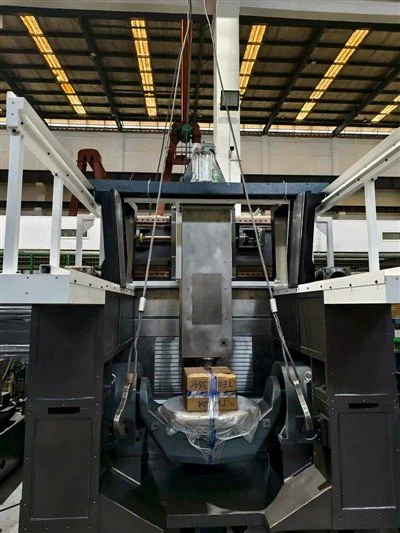
When it comes to the world of precision manufacturing, turn – mill machines are a remarkable innovation that combines the capabilities of turning and milling operations in a single setup. As a turn – mill machine supplier, I often get asked about various aspects of these machines, and one of the most common questions is about the feed rate range. In this blog post, I’ll delve into the feed rate range of a turn – mill machine, explaining what it means, why it’s important, and the factors that influence it. Turn‑Mill Machine Machine
Understanding Feed Rate
Before we jump into the range, let’s first understand what feed rate is. Feed rate refers to the speed at which the cutting tool moves relative to the workpiece during a machining operation. It is typically measured in millimeters per revolution (mm/rev) for turning operations and millimeters per minute (mm/min) for milling operations. In a turn – mill machine, which can perform both turning and milling, the feed rate plays a crucial role in determining the quality of the finished product, the machining time, and the tool life.
Feed Rate Range in Turning Operations
In turning operations on a turn – mill machine, the feed rate range can vary significantly depending on several factors. Generally, for rough turning, where the goal is to remove a large amount of material quickly, the feed rate can be relatively high. A typical rough turning feed rate might range from 0.2 to 0.5 mm/rev. This allows the cutting tool to take deep cuts and remove material at a rapid pace. However, it’s important to note that a very high feed rate can also lead to increased tool wear and a rougher surface finish on the workpiece.
On the other hand, for finishing turning operations, where the focus is on achieving a smooth surface finish and high dimensional accuracy, the feed rate is much lower. A finishing feed rate can range from 0.05 to 0.15 mm/rev. At these lower feed rates, the cutting tool removes material in smaller increments, resulting in a finer surface finish and better control over the dimensions of the workpiece.
Feed Rate Range in Milling Operations
The feed rate range for milling operations on a turn – mill machine is also influenced by multiple factors. In face milling, which is used to create flat surfaces, the feed rate is often expressed in millimeters per tooth (mm/tooth) and then converted to millimeters per minute (mm/min) based on the number of teeth on the milling cutter and the spindle speed.
For rough face milling, the feed rate per tooth can range from 0.1 to 0.3 mm/tooth. This allows for efficient material removal, but again, too high of a feed rate can cause excessive tool wear and poor surface quality. When it comes to finish face milling, the feed rate per tooth is typically reduced to 0.02 to 0.08 mm/tooth to achieve a smooth and accurate surface.
In end milling, which is used for creating slots, pockets, and profiles, the feed rate range is similar to that of face milling. Rough end milling may have a feed rate per tooth of 0.08 to 0.25 mm/tooth, while finish end milling might use a feed rate per tooth of 0.01 to 0.05 mm/tooth.
Factors Influencing the Feed Rate Range
- Workpiece Material: Different materials have different machinability characteristics. For example, soft materials like aluminum can generally tolerate higher feed rates compared to hard materials like stainless steel or titanium. When machining aluminum, you can often use higher feed rates without causing excessive tool wear. In contrast, hard materials require lower feed rates to ensure the cutting tool can effectively remove material without breaking or wearing out too quickly.
- Tool Material and Geometry: The type of cutting tool used, such as carbide, high – speed steel (HSS), or ceramic, and its geometry can significantly affect the feed rate range. Carbide tools are generally more durable and can withstand higher feed rates compared to HSS tools. Additionally, the shape of the tool, such as the number of flutes, the rake angle, and the clearance angle, can also influence how much material the tool can remove at a given feed rate.
- Machine Capabilities: The power and rigidity of the turn – mill machine itself play a role in determining the feed rate range. A more powerful and rigid machine can handle higher feed rates without experiencing excessive vibration or deflection. On the other hand, a less powerful or less rigid machine may require lower feed rates to maintain stability and accuracy during machining.
- Desired Surface Finish and Dimensional Accuracy: If a high – quality surface finish and precise dimensions are required, lower feed rates are typically necessary. Higher feed rates tend to result in a rougher surface finish and less precise dimensions. Therefore, the specific requirements of the final product will impact the choice of feed rate.
Importance of the Correct Feed Rate
Choosing the correct feed rate is of utmost importance in turn – mill machining. If the feed rate is too high, it can lead to several issues. Excessive feed rates can cause the cutting tool to wear out quickly, increasing tooling costs. It can also result in a poor surface finish on the workpiece, which may require additional finishing operations. In some cases, a high feed rate can even cause the tool to break, leading to machine downtime and possible damage to the workpiece.
Conversely, if the feed rate is too low, the machining process will be inefficient, taking longer to complete and increasing production costs. It can also cause the cutting tool to rub against the workpiece instead of effectively cutting, which can lead to heat generation, workpiece deformation, and reduced tool life.
How We Assist in Optimizing Feed Rate
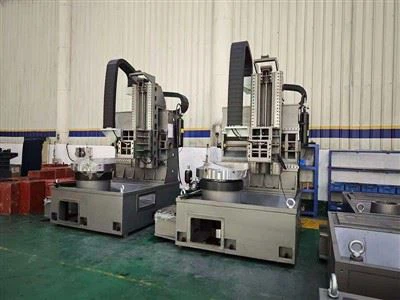
As a turn – mill machine supplier, we understand the complexity of choosing the right feed rate. We offer comprehensive support to our customers in this regard. Our team of experienced engineers can provide technical advice based on the specific requirements of the machining job, including the workpiece material, the desired surface finish, and the available machine capabilities.
We also provide training programs for our customers’ operators. These programs cover topics such as understanding the feed rate range, how to adjust the feed rate based on different machining conditions, and how to monitor the tool wear and surface finish during the machining process. By equipping our customers with the knowledge and skills to optimize the feed rate, we help them improve their machining efficiency, reduce costs, and enhance the quality of their products.
Contact Us for More Information
Drilling and tapping center If you are in the market for a turn – mill machine or have questions about the feed rate range and how it can be optimized for your specific applications, we invite you to contact us for a detailed discussion. Our team is ready to provide you with in – depth information, answer your queries, and assist you in making the best decision for your manufacturing needs. Whether you are a small – scale workshop or a large – scale industrial manufacturer, we have the expertise and the right turn – mill machine solutions for you.
References
- "Machining Handbook" by Industrial Press Inc.
- "Modern Machining Technology" by John A. Schey
- Technical papers from leading machine tool manufacturers on turn – mill machining processes.
Smartech Machinery & Equipment Co., Ltd.
As one of the most professional turn‑mill machine machine manufacturers and suppliers in China, we also support customized service. Please rest assured to buy bulk turn‑mill machine machine made in China here from our factory. Contact us for more details.
Address: Room 2832, Changping Commercial Mansion, Shihua Road, Futian Free Trade Zone, Shenzhen, China
E-mail: smartech@smartechcnc.cn
WebSite: https://www.smartech-cnc.com/
