Do woven patches/labels float in water? Woven Patch/label
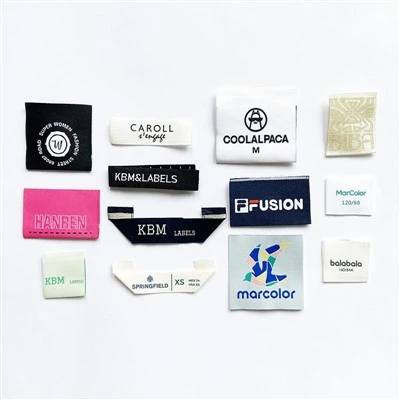
As a supplier of woven patches and labels, I’ve often come across interesting questions from clients. One such question that piqued my curiosity is whether woven patches and labels float in water. At first glance, it might seem like a simple yes – or – no question, but upon further exploration, it’s a topic that involves a bit of science and the characteristics of these products.
Let’s start by understanding what woven patches and labels are. Woven patches are meticulously crafted by interlacing threads together to form a design. The threads are typically made of materials like polyester, cotton, or a blend of both. Polyester is a synthetic fiber known for its durability and resistance to wrinkles, while cotton is a natural fiber that is soft and breathable. Labels are similar in construction, often used to display information such as brand names, sizes, or care instructions.
The ability of an object to float in water is determined by its density. Density is defined as the mass of an object divided by its volume. If an object has a lower density than water (which has a density of approximately 1 g/cm³), it will float. If it has a higher density, it will sink.
When it comes to woven patches and labels, their density is highly influenced by the materials used in their construction. Cotton, for example, absorbs water quite readily. When a cotton – based woven patch is placed in water, it quickly soaks up the water, increasing its mass significantly. This increase in mass, without a corresponding large increase in volume, can cause the density of the patch to exceed that of water, making it sink.
On the other hand, polyester has a different relationship with water. Polyester is a hydrophobic material, meaning it repels water. A woven patch made primarily of polyester may initially float on water because its density is relatively low compared to water. The air trapped within the weave structure also contributes to its buoyancy. However, over time, if water seeps into the patch and displaces the air, the situation might change. The patch could potentially become waterlogged and sink, although this process usually takes longer than with a cotton – based patch.
Another factor that affects the floating ability of woven patches and labels is the presence of additional elements. Many patches and labels have backing materials, such as heat – sealable vinyl or adhesive layers. These materials can also influence the density of the final product. For instance, a patch with a thick vinyl backing will likely have a higher density and is more likely to sink compared to a patch without such a backing.
In addition, the way the patch or label is woven matters. A tightly woven patch with less air between the threads may have a different floating behavior compared to a loosely woven one. A loosely woven patch can trap more air, which can aid in floating.
To test this hypothesis, I conducted a simple experiment in my workshop. I gathered a variety of woven patches and labels, including those made of pure cotton, pure polyester, and blends of both. I also included samples with different backing materials. I carefully placed each item in a large container filled with water and observed their behavior over a period of several hours.
The results were quite revealing. The pure cotton patches sank almost immediately. As soon as they hit the water, they started to absorb it, and within seconds, they were at the bottom of the container. The polyester patches, however, had a more varied response. Some polyester patches, especially those with a looser weave, floated for an extended period, even up to several hours. Others, particularly those with a heavy backing or a more compact weave, started to sink after a while as water gradually penetrated the structure.
For patches and labels made of a blend of cotton and polyester, the outcome depended on the ratio of the two materials. Patches with a higher proportion of cotton tended to sink faster, while those with more polyester were more likely to float for a longer time.
From a practical perspective, this knowledge can be useful for our clients. For example, if a client is looking to use woven patches or labels in an environment where they may come into contact with water, such as for outdoor sportswear or marine – related products, considering the floating ability can be important. If the patch or label needs to remain visible and intact in a wet environment, a polyester – based option might be more suitable.
As a supplier, we take pride in understanding the unique properties of our products so that we can provide the best guidance to our clients. Whether you’re a fashion brand looking to add a touch of style with woven patches, or a manufacturer in need of high – quality labels, we are here to offer you a wide range of options.
If you’re interested in learning more about our woven patches and labels, or if you have specific requirements regarding their performance in different environments, we’d love to hear from you. Our team of experts can provide detailed information, samples, and pricing based on your needs. Feel free to reach out to start a productive discussion and let’s find the perfect woven patches and labels for your project.
Flat Embroidery Patch References
- "Textile Science Fundamentals" – A comprehensive textbook on textile materials and their properties.
- "Materials in Water: Behavior and Applications" – A research compilation discussing the interaction of various materials with water.
Yiwu Lanying Garment Accessories Co., Ltd.
As one of the most professional woven patch/label manufacturers and suppliers in China, we’re featured by quality products and good service. Please rest assured to wholesale premium woven patch/label at competitive price from our factory. Customized orders are welcome.
Address: F1,NO.448, Majiaotang Village, Houzhai Street, Yiwu City, Zhejiang Province, China 322000
E-mail: zhangchunyingzi@126.com
WebSite: https://www.embroideredpatchfactory.com/
