If you’re a manufacturing engineer, workshop manager, or small business owner looking to add a High Speed Drilling and Tapping Center (HSDTC) to your production line, one of the first questions you’ll ask is: “How much does this actually cost?” As a supplier who’s worked with hundreds of clients—from startup jewelry makers to automotive component facilities—I can tell you there’s no one-size-fits-all price tag. That’s because HSDTCs are built for specific use cases, with different capabilities, precision levels, and add-ons that shift costs dramatically. Over the past 12 years in this industry, I’ve helped clients find machines that fit their budget without forcing them to sacrifice the performance they need to hit production targets or maintain part quality. Let’s break down the price ranges, what drives those numbers, and how to figure out what makes sense for you. High Speed Drilling and Tapping Center
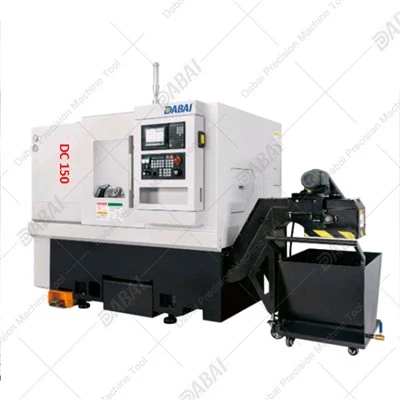
First, it’s important to define what an HSDTC actually is, because that’s where a lot of confusion starts. Unlike a manual drill press or even a basic vertical machining center (VMC), an HSDTC is designed for high-volume, precise drilling and tapping of small to medium-sized parts—think electronics connectors, medical device hardware, automotive fasteners, or aerospace brackets. The key differentiators here are spindle speed (most HSDTCs spin between 10,000 and 40,000 RPM, vs. 6,000 RPM for a standard VMC), rapid traverse rates (up to 120 meters per minute, cutting cycle time by 50% or more), and rigid, compact frames that reduce vibration during high-speed operation. But even with that core definition, the range of prices is huge. Let’s start with the lowest end: entry-level HSDTCs, which typically cost between $15,000 and $35,000.
I’ll be clear about who entry-level HSDTCs are for. They’re perfect for small businesses, startups, or workshops that run low to medium volumes of parts, usually 1,000 to 10,000 parts per month, and don’t need 24/7 operation. Most of these machines are made in China or Taiwan, with solid core components but fewer bells and whistles. For example, a basic entry model might have a 12,000 RPM spindle, a 10-tool automatic tool changer (ATC), and a work envelope of 300mm x 200mm x 200mm—enough for small connectors or fasteners. You won’t get built-in temperature compensation (critical for consistent precision over long runs) or a full 4th-axis rotary table, but you will get reliable, precise drilling and tapping for simple parts. Last year, I worked with a 3-person custom furniture accessory maker who was manually tapping their brass handles and losing 20% of parts to misaligned threads. We recommended an entry-level HSDTC for $28,000, and within three months, their part scrap rate dropped to 3%, and they could take on 3x more orders without hiring more staff. The tradeoff here is that these machines usually have a 1-year warranty, and parts might take a week or two to ship if something breaks, so they’re not ideal for high-volume operations.
Next, the mid-range HSDTC, which is the sweet spot for most small to mid-sized manufacturing facilities. These run between $35,000 and $70,000. The difference here is night and day compared to entry-level models. Mid-range machines are often made in Taiwan or South Korea, with higher-grade components: a 20,000 to 30,000 RPM spindle, a 16 to 24-tool ATC, and built-in features like linear scales for better position accuracy, temperature compensation to prevent drift during long runs, and optional 4th or 5th-axis tables for complex parts. A customer of mine last year was a medical device startup making titanium bone screws, which require extremely precise tap threads (within 2 microns to ensure they fit perfectly into bone). We matched them with a mid-range HSDTC for $52,000, and that machine now runs 18 hours a day, 6 days a week, with zero precision issues over two years. The warranty is 2 to 3 years, and parts are stocked locally in most regions, so downtime is minimal. Mid-range models also handle higher volumes—up to 50,000 parts per month—making them worth the investment if you’re looking to scale. One common mistake I see here is clients overbuying mid-range features they don’t need, like a 5th-axis table if they only make flat parts. We always do a free part review, where we ask for 2-3 sample parts and a monthly production volume, to cut out unnecessary add-ons and keep costs on target.
Then there’s the high-end HSDTC, which starts at $70,000 and can go well over $150,000. These are the machines for large-scale automotive, aerospace, or medical part manufacturers that run 24/7, with strict ISO or AS9100 quality standards, and need ultra-high precision for complex parts. High-end HSDTCs are typically made in Japan, Germany, or the U.S., with features like a 40,000 RPM spindle for micro-drilling (for parts like smartphone camera components that have holes smaller than 0.1mm), full 5-axis capability, linear motors instead of ball screws for even faster traverse rates, and integrated automation like robotic load/unload systems. For example, a Tier 1 automotive client I worked with was making 100,000 aluminum engine valves per month, each needing 12 precise drilled holes and 6 tapped threads. They were using three mid-range machines that kept breaking down during 24-hour runs, so we installed two high-end HSDTCs for $95,000 each, and now they run lights-out with zero downtime for over a year. The precision here is within 1 micron, which is non-negotiable for parts that need to meet global industry standards. The tradeoff, obviously, is the higher upfront cost, but the productivity gains and lower scrap rate make it a better long-term investment for high-volume operations.
Now, let’s talk about the factors that can shift a machine’s price by tens of thousands of dollars, because that’s where most clients get confused. The first is spindle type: a standard belt-driven spindle costs less than a direct-drive or inline spindle, which is more precise and lasts longer, especially at high RPM. Another big one is tool changer capacity and type: a 24-tool ATC is useful for complex parts that need multiple drills and taps, but a 60-tool ATC lets you switch tools without stopping production for longer runs, adding $10,000 to $15,000 to the price. Automation is another factor: adding a robotic arm for load/unload or a conveyor system to move parts in and out of the machine can add $15,000 to $40,000, but it cuts down on labor costs and lets you run lights-out. Even small things, like a touch probe to measure parts mid-run or a mist collector for cutting fluids, can add a few thousand dollars, but they reduce scrap and improve machine lifespan.
I also need to be transparent about hidden costs that aren’t included in the base price. A lot of clients will get a quote for a $25,000 entry-level machine and forget to account for shipping (usually $1,500 to $3,000), installation (another $1,000 to $2,000), and training for your operators (around $500 to $1,000 per person). For mid-range and high-end machines, you might also need to upgrade your power supply or floor space to accommodate the machine, which can add a few thousand more. We always include a full breakdown of these costs in our quotes, so there are no surprises—something I learned early on, when a small client got a quote that didn’t include shipping and couldn’t afford the machine.
So, how do you decide which price range is right for you? Let’s run through a quick checklist that I give to every client: First, what’s your monthly production volume? If it’s under 10,000 parts, entry-level is probably enough. If it’s 10,000 to 50,000, mid-range is the sweet spot. If it’s over 50,000 or you need lights-out operation, high-end is worth considering. Second, what precision do you need? If your parts just need to fit basic tolerances, entry-level works. If you’re working with medical or aerospace parts that need micron-level precision, you’ll need mid or high-end. Third, what’s your budget? Don’t stretch yourself too thin, but also don’t buy a machine that will hold you back in a year when you scale. I’ve seen clients save $10,000 by buying an entry-level machine for a project that turned into a big contract, only to have to replace it a year later—costing them more in the long run.
Another thing I always emphasize: used vs. new. A lot of clients ask about used HSDTCs, which can cost 30% to 50% less than new. But be careful here. Entry-level used machines are often fine, but mid and high-end used machines can have hidden wear on the spindle or linear scales that will cause precision issues down the line. I tell clients that if you go for used, work with a reputable supplier who inspects the machine, rebuilds worn parts, and gives a warranty—usually 6 months to 1 year. Buying a used machine from a third-party seller with no warranty is a gamble I don’t recommend, especially if you’re relying on it for production.
Over the years, I’ve found that the best way to avoid overpaying or underbuying is to talk to a supplier who will listen to your specific needs, not just push the most expensive machine. Last month, I worked with a small electronics manufacturer that originally asked for a $60,000 mid-range machine, but after reviewing their sample parts, we realized they only needed a 12-tool ATC and no 4th-axis table. We adjusted the quote to $42,000, saving them $18,000 while still giving them all the precision and speed they needed. That’s the kind of partnership we focus on—helping clients make smart investments, not just make a sale.

If you’re ready to start looking for an HSDTC, my advice is to first define your needs clearly: volume, part precision, number of operators, and long-term growth plans. Then reach out to a supplier that offers transparent pricing, detailed part reviews, and post-sales support. At the end of the day, the price of an HSDTC isn’t just the upfront cost—it’s the productivity, scrap reduction, and scalability you’ll get over the machine’s 10 to 15-year lifespan. It’s an investment in your business, not just a piece of equipment. I’ve seen startups turn into mid-sized companies thanks to the right HSDTC, and I’ve helped large facilities cut costs and improve quality with the right machine for their needs. If you want to chat through what makes sense for your shop, don’t hesitate to reach out to discuss your requirements and get a tailored proposal that fits your budget and production goals.
Gantry Machining Center References:
- Manufacturing Engineering and Technology, Kalpakjian, S. and Schmid, S.R.
- High Speed Machining Handbook, Tschätsch, H.
- Journal of Manufacturing Processes, Vol. 58, 2020, pp. 721-730
- Global Market Analysis of Machine Tools, 2023, International Manufacturing Technology Association
Dabai Precision Machine Tool (Jiangsu) Co., Ltd.
As one of the most professional high speed drilling and tapping center manufacturers and suppliers in China, we’re featured by quality products and good price. Please rest assured to buy advanced high speed drilling and tapping center for sale here from our factory. We also accept customized orders.
Address: No. 66-1, Zhenhu North Road, Hudai Town, Binhu District, Wuxi City
E-mail: elaine@dabaicnc.com
WebSite: https://www.cnc-dabai.com/
