When I walk through our shop floor each morning, I don’t just see milling machines and CNC lathes— I see the quiet responsibility that comes with every aerospace casting part that rolls off our production line. For the past 12 years, our team has specialized in machining cast components for the aerospace sector, and I’ve learned quickly that this isn’t just metalworking. It’s a craft bound by non-negotiables that don’t exist in any other machining space. When a casting is destined for a jet engine, a landing gear bracket, or a satellite’s structural frame, every cut, every micro-measurement, and every surface finish isn’t just about making a part fit—it’s about keeping 100+ people safe 35,000 feet in the air. That’s the core of what makes aerospace casting part machining so special, and today I want to pull back the curtain on the requirements that separate this work from every other job we do. Casting Part Machining
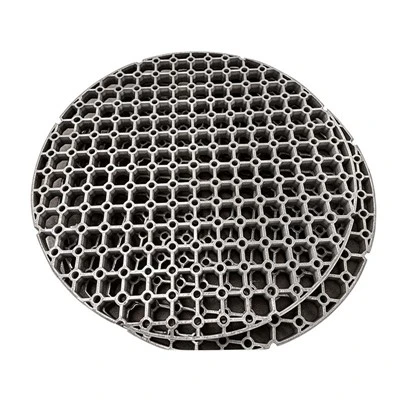
First, let’s talk about material integrity, because in aerospace, a casting’s weakest point is never where the material starts—it’s where a machining step damages it. Most of the parts we process start as investment castings made from titanium, Inconel, or Waspaloy—superalloys designed to survive extreme heat, pressure, and vibration. These materials are inherently tough, but their microstructures are fragile. A single overheated cut from a dull tool can leave a heat-affected zone (HAZ) just 0.001 inches thick, and that HAZ is a ticking time bomb. In flight, that tiny imperfection can crack under cyclic stress, leading to part failure. So our first non-negotiable is material-specific machining parameters. For titanium, we run spindle speeds 20% lower than we would for general machining, with rigid coolant pressure to pull heat away instantly—no exceptions. For Inconel, we use polycrystalline diamond (PCD) tools instead of carbide, because carbide will chip and leave debris that gets embedded in the material, ruining its fatigue properties. We even test every batch of castings for inclusions before machining, using ultrasonic and eddy current inspection, because a small hidden void in the raw casting can expand into a critical defect during cutting.
Next up is dimensional tolerance, and here, “close enough” doesn’t exist. Let me give you a real example: last year, we machined a turbine blade hub for a regional jet engine. The customer’s print called for a bore diameter of 1.2458 inches, with a tolerance of ±0.0002 inches. To put that in perspective, that’s less than one-third the width of a human hair. If we had just hit the nominal size, the part wouldn’t seat correctly in the engine’s rotor, causing imbalance that could lead to vibration during takeoff—something no airline can afford. How do we hit that? We don’t just rely on machine codes. We use in-process gauging with precision touch probes that take measurements every 0.05 inches along the bore, adjusting the tool path in real time if we drift even 0.00005 inches. We also hold our machine tools at a constant 72°F in our climate-controlled shop, because even a 1°F temperature shift can expand metal enough to throw a tolerance off. For critical parts, we do a post-machining check on coordinate measuring machines (CMMs) that are calibrated weekly against traceable NIST standards—no shortcuts here.
Surface finish is another area where aerospace requirements are unforgiving. A turbine blade airfoil’s surface can’t have any tool marks, scratches, or micro-roughness that would disrupt airflow. A 0.1 Ra surface finish is common for these parts, which is so smooth it feels like polished glass. For landing gear components, the requirements are even more specific: the critical load-bearing surfaces need a compressive residual stress layer, not tensile stress, because tensile stress makes the part more prone to cracking under cyclic loading. That means we don’t just mill these parts—we finish them with a combination of abrasive flow machining (AFM) and cryogenic treatment. AFM forces a viscous, abrasive polymer through the part’s internal passages, smoothing every crevice without damaging edges, while cryogenic treatment locks in the material’s molecular structure to create that desired compressive stress. I’ve seen customers reject parts because of a single 0.5 Ra surface roughness deviation—those parts get scrapped, no second chances. We can’t afford to send a part that doesn’t meet finish specs out the door, because it will fail in testing, and that delays a plane delivery, costing the airline millions.
Quality documentation is a requirement that most general machining shops barely notice, but in aerospace, it’s the backbone of every order. Every single machining step has to be recorded with serial numbers for tools, machine run hours, inspection data, and operator signatures—all traceable back to the raw casting’s melt batch. The FAA (and EASA, for international customers) requires this level of traceability because if a part fails, they need to be able to track every step of its lifecycle, from the initial metal pour to the final installation on a plane. We use a custom digital system that logs every tool change, every gauge measurement, and every CMM report. Last quarter, a customer’s incoming inspector spent three full days verifying the documentation for a batch of landing gear brackets—they didn’t just trust our word; they needed to see every number, every timestamp, and every calibration certificate. If even one line of the documentation was missing, that entire batch would have been held up, and we would have lost their trust.
Then there’s the issue of part handling and contamination control, which sounds minor, but it’s a huge one. Aerospace castings are often stored in individual, sealed plastic bags with desiccants, and we never touch critical surfaces with bare hands—even the oil from a fingerprint can leave a corrosion spot that will show up during non-destructive testing (NDT). Our shop has dedicated zones for each type of part: titanium parts are machined in a separate area from aluminum parts, because a tiny aluminum chip left in a titanium casting would act as a galvanic couple and cause corrosion over time. For highly sensitive parts, we wear lint-free coveralls, nitrile gloves, and face masks, and we blow off all parts with filtered, dry air before moving them to inspection. I learned this lesson the hard way early in my career—we shipped a small satellite structural casting where one technician had left a cotton fiber on a surface. It showed up during the customer’s X-ray inspection, and they sent the entire order back. Since then, every team member here is trained to treat every casting like it’s a part of their own family’s safety.
We also have to account for post-machining processing that’s unique to aerospace. Many cast parts need to be stress-relieved after machining, because the cutting process can introduce internal stresses that cause distortion later. For example, a complex cast bracket can warp up to 0.010 inches after machining if stress is not relieved, which would make it impossible to fit to the aircraft frame. We use vacuum furnaces for stress relief, because they heat the part evenly and avoid introducing surface oxidation. Some parts also need coating—like anodizing for aluminum or plasma spray for thermal barrier coatings on turbine components. We work with approved coating vendors, and every batch is inspected after coating for thickness and adhesion, using eddy current and tape tests. If a coating is too thin, it won’t protect the part from heat or corrosion; too thick, and it will throw the dimensional tolerance we worked so hard to achieve.
What sets us apart from other machining suppliers is that we don’t just follow these rules—we built our entire shop around them. We invest 15% of our annual revenue in new CNC machines, tools, and inspection equipment, because outdated gear can’t meet these aerospace requirements. Our team members undergo 40 hours of specialized training every year, not just on machining, but on FAA regulations, material science, and quality control. We also work closely with casting foundries from the very start of a project, because machining a casting is only as good as the casting itself. If a foundry leaves a draft angle that’s too sharp, we have to adjust our tool path to avoid damaging the part, and we partner with them to fix issues before they become machining problems.
I know there are plenty of suppliers who will tell you they do aerospace machining, but when it comes down to it, the difference is in the details. It’s the way we calibrate our CMMs every Monday at 7 a.m. sharp. It’s the way we run a 15-minute idle test on every machine before machining a critical part. It’s the way we hold a 10-minute pre-shift meeting to go over each part’s requirements for the day. None of this is glamorous, but this is the work that keeps planes flying safely, that helps satellites launch on time, and that builds trust with our customers, who rely on us when the stakes are highest.
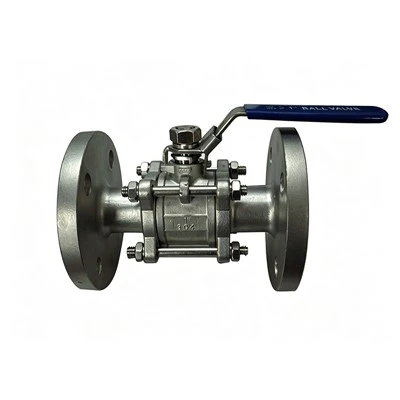
If you’re an aerospace procurement manager working on a new project with cast components, I know how overwhelming it can be to find a supplier that can meet all these special requirements without sacrificing quality or delivery time. We’ve worked with small business jets, commercial airline fleets, and even space launch providers, and we’re ready to take on your most demanding parts. Give us a call—let’s talk through your specific casting machining needs, no obligation. We’ll show you our shop floor, review our quality documentation process, and prove that we’re the partner you can count on for every critical component.
Casting Part Machining References:
- Aerospace Industries Association. (2022). Aerospace Casting and Machining Standards: Materials, Tolerances, and Quality Control. AIA Press.
- Federal Aviation Administration. (2021). Part 25: Airworthiness Standards: Transport Category Airplanes. U.S. Department of Transportation.
- ASM International. (2020). Superalloys for Aerospace Applications: Machining, Processing, and Performance. ASM Handbook Volume 16: Machining.
- European Union Aviation Safety Agency. (2022). EASA Part 21: Design and Production Organization Requirements. EASA Publications.
- Machining Science and Technology. (2019). “Heat-Affected Zone Mitigation in Titanium and Inconel Machining for Aerospace Components.” Vol. 23, No. 4, pp. 512-530.
Ningbo Yirui Machinery Manufacturing Co., Ltd.
As one of the most professional casting part machining manufacturers and suppliers in China, we’re featured by quality products and good price. Please rest assured to wholesale durable casting part machining made in China here from our factory. Customized orders are welcome.
Address: No.107, Wanzhong Village, Jishigang Town, Haishu District, Ningbo City
E-mail: James.he@yiruitek.com
WebSite: https://www.yiruime.com/
