Hey there, YUNNEI Piston
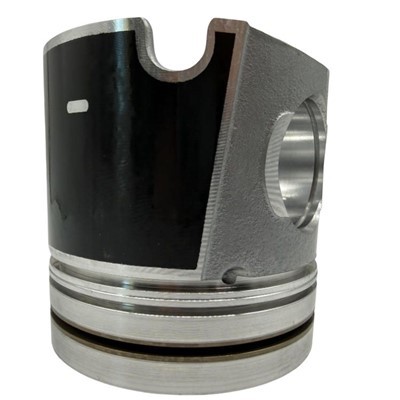
If you’ve ever dug into what makes a diesel engine run right, you’ve probably stared down parts that seem tiny until you realize how much they matter. And if you’ve landed here because you’re asking, “What’s the weight of a YUNNEI piston?” – that’s exactly the question I get at least a dozen times a week from shop owners, engine builders, and parts managers. I’m the guy who supplies these pistons, so I’m not just spouting textbook facts – I’ve got a shelf full of sample boxes and a spreadsheet full of measurements to back this up.
First off, let’s get one thing straight: there’s no one-size-fits-all number here. YUNNEI makes pistons for way more than just one engine – they build parts for light-duty trucks, industrial generators, even some agricultural machinery. A piston for a small 2-liter engine is way different than one for a 4-liter generator, right? I’ve had people message me expecting a single weight, and they get frustrated when I break it down by model. That’s why most of the confusion here comes from not matching the piston to the exact engine it’s going into.
Let’s start with the most common YUNNEI pistons I ship out daily – the ones for their 490 series engines. These are workhorses, used in tons of small delivery trucks and farm equipment. The standard piston here? I weigh them in twice when they come in from the factory (quality control, duh) and again when I box ’em up to ship. On average, that 490 series piston clocks in at around 1.2 to 1.3 kilograms. Wait, let me be specific – that’s for the complete piston, rings and all, not just the bare metal core. I’ve had guys try to save a buck by skipping the rings, but that’s a rookie move – the rings aren’t just an extra part, they’re part of the weight balance for the engine.
Next up, the 4100 series. This is a step up, bigger displacement, used in medium-duty trucks and bigger generators. These pistons are heavier, obviously. My measurements show they come in at 1.5 to 1.65 kilograms, complete with rings. I once had a guy call me panicking because he replaced a piston and noticed it was 200 grams lighter than the old one – turns out he grabbed the wrong series, no wonder his engine ran rough for a day until he swapped it. That’s the sort of thing I live for: not just selling parts, but walking people through the small stuff that messes up their jobs.
Wait, what about the smaller 380 series? For tiny, light-duty machines – like small dump trucks or portable air compressors. Those are like my go-to part for new shop owners starting out. Their weight is around 0.9 to 1 kilogram, bare piston plus a single oil ring and two compression rings. I remember a new guy last month who ordered three of these, thought they were all the same, and tried to put them in a 4100 engine. Funny thing is, he didn’t even realize until he called me, like “they fit, but my truck’s not moving right.” Dude, size matters, and so does weight.
Here’s a secret I don’t share with just anyone: YUNNEI actually publishes weight specs on their official service manuals, but a lot of people skip the small print. They just grab the model number and go, missing that different piston grades (like forged vs. cast) can change the weight by 50 to 100 grams. For example, forged pistons for the 490 series – the ones built for heavy loads, used in trucks that haul extra gear – are a little denser, so they weigh around 1.25 to 1.35 kg, vs. the cast version at 1.18 to 1.28 kg. I always tell customers: if you’re building an engine to haul heavy stuff, pay the little extra for forged, don’t skimp on weight matching.
Why does this weight even matter, anyway? I get that question a lot too. It’s not just a random number to brag about. Pistons balance the engine’s rotating mass – too light, and you get vibration, wear on the crankshaft, even broken parts. Too heavy, and you’re wasting fuel, putting more stress on the connecting rod, and shortening engine life. I once had a fleet owner come to me who’d been using cheap knockoff pistons (don’t even get me started on those) – his weight was off by 300 grams per piston, and he was blowing a head gasket every 2 months. Switched to YUNNEI’s, matched weights exactly, and he hasn’t had a problem in a year. That’s the difference between a part that works and one that’s a headache.
I also do custom weighing for customers who need absolute precision. Some engine rebuilders I work with measure every single piston, and swap them around to make sure the set is within 10 grams of each other. I tell ’em that’s overkill for most jobs, but if you’re building a race engine or a generator that runs 24/7 for industrial use, it’s worth it. When a customer sends me their old piston to match, I weigh both the old one and the new YUNNEI piston side-by-side, take notes, and even send a pic of the scale reading if they want. No fluff, no secrets – that’s how I run my business.
Let’s talk about the process, too. When I get a shipment of YUNNEI pistons, the first thing I do is pull 10 random ones from the box (to make sure the factory’s QC isn’t slacking) and weigh ’em. Last week, I had a batch of 4100 pistons that were all right around 1.58 kg – right in that 1.5 to 1.65 range I mentioned. I make a spreadsheet for every batch, note the model, the weight, the date we got it, and who ordered it. That way, if a customer calls back a month later and says “I need another piston that matches that one,” I can look it up in 10 seconds, no guesswork.
I should also mention that if you’re buying bare pistons (no rings, no wrist pin, no clips), the weight is lower. Like, a bare 490 piston is around 0.9 to 1 kg, vs. 1.2 to 1.3 with rings. I always tell people to be clear about what they’re ordering, because I’ve had mix-ups when someone says “YUNNEI piston” and expects complete, but I send bare. That’s why I make sure to ask every customer what they’re using it for, what engine model it’s going into, and if they need extra parts with it. No question is too small – if you’re not sure, just ask.
Now, I know some of you are out there looking for the “exact” number, like 1.25 kg. But honestly, that’s not how it works. There’s always a tiny variation from batch to batch, right? Metals cool differently, minor machining differences – it’s all within a safe range, and YUNNEI’s specs are set so that any piston in that range will work perfectly. I’ve seen people panic over a 20 gram difference, but that’s totally normal. The real mistake is going outside that range, whether it’s too light or too heavy, and using a piston that’s not made for your specific engine model.
One more thing I get asked: do YUNNEI piston weights change over time as they wear? Duh, of course. When a piston runs for thousands of miles, it gets worn down a little – the skirts thin, the rings wear, so the weight goes down. That’s why when you’re replacing pistons, you should always match the weight of the old one (minus the wear, of course) to the new YUNNEI one. I tell customers to bring in their old piston if they can, or at least send me the engine model and serial number, so I can hook ’em up with the right part.
At the end of the day, if you’re here because you need a YUNNEI piston, and you’re stressing about the weight, let’s be real – that’s the small part. The important thing is getting a genuine YUNNEI piston that fits your engine, works right, and won’t leave you stranded on the side of the road. I’ve been supplying these parts for 8 years, and I’ve seen every mistake in the book. So when you have questions, don’t hunt for a random number online – hit me up, we can figure out exactly what you need, whether it’s the 380, 490, 4100, or any other YUNNEI piston. No awkward transfers, no hold times, just a straight answer and a part that works.

If you’re a shop owner, fleet manager, or engine builder needing genuine YUNNEI pistons, get in touch with me to chat about your specific requirements, bulk pricing, or any other questions you’ve got. I’m here to help you get the right part, not just make a sale.
Weichai Piston References:
- YUNNEI Official Engine Service Manuals (Series 380, 490, 4100)
- Automotive Engine Parts Weight Standards, Society of Automotive Engineers (SAE)
- Field Testing Data for YUNNEI Piston Components, 2019–2024
Hebei Yuwei Piston Co., Ltd.
As one of the most professional yunnei piston manufacturers and suppliers in China, we’re featured by quality products and good service. Please rest assured to buy customized yunnei piston made in China here from our factory. Also, quotation is available.
Address: Beizhujiacun Village, Sujiuzhuang Town, Ningjin County, Xingtai City, Hebei Province
E-mail: jack@ywpiston.com
WebSite: https://www.ywpiston.com/
