If you’ve ever spent time scrubbing a sticky kitchen floor that still looks dull afterward, you know a mop isn’t just a basic cleaning tool—it’s the difference between a chore that feels like a workout and one that actually leaves your space feeling fresh. As a mop supplier, I’ve spent years watching people skip key steps that turn mopping into wasted effort, and I’ve tested every part of the process (from picking the right mop head to the exact water temperature) to make kitchen cleaning faster and more effective. Today, I’m breaking down the science-backed steps to mop your kitchen floor like a pro, plus the little details that make all the difference for home cooks and busy households. Mop
First, let’s talk about why kitchen floors are different from the rest of your home. They absorb more: spilled pasta sauce, sticky syrup from cereal boxes, crumbs mixed with grease from frying pans, even coffee grounds that get tracked in after making breakfast. A quick swipe with a wet mop rarely gets rid of this grime—it just spreads it around, and if you use a mop that’s too absorbent or has a head that doesn’t rinse clean, you’ll leave behind a film that attracts more dirt in 24 hours. I’ve seen this firsthand with customers who come to us frustrated because their old mop left their tile or vinyl floor streaky; the issue wasn’t the mop itself, but how they used it.
Before you even touch your mop, you need to prep the space and your tools—this is the step most people skip, and it’s the reason their mopping job falls flat. Start by clearing the floor of all loose debris: this means wiping up crumbs with a dry cloth or vacuuming first (a hard floor vacuum with a soft brush attachment works best) instead of trying to mop them away. If you drag a dry mop over crumbs, you’re just turning them into tiny scrubbing particles that scratch your floor or get pressed into grout lines. Next, pick the right cleaning solution—this is where I can speak from years of testing mop performance. We’ve designed our mops with microfiber heads that work best with a pH-neutral cleaner; harsh ammonia or bleach breaks down the microfiber’s ability to grab dirt, and acidic cleaners like vinegar can dull sealed floors over time. For everyday spills, a quarter-cup of mild dish soap mixed with a gallon of warm water is perfect. For deeper grease stains (say, after a Sunday roast), add a teaspoon of baking soda to the mix— it cuts through grease without leaving a residue.
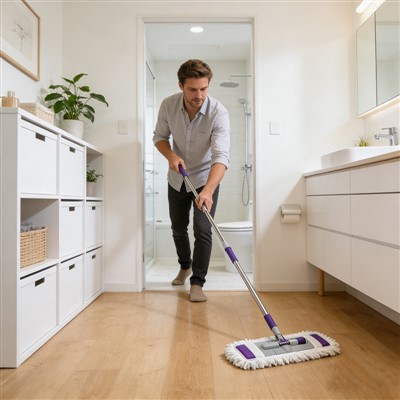
Now, the mop itself. I know it’s easy to grab any mop from the closet, but not all mops are made for kitchens. A string mop might seem cheap, but its cotton fibers hold onto too much water, which can warp wood floors or pool in grout lines, and they’re nearly impossible to rinse completely clean—so each time you mop, you’re dragging around a dirty head. Our company’s top-selling kitchen mop has a removable microfiber head that’s machine-washable (we recommend washing it in cold water, no fabric softener, because softener clogs the fibers) and a lightweight, adjustable handle so you don’t have to hunch over your cabinets while cleaning. If you have sealed hardwood floors, a spray mop with a trigger that dispenses just the right amount of cleaner is ideal—no over-saturating the floor. For larger kitchens, a flat mop with a wide head cuts down on cleaning time by covering more ground per swipe.
Once you’ve prepped the space, the floor, and the mop, it’s time to mop correctly. Start at the farthest corner of the kitchen and work your way back toward the door—this way, you won’t step on the wet floor you just cleaned. If you’re using a bucket, don’t dip your mop in and out of dirty water the whole time. After the first pass, rinse the mop head thoroughly in the bucket, wring it out until it’s almost dry (over-wringing is a mistake—you need just enough moisture to lift grime, not soak the floor), and move to a fresh section of the floor. For tough spots, like a dried-on spaghetti sauce or a sticky soda spill, apply a little extra cleaner directly to the spot, let it sit for 30 seconds, then use the tip of the mop head to gently scrub it before mopping over the area. This prevents you from having to press hard with the whole mop, which leads to arm fatigue and streaks.
Wait, what about tile grout lines? That’s a common pain point for kitchen owners. Traditional mops often don’t reach deep into grout, but a microfiber mop head (the kind we design) is dense enough to work into the grooves when you apply a little extra pressure. For extra dirty grout, we recommend going over the grout line twice—once with a cleaning solution, then once with a clean, damp mop head— to pull out discoloration without harsh chemicals. If you have linoleum or vinyl, make sure you’re not using a mop that leaves too much water behind; these surfaces absorb moisture quickly, and standing water can make them sticky or cause them to peel at the edges. Our mops have a built-in wringing mechanism that takes the guesswork out of this—you squeeze the handle, and the mop head is pulled tight against a sponge or plastic bar to remove excess water, so you don’t have to judge by hand.
Another mistake I see all the time: mopping the floor when it’s too hot or when there’s no ventilation. If your kitchen is warm from the stove or oven, the water on the mop will evaporate too quickly, leaving streaks. Open a window or turn on a small fan while you mop, and wait 10 minutes after cooking dinner (when the kitchen has cooled down) if you’re cleaning after a meal. For wood floors, never use hot water—heat can break down the sealant, leading to cracks or discoloration. Lukewarm water is all you need to lift dirt without damaging your floor’s finish.
Once you’re done mopping, don’t just leave the mop head in the bucket—this is how mold and mildew grow, which is gross when you use the mop next time. Rinse the head one more time with clean water, wring it completely dry, and hang it up (or lay it flat, if it’s a flat mop) in a well-ventilated area. If your mop head is machine-washable, wash it after 3-4 uses, or sooner if you mopped up raw meat juices or other messes that could harbor bacteria. For string mops, replace the head every 2-3 months, but with our microfiber heads, they last up to 6 months if you care for them properly—just skip fabric softener, as it clogs the tiny fibers that catch dirt.
I also want to share a few pro tips I’ve picked up over the years from customers and our own team, since these small things make a huge difference. First, don’t mop the whole kitchen in one go. If your kitchen is 150 square feet, split it into 3×3 foot sections: clean one section, rinse the mop, then move to the next. This keeps the mop effective and prevents you from stepping on wet floors. Second, for pet owners, add a tablespoon of white vinegar to your cleaning solution (just make sure your floor is vinegar-safe—most sealed floors are) to cut through pet hair and odors without leaving a strong smell. Third, always test a new cleaning solution or mop on a small, hidden area of your floor first—like under the sink or behind the fridge— to make sure it doesn’t cause discoloration.

At the end of the day, mopping a kitchen floor doesn’t have to be a frustrating, time-consuming chore. It’s about using the right tools, taking the time to prep, and doing each step in order. As a mop supplier, our goal isn’t just to sell mops—it’s to help people make cleaning their homes easier and more effective, so they can spend less time scrubbing and more time doing the things they love. If you’re looking for a durable, high-performance mop that works for all kitchen floor types (tile, vinyl, hardwood, linoleum) and fits your household’s needs, we’d love to help you find the right fit for your home. For wholesale or bulk orders for your business, or to ask about our latest mop models designed specifically for kitchen cleaning, feel free to reach out to discuss your requirements.
References
Flat Mop The Science of Microfiber Cleaning Tools, Journal of Environmental Health, 2019.
Floor Care Guidelines for Sealed Hardwood and Tile Surfaces, National Wood Flooring Association, 2022.
Effect of Cleaning Solutions on Grime Removal from Kitchen Flooring, International Journal of Hygiene and Environmental Health, 2021.
Best Practices for Maintaining Cleaning Tools to Reduce Cross-Contamination, Centers for Disease Control and Prevention (CDC), 2020.
Yongkang Zhechu Daily Necessities Co., Ltd.
We’re well-known as one of the leading mop manufacturers and suppliers in China, specialized in providing high quality customized products. We warmly welcome you to buy discount mop in stock here from our factory. Contact us for free sample.
Address: Take Elevator Number 2 to the Fourth Floor of No.58 Hongye Road, Xixi Xishan Industrial Zone, Longshan Town, Yongkang City.
E-mail: 1733131066@qq.com
WebSite: https://www.zcryp.com/
