If you’re a printer running flexo or gravure presses, you’ve probably stared at a worn gravure roller at 2 a.m. during a tight run, wondering: Do I fix this? Or just swap it out? As a gravure roller supplier, I get that question every single week—sometimes from small shops that can’t afford downtime, sometimes from big plants that waste money on unnecessary replacements. The answer isn’t one-size-fits-all, and it’s not just “replace every X number of runs” either. Let’s break this down like we’re grabbing coffee and geeking out over press tech, no stuffy industry jargon, I promise. Gravure Roller
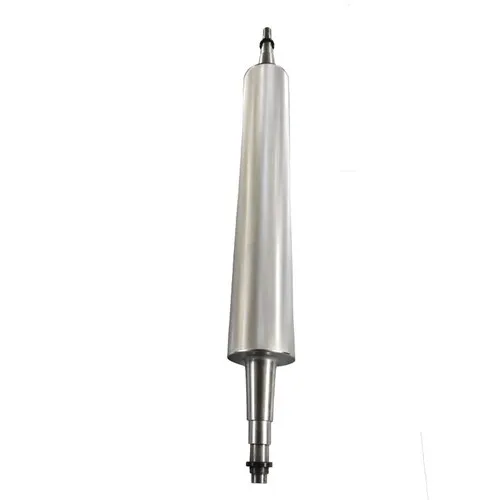
First, let’s get one thing straight: A gravure roller’s lifespan doesn’t hinge on time—it’s all about what’s actually happening to that tiny cell structure on its surface. That’s where the ink transfers, right? If those cells get beat up, clogged, or worn thin, you’re either getting inconsistent ink laydown (think: streaks, faded logos, or ink that smudges too early) or wasting ink trying to compensate. I’ve seen rollers go 10 million impressions and still work like new, and others crap out at 2 million. So how do you tell which is which?
Start with the visible red flags that most people miss. I know, I know—you’re busy, so you might skip the 5-minute check before a run. But here’s the tea: Grab a magnifying glass (the cheap $10 one works, no need for lab gear) and glance at the cell walls. If they’re chipped, pitted, or flat, that’s a non-negotiable sign it’s time to swap. Another big one: The cell depth. Most rollers are engraved to a specific depth—say, 30 microns for high-volume packaging ink. If you run a micrometer (or even a simple cell depth gauge—we sell these, by the way, but you can rent them too) and find it’s dipped below 80% of the original depth, you’re in trouble. Shallow cells can’t hold enough ink, so you’ll have to crank up the ink pump, which dries slower, causes more smudges, and eats through ink way faster than a new roller.
Then there’s the stuff you can’t see, but your press will yell at you about. Ever notice that your print density is off? Like, a brand new job that looked perfect yesterday is 10% lighter today, even though you adjusted everything: ink viscosity, blade pressure, press speed. That’s the roller talking. If density drops more than 15% from your baseline, that’s not a press setting issue—it’s the roller’s cells failing. Also, blade chatter: That high-pitched squeal when the press runs fast? If it’s getting louder, even after you sharpened the doctor blade and tightened it, the roller’s surface is probably rough enough to make the blade vibrate. Chatter isn’t just annoying—it causes those tiny white lines across your print, and it’ll ruin more than just that one run.
But wait—don’t rush to replace a roller just because it’s a little dirty. A lot of guys come to us panicking because their roller is clogged with dried ink, and they think it’s worn out. No, that’s a preventable mess. We always tell customers to do a deep clean after every big job: soak the roller in a mild solvent (nothing too harsh—avoid acetone unless you’re sure it’s compatible with the engraving material) and use a soft-bristle brush or ultrasonic cleaner to get gunk out of the cells. If you skip that, ink dries in there, it can flake off during the next run, cause streaks, and people think it’s the roller’s fault. I’ve seen a roller that looked totally shot get a deep clean and go another 5 million impressions. So that’s step one: Clean it properly before you decide to replace it.
Now, let’s talk about the numbers part, because even the gut checks need a baseline. Most of our customers track impressions, but you should also track the type of job. A roller running water-based ink for food packaging is way gentler than one running solvent-based ink for heavy-duty corrugated. Solvents eat at the engraving coating over time, so that roller will need to be swapped more often. Also, press speed: If you’re running 1,000 feet per minute, the roller is spinning way faster, so wear is more rapid than at 500 FPM. We usually advise: For standard jobs, if your roller is hitting 8 to 12 million impressions, schedule an inspection. For high-stakes jobs (labels, pharmaceuticals, where consistency is non-negotiable), cap it at 6 to 8 million, even if it looks fine. I once had a customer skip that inspection, and they had a run of 50,000 labels that all had streaks—cost them $2,000 in reprints, way more than the cost of a new roller.
Another angle: The coating type. Not all gravure rollers are made the same. There’s chrome plating, which is cheap but scratches easily. Then there’s ceramic, which is way more durable, can handle harsher solvents, and lasts 2 to 3 times longer than chrome. If you’re using chrome rollers, don’t push them past 5 million impressions max—they’ll scratch and pit way faster. Ceramic? You can go 10 to 15 million, as long as you keep the cells clean. We’ve had a food packaging plant run ceramic rollers for 18 million impressions and they still tested at 85% of original cell depth. That’s the difference the coating makes, and it’s a big factor in when you need to replace.
Wait, what about when you recondition a roller? A lot of places will have their roller shop strip the old coating, re-engrave the cells, and re-coat it. That’s a great middle ground, but it’s not a free pass to ignore replacement. Reconditioned rollers have a lifespan too—usually half of a new one, because the engraving base is a little thinner than a brand new roller. So if you’re running a reconditioned chrome roller, cap it at 2 to 3 million impressions, and check the cell depth every 1 million. If you go over that, you’ll end up with inconsistent print anyway.
I know a lot of folks hate overanalyzing this, but here’s the trick: Keep a simple log for each roller. Jot down when you installed it, what type of job it’s on, how many impressions, and any issues (streaks, density drops, blade chatter). After a few runs, you’ll start to see a pattern. For example, if every chrome roller on your solvent jobs dies at 4 million, you know to schedule a recondition or replacement right before that. No more surprises.
Also, don’t sleep on the blade. The doctor blade works with the roller—if the blade is worn, it’ll cause extra wear on the roller’s cells. We tell customers to replace the blade every 2 to 3 million impressions, or when it’s nicked. A good blade extends a roller’s life by 20-30%, so it’s a cheap fix that saves you money on roller replacements. I had one customer who was buying 10 new chrome rollers a year just because he was using dull blades—switched to new blades and now he only buys 5. That’s a no-brainer.
Now, let’s talk about when it’s definitely too late. If you’ve had streaks on 3 or more consecutive runs, no matter what you adjust. If you’ve had ink bleed that you can’t fix, even after testing ink viscosity. If the roller has visible pits or cracks when you run your finger over it (wait, no, use a magnifying glass—finger won’t catch tiny pits). If the cell depth is below 75%—that’s a hard stop. Trying to make a dead roller work will cost you more in reprints, wasted ink, and downtime than just buying a new one.
Here’s the thing I always tell new customers: It’s better to replace a roller a little early than to push it too far. I’ve seen shops save $500 on a roller, lose $10,000 on a bad run, and end up having to replace two rollers instead of one. Downtime is the biggest killer here. If you’re running a 24/7 plant, a roller failing in the middle of a run costs way more than the cost of a new one. So factor in downtime, not just the cost of the roller.
If you’re still on the fence about your roller, send us a photo of the cell structure, tell us what type of jobs you’re running and how many impressions you’ve put on it, and we can help you make a call. No sales pitch, just actual advice from people who’ve been in the field for years. We get it—you don’t have time to mess around with a roller that’s on its last legs, and you don’t want to waste money on a new one that you could have reconditioned.
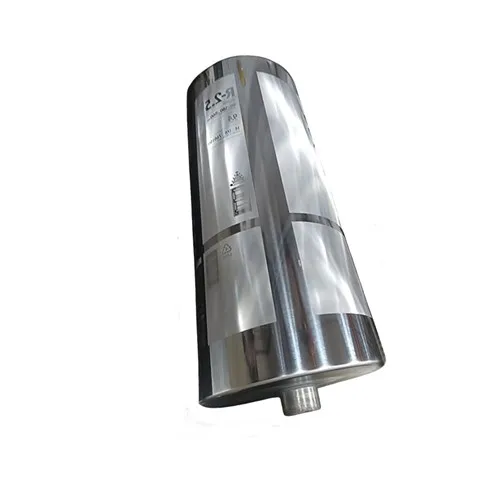
At the end of the day, determining a gravure roller’s replacement frequency is a mix of regular checks, tracking impressions, and listening to your press. It’s not rocket science, and it doesn’t have to be a guess. Just don’t skip the little steps—clean the roller, track the numbers, check the cells—and you’ll avoid most of the headaches. If you need help, hit us up to talk through your setup, no obligation. We’re not here to pressure you into buying something you don’t need, but we are here to make sure you don’t get stuck with a bad roller right before a big deadline.
Chrome Anilox Roller References:
- Gravure Association of America. (2021). Best Practices for Gravure Roller Maintenance and Lifespan.
- Print Technology Today. (2022). Impact of Engraving Coating on Gravure Roller Performance.
- International Organization for Standardization. (2019). ISO 12065:2019 – Gravure Printing Cylinders – Dimensions and Metrological Characteristics.
- Flexo & Gravure Technical Association. (2020). Cost-Benefit Analysis of Gravure Roller Replacement vs. Reconditioning.
Kunshan Hanhan Co., Ltd.
We’re well-known as one of the leading gravure roller manufacturers and suppliers in China. We warmly welcome you to buy high quality gravure roller made in China here from our factory. If you have any enquiry about cooperation, please feel free to email us.
Address: No. 1093, B Zone, No. 2 Xugongqiao Rd, Huaqiao Town, Kunshan City, Suzhou, Jiangsu, China
E-mail: info@kshhroller.com
WebSite: https://www.kshh-roller.com/
